


 For all latest news, follow the Daily Sun's Google News channel.


Winters without birds at Jahangirnagar University
Faruk Hossain, Jahangirnagar University
Published: 24 Jan 2026, 12:00 AM
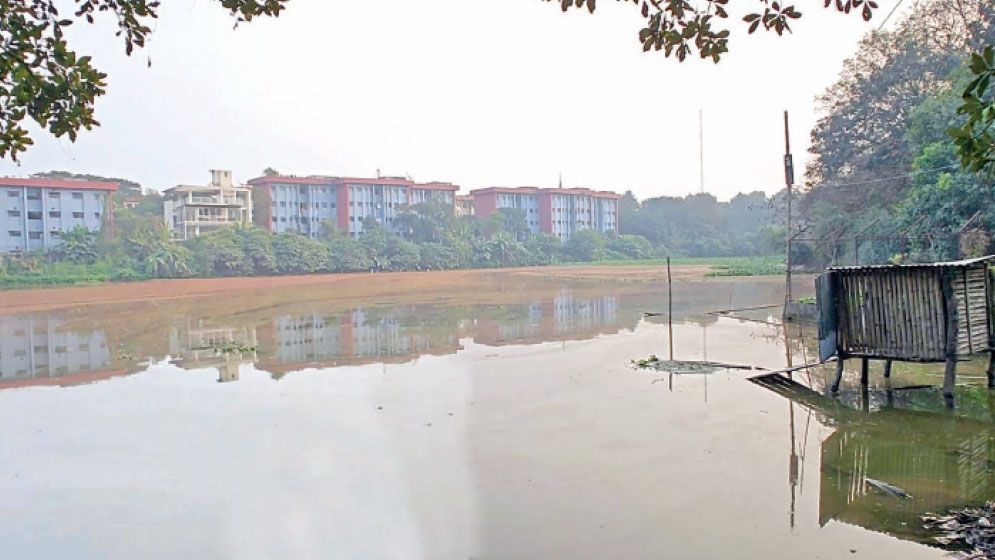
With the arrival of winter, once the Jahangirnagar University (JU) campus flocked into a sanctuary for thousands of migratory birds escaping the harsh cold of Siberia and Central Asia; these birds flocked to the JU campus for its greenery and livable environment in search of safe refuge. But migratory birds' presence on the campus has alarmingly decreased over the last decade.
The sight of northern pintails, freshwater ducks, and garganeys floating on the lake, their calls echoing across the water, made winter a season of avian celebration. But over time, that picture has changed significantly.
Despite the return of winter each year, the number of migratory birds is now declining at an alarming rate.
JU, which boasted nearly 30 large and small waterbodies where the birds nested and found safe refuge, once was a sanctuary for the migratory birds, but it is no longer. Every winter, a decade back, the lakes transformed into vibrant habitats with the chirping of thousands of birds, which turned the university campus into a natural spectacle.
That natural wonder and balanced environment has gradually faded. Today, birds are visible in only a few remaining lakes, while most waterbodies lie silent.
The fading of natural beauty and winter birds' presence has raised serious concerns among the university students and environmentalists.
The primary reason behind this fading scenario is the growing crisis of habitat loss. Unplanned construction of new buildings and widespread tree felling have steadily eroded the birds’ natural shelter.
Moreover, several lakes, abandoned for a long time, have lost their natural water flow, while others have become polluted by accumulated waste.
The degradation of water quality has reduced oxygen levels, causing a decline in aquatic organisms and insects that form the main food source for migratory birds.
Though some of the lakes have recently been restored, most of them are leased out, which creates obstacles to the unrestricted movement of birds.
Environmentalists warn that without urgent conservation efforts and sustainable planning, the winter skies that once came alive with birdsong may be permanently silent.