


 For all latest news, follow the Daily Sun's Google News channel.


Nazrul’s birth anniversary tomorrow
Daily Sun Report, Dhaka
Published: 24 May 2026, 12:00 AM
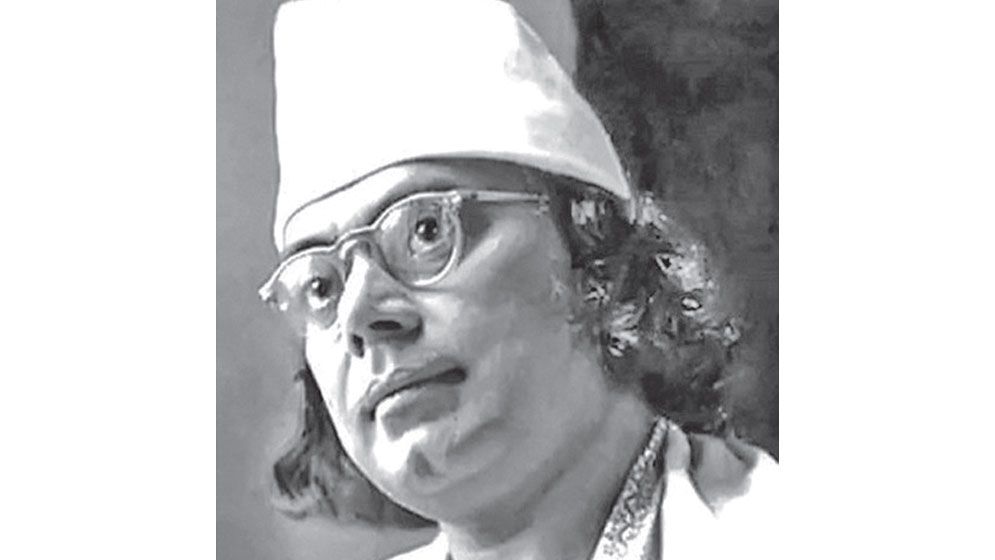
The 127th birth anniversary of National Poet Kazi Nazrul Islam will be observed across the country today through various programmes.
A poet, novelist, lyricist, composer, playwright and journalist, Kazi Nazrul Islam is one of the most celebrated cultural icons of the nation.
His fiery poems had earned him the title “Rebel Poet” and encouraged the subjugated masses to fight against the repression and injustice of British colonial rule. The nation got inspiration from his poems and songs during the Liberation War and all democratic movements and struggles.
Besides, Nazrul’s raga-based songs had developed people’s taste and inspired them to experience the eternal beauty of love.
On the occasion of the birth anniversary of the National Poet, President Mohammed Shahabuddin and Prime Minister Tarique Rahman issued separate messages, paying rich tributes to the polymath.
Like other years, the government and different cultural and socio-political organisations will arrange numerous programmes on the day to remember Kazi Nazrul Islam and celebrate his creations.
Dhaka University Vice-Chancellor Prof Dr ABM Obaidul Islam, delegations of different political parties, family members of the poet, activists of different social and cultural organisations and people from all walks of life will place wreaths on the grave of the poet.
The Ministry of Cultural Affairs, the Ministry of Education, Dhaka University, Bangla Academy, Nazrul Institute, Bangladesh Shilpakala Academy, Chayanaut and many other organisations are arranging special programmes marking the day.
Bangladesh Television and other private television channels and Bangladesh Betar and FM radio stations will air special programmes on the occasion. Newspapers will publish special content, highlighting the life and works of the national poet.
Born on 24 May 1899 at Churulia village in Burdwan district of West Bengal in undivided India, Nazrul had to discontinue his studies at an early age to earn his living as his father died when he was only 11.
Initially, he had joined a professional Leto troupe where he was introduced to the richness of Bangla and Sanskrit literature.
A year later, he resumed his education and got enrolled in Matharun English School but dropped out from Class VI because of poverty. This time, he worked with a Kabi Gaan troupe and subsequently took up a job at a bakery.
While working there, Nazrul started writing poems and his talent soon grabbed the attention of a police officer named Kazi Rafizullah, who gave him shelter at his house in Mymensingh’s Trishal in 1914, and enrolled him in Class VII at Darirampur School.
He joined the British Army in 1917. During his two and a half years of service, the young poet was introduced to Persian literature and learned to play different instruments following notation.
Nazrul’s literary practice got a formal shape at that time. His first poem Mukti, first novella ‘Bounduler Atmakahini’, novel ‘Badhon Hara’ and a number of other writings were published in that period.
From 1920, he concentrated on creating his literary masterpieces. Many of his famous poems, including Bidrohi, appeared during the period.
Nazrul came to Cumilla in April 1921 and met Promila Devi, a young Hindu girl whom he loved and married subsequently. In 1922, he began editing a fortnightly magazine named Dhumketu which literally stormed the British rulers in India.
On 13 October 1922, Kazi Nazrul Islam, as the first person in the subcontinent, placed a demand for independence in an article published in Dhumketu.
For his political poem Anondomoyir Agomone, he was sentenced to one year in jail.
While staying in prison, the poet began a hunger strike, protesting the mistreatment by a British jail superintendent. He was released consequently but the British government banned most of his books throughout the 1920s.
In his short creative life, Nazrul also worked as a lyricist and music composer for the popular music label HMV (His Master’s Voice). He developed 17 new ragas and created six new talas or rhythms.
He acted in a film and directed music as well. He joined All India Radio Kolkata in October 1939.
Nazrul suddenly became sick in 1942 and was diagnosed with a rare neurological disorder Pick’s disease that led to the loss of his voice and memory. He was sent abroad for treatment but did not recover from the disease. In his short artistic career of just 20 years, he penned at least 3,174 songs, 600 poems, three novels and 43 essays.
After the country’s independence in 1972, Bangabandhu declared Nazrul the National Poet and brought the ailing poet with due honour to Bangladesh. Nazrul died in Dhaka on 29 August 1976.