


 For all latest news, follow the Daily Sun's Google News channel.


62,000 Rohingya women, youth access safe spaces
Women and girls received confidential counselling, medical referrals and specialised support services
Daily Sun Report, Dhaka
Published: 23 Feb 2026, 04:53 PM
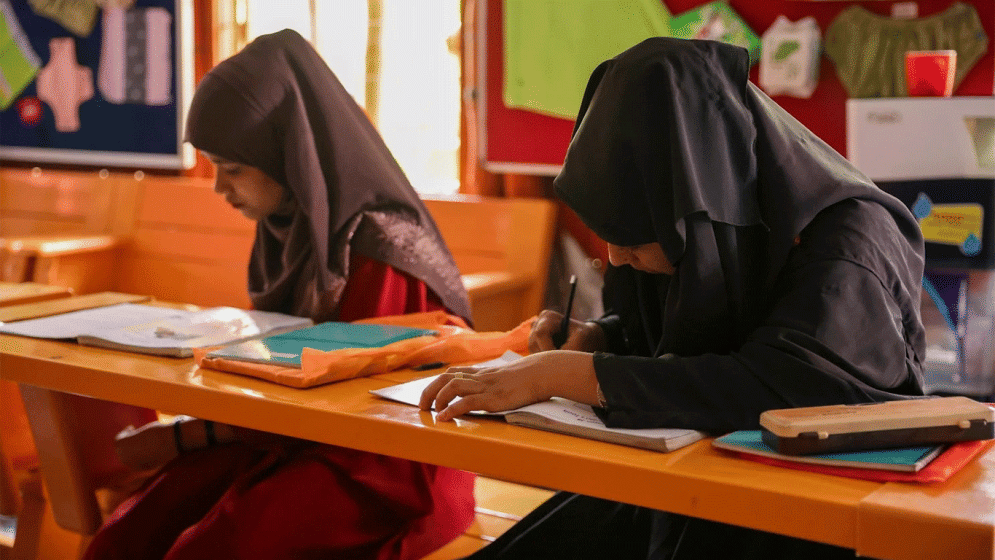
Photo: Courtesy
More than 62,000 Rohingya refugees and members of host communities - mainly women, girls and young people - have accessed protection and support services through safe spaces established in Cox’s Bazar and Bhasan Char.
The support has been delivered under the
Switzerland-funded “Rising Together” project implemented by the United Nations
Population Fund (UNFPA) in Bangladesh.
Backed by the Swiss Agency for Development and
Cooperation (SDC), the initiative in its first year expanded ‘Women’s Friendly
Spaces’ and ‘Youth Centres’, offering services related to gender-based violence
prevention, sexual and reproductive health, psychosocial care and life skills
development, according to a UNFPA press release.
Women and girls received confidential counselling,
medical referrals and specialised support services. Youth Centres provided safe
environments where young people could learn, build leadership skills and engage
in peacebuilding activities through the Youth4Peace curriculum.
“Switzerland’s support is sustaining life-saving
services while expanding opportunities for women and young people to lead in
their communities,” said Catherine Breen Kamkong, UNFPA representative in
Bangladesh. “By investing in safe spaces for women and youth, we are helping
communities protect dignity today and build resilience for the future.”
The project aims to strengthen resilience, inclusion
and social cohesion among Rohingya and host communities, while addressing and
preventing gender-based violence and other safety threats. It also promotes
youth leadership and social responsibility.
“The Embassy of Switzerland in Bangladesh supports
the ‘Rising Together’ initiative to ensure that Rohingya refugees and host
communities can access essential protection, health and psychosocial services,”
said Diepak Elmer, deputy head of mission and head of cooperation.
The initiative further supports youth-led
revitalisation efforts, transforming shared spaces into gardens, libraries and
learning corners. Peer-led psychosocial outreach and helpline services are
helping reduce stigma around mental health and connect vulnerable individuals
to care.
“Peace is when we can smile together without fear.
These sessions give us hope,” said a youth participant.
As the programme enters its second year, UNFPA and
SDC will continue focusing on community leadership, prevention of child
marriage and empowering women and youth as drivers of resilience and positive
change.