


 For all latest news, follow the Daily Sun's Google News channel.


Fuel oil reserves sufficient, more supplies coming: Energy division
The country currently has 1.33 lakh tonnes of diesel, and 54,600 tonnes more are set to arrive by Friday, said Monir Hossain Chowdhury, joint secretary at the Energy and Mineral Resources Division
Daily Sun Report, Dhaka
Published: 30 Mar 2026, 05:51 PM
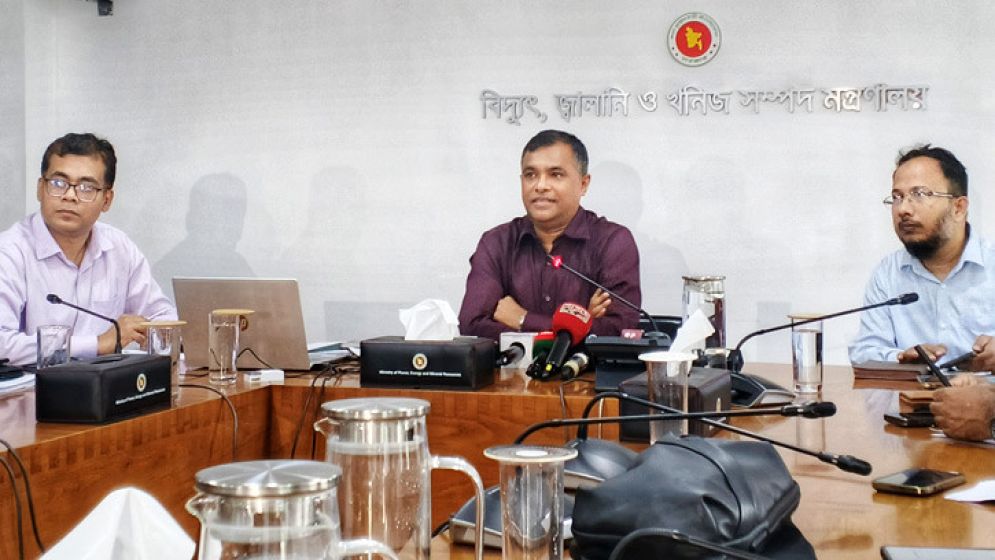
Photo: Collected
The country has sufficient reserves of fuel oil, and more imports
are coming, said Monir Hossain Chowdhury, joint secretary at the Energy and
Mineral Resources Division, on Monday.
There is no reason for people to get anxious about fuel oil
supplies amid the Middle East conflict, he added while speaking at a briefing
held at the Secretariat.
The country currently has 1.33 lakh tonnes of diesel, and
54,600 tonnes more are expected to be imported by Friday, he said. In the
meantime, 7,000-tonne will be imported from India via pipeline.
In April, another 1.54 lakh-tonne fuel oil will be imported
from China, Indonesia and Singapore.
Furthermore, works are ongoing to import six lakh tonnes of
diesel for two months from Russia, amid a 30-day sanction waiver granted by the
US authorities, said Monir.
Amid the supply fears sparked by the Iran war, authorities
have so far imported 22,000-tonne diesel from India, and a deal to this end has
been in effect.
Officials are working to import more from Nigeria, Azerbaijan,
Kazakhstan, Angola, Australia and the US.
Iran has already permitted Bangladesh-flagged vessels to
transit the Strait of Hormuz, which Tehran has effectively controlled as a
leverage in its war against the US-Israeli forces.
However, not all fuel imports bound for Bangladesh are
carried by the country’s ships, and only this factor could cause some problems,
Monir Hossain Chowdhury noted.
Officials are continuing talks with Iranian government to
secure transit for all vessels carrying fuel imports for Bangladesh through the
Strait of Hormuz. Hopefully, the talks will soon bring positive results, the
joint secretary added.
In the meantime, as pre-emptive measures, the government is
prioritising savings and austerity steps both at the individual and
institutional levels.
The government has also directed the authorities concerned
to prioritise the agriculture sector, and have instructed the agricultural
officers and upazila nirbahi officers (UNO) to work to this end, the joint
secretary said.