



 For all latest news, follow the Daily Sun's Google News channel.


A brutal hostage odyssey: Abduction and deadly voyage to Malaysia
Daily Sun Report, Dhaka
Published: 04 May 2026, 11:29 AM
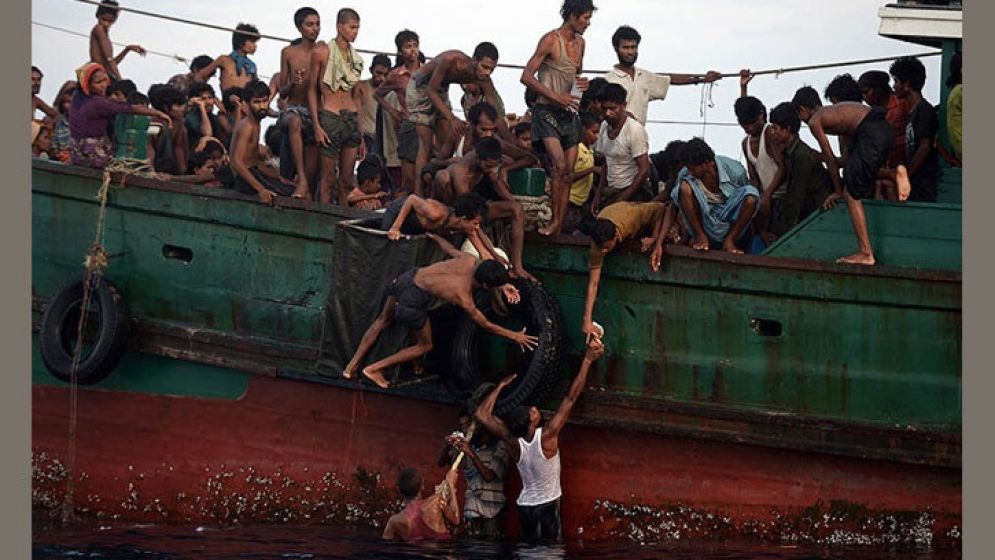
Photo: Courtesy
A chilling account of abduction, human trafficking and false promises has emerged from Cox’s Bazar, where victims were held hostage in remote hill areas before being forced onto a fishing trawler bound for Malaysia—ending in a catastrophic sinking in the Andaman Sea.
Investigations reveal that people abducted from different parts of Cox’s Bazar were initially confined in isolated forest hideouts in Baharchhara. They were later transferred onto a fishing trawler, where more individuals joined—many lured by traffickers with promises of reaching Malaysia.
In total, around 260 people were crammed onto the vessel, embarking on a perilous sea journey. Four days later, amid escalating tension and brutality by traffickers, chaos erupted on board.
The overcrowded trawler eventually capsized and sank in the Andaman Sea, leaving an estimated 264 men, women and children missing. Only nine people were rescued after drifting helplessly in open waters for hours.
Voyage from Desperation to Disaster
The incident began on the night of 4 April 2026, when a fishing trawler—approximately 42 feet long—set off from the Baharchhara coast in Teknaf. Instead of carrying fish or goods, it was packed with people: women, children and young men squeezed into every available space, including the lower ice storage hold.
After four days at sea, tragedy struck in the early hours of 7 April. Panic spread among passengers over thirst and fear, leading to clashes. Witnesses said those pleading for water were brutally beaten, with many locked inside the lower compartment, where at least 33 people reportedly suffocated.
Their bodies were later thrown overboard, destabilising the already overloaded vessel. Within moments, the trawler tilted sharply and sank. Those trapped below were unable to escape and disappeared into the deep sea.
Survivors described a desperate struggle for life, clinging to floating objects—drums, wooden debris and fishing floats—while battling strong currents for hours.
On the morning of 9 April, nearly 36 hours after the sinking, a Bangladeshi vessel en route to Indonesia spotted several survivors signalling for help.
Captain Omar Jahan said the crew immediately launched a rescue operation in line with international maritime obligations. Over a three-hour effort, nine survivors were pulled from the sea. Despite extensive searches across several nautical miles, no others were found.
The rescued individuals were in critical condition—severely dehydrated, suffering from saltwater ingestion and serious skin damage.
Trafficking Network Exposed
The investigation points to a well-organised human trafficking network operating in Cox’s Bazar, targeting vulnerable Rohingya refugees and Bangladeshi citizens.
Victims are often abducted by local transport operators from areas such as Kolatoli and Teknaf, sold for around Tk50,000, and taken to remote detention sites. There, they are subjected to brutal torture while traffickers demand ransom from families. Those unable to pay are either sold onward or forced onto boats bound for Malaysia.
Some survivors reported being sold multiple times. Testimonies describe these detention centres as human “markets” where lives are traded for money.
Weeks after the disaster, families across Cox’s Bazar continue to wait in anguish for news of their missing loved ones. Mothers, wives and relatives cling to hope—watching doorways, waiting for a call that may never come.
The tragedy has left deep scars across coastal communities, exposing the scale and brutality of maritime human trafficking in the region.
Further findings, including field reporting in Malaysia, suggest that survivors who reach Southeast Asia often face a second phase of captivity.
Victims are transported through Thailand and Indonesia before entering Malaysia, where they are confined in warehouses and subjected to further extortion. Ransom demands can reach up to Tk350,000 before release.
Survivors described severe abuse, armed guards, and coordination between international trafficking networks.
A Cross-Border Humanitarian Crisis
The incident has shocked observers and raised urgent concerns over transnational trafficking networks, gaps in law enforcement, and the vulnerability of marginalised populations.
According to international agencies, more than 250 people were on board the trawler, including over a hundred Bangladeshis and a large number of Rohingya refugees.
As investigations continue, the tragedy underscores a grim reality: for many, the pursuit of a better life abroad ends not in opportunity, but in death—or disappearance at sea.
Source: Kaler Kantho