


 For all latest news, follow the Daily Sun's Google News channel.


Proposed budget contradicts commitment towards tobacco-free Bangladesh: BTCA
BTCA said these measures could help curb tax evasion and enhance government revenue if implemented effectively
Daily Sun Report, Dhaka
Published: 12 Jun 2026, 05:02 PM
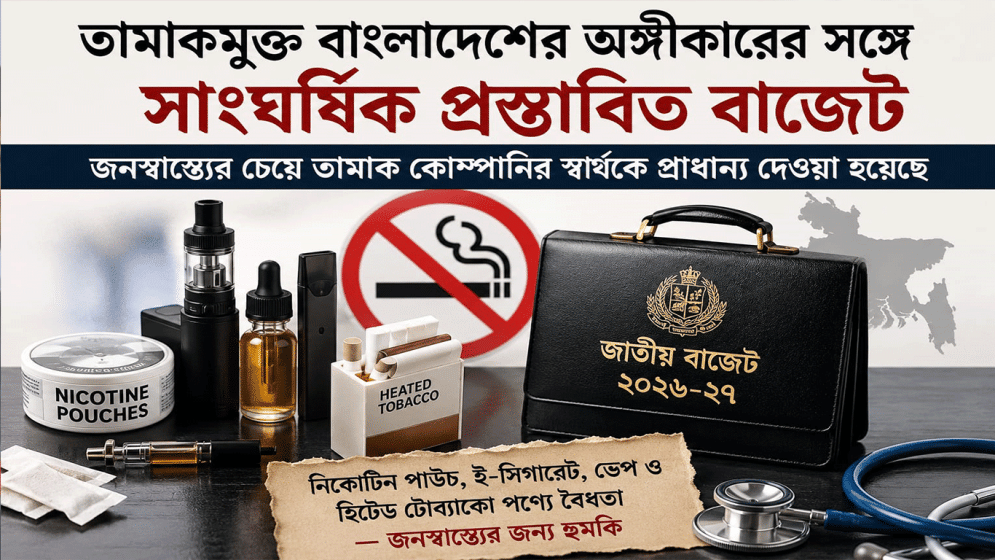
Photo: Daily Sun
The Bangladesh Tobacco Control Advocates (BTCA) has expressed deep concern over the proposed national budget for FY 2026–27, alleging that it prioritises the interests of the tobacco industry over public health protection and tobacco-use reduction efforts.
According to the organisation, the government's
decision to bring nicotine pouches, heated tobacco products (HTPs),
e-cigarettes, and vape products under the tax regime effectively legitimises
these products, creating new public health risks and exposing millions of young
people to nicotine addiction.
The remarks were made in a joint press statement
issued on Friday and signed by BTCA Convener Iqbal Masud and Moderators
Sushanta Sinha, Syeda Ananya Rahman, Farhana Jaman Liza, Samiul Hasan Sajeeb,
Abu Raihan, and Ibrahim Khalil.
In the statement, BTCA leaders said the government
has repeatedly pledged to build a tobacco-free Bangladesh, yet several
provisions in the proposed budget directly contradict that commitment.
Public health experts have long advocated for
banning emerging tobacco and nicotine products, including e-cigarettes, vapes,
nicotine pouches, and heated tobacco products. Instead, the government has
reportedly removed provisions related to banning such products from the
proposed amendment to the tobacco control law and brought them under the tax
structure, effectively allowing their legal entry into the market.
BTCA warned that this move could place millions of
adolescents and young adults at risk of developing nicotine addiction. The
organisation argued that while the decision may generate short-term revenue, it
is likely to increase long-term healthcare expenditures and economic losses
resulting from tobacco-related illnesses, reduced productivity, and premature
deaths.
The statement further noted that the proposed
increase in cigarette prices remains inadequate from a public health
perspective. Around 75% of cigarettes sold in Bangladesh belong to the low-tier
segment, yet the price of these cigarettes has been increased by only Tk2 per
pack. Given the current inflationary environment, BTCA believes this increase
will have little to no impact on reducing tobacco consumption.
The organisation also criticised the government's
failure to adopt a specific excise tax in addition to the existing ad valorem
tax system, despite repeated recommendations from public health experts.
According to BTCA, this omission will not only deprive the government of potential revenue but also allow tobacco companies to exploit loopholes in the tax structure and earn excessive profits.
BTCA described the minimal increase in low-tier
cigarette prices, the lack of significant tax hikes on bidis, zarda, and gul,
and the effective legalisation of new nicotine products as a backward step in
tobacco control efforts.
However, the organisation welcomed several
initiatives included in the proposed budget, such as the introduction of QR
codes on cigarette tax stamps, the implementation of a digital track-and-trace
system, and stronger monitoring of the tobacco supply chain.
BTCA said these measures could help curb tax evasion
and enhance government revenue if implemented effectively.
The organisation urged the National Board of Revenue
(NBR) and the government to review the proposed budget in light of
recommendations from public health experts and introduce necessary amendments
that place public health at the forefront of fiscal policy.