



 For all latest news, follow the Daily Sun's Google News channel.


Corruption claims mount, yet Benazir’s ally Mozammel remains untouchable
Daily Sun Report, Dhaka
Published: 16 Jun 2026, 10:59 AM
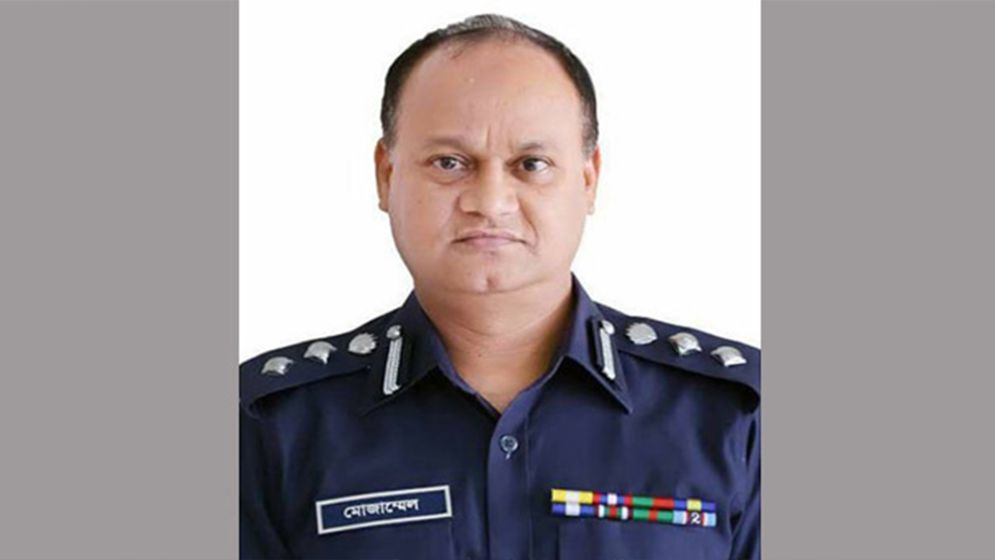
While former Inspector General of Police (IGP) Benazir Ahmed has been arrested in Dubai in connection with corruption allegations, one of his closest associates in Bangladesh, former police officer Gazi Md Mozammel Haque—often referred to as the “second Benazir” within police circles—continues to evade legal action despite facing a long list of accusations.
Mozammel has been accused of land grabbing, abuse of power, torture, illegal wealth accumulation, and widespread corruption. Investigations suggest that he allegedly leveraged his close ties with Benazir Ahmed during the latter’s tenure as head of the police and Rapid Action Battalion (RAB) to build a vast financial empire over more than a decade.
Following the political transition on 5 August 2024, authorities moved against a number of influential politicians, former ministers, lawmakers, and bureaucrats accused of corruption. However, despite multiple investigations and court orders, Mozammel has yet to face arrest, raising questions about whether powerful networks continue to shield him from accountability.
According to reports, allegations against the former police officer are not new. Over the years, various media investigations and complaints have accused him of forcibly acquiring land, abusing official influence, filling rivers for commercial projects, and amassing enormous wealth beyond known sources of income.
The Anti-Corruption Commission (ACC) is currently investigating Mozammel and his wife over allegations of acquiring assets beyond their declared income. Courts have already ordered the seizure of land assets linked to the family and frozen 28 bank accounts.
Information gathered from court records, ACC investigations, media reports, and local sources paints a picture of extensive property holdings allegedly linked to Mozammel. These reportedly include a residential development spanning nearly 3,000 bighas in Rupganj, more than 100 bighas of garden property, 175 bighas of land in Bandarban, a resort project in Cumilla allegedly developed through river encroachment, large estates in Sunamganj, and industrial facilities in Demra.
Critics argue that while authorities have frozen accounts and seized assets, the failure to bring the accused before the law has fueled public skepticism about the pace of the investigation.
Beyond financial crimes, Mozammel also faces allegations of serious human rights abuses. Several residents of Rupganj have claimed they were threatened, harassed, or subjected to legal pressure after refusing to sell land.
One of the most widely discussed allegations involves claims that an elderly landowner was unlawfully detained and pressured into transferring 62 bighas of land. Victims and local residents have questioned why an individual facing such extensive allegations remains free while ordinary citizens often face swift legal action for far less serious accusations.
Another controversial issue involves the “Ananda Police Housing” project in Rupganj. Investigations reportedly found no formal affiliation between the project and Police Headquarters, despite the use of the word “Police” in its branding.
Critics argue that the use of a state institution’s name helped create public trust and may have misled prospective buyers. They say the lack of visible action over the matter has further deepened concerns among affected residents.
Corruption analysts argue that the allegations against Mozammel represent more than the conduct of a single former police officer; they have become a test of institutional accountability.
Transparency advocates have noted that powerful corruption networks often survive through mutually beneficial relationships among influential actors. The question, observers say, is whether such networks continue to protect individuals facing serious allegations.
Professor Dr. Omar Faruk of the Department of Criminology and Police Science at Mawlana Bhashani Science and Technology University said that misconduct by members of law enforcement can encourage similar behavior among others within the system.
“Allegations of abuse of power, corruption, and illegal wealth accumulation by law enforcement officials require impartial investigations and exemplary punishment,” he said.
With investigations ongoing and public scrutiny growing, many are now asking whether authorities will move beyond asset seizures and financial probes to determine criminal liability and ensure accountability.
Source : Kaler Kantho