



 For all latest news, follow the Daily Sun's Google News channel.


Govt approves country’s first Free Trade Zone in Anwara
Daily Sun Report, Dhaka
Published: 19 Jun 2026, 01:04 PM
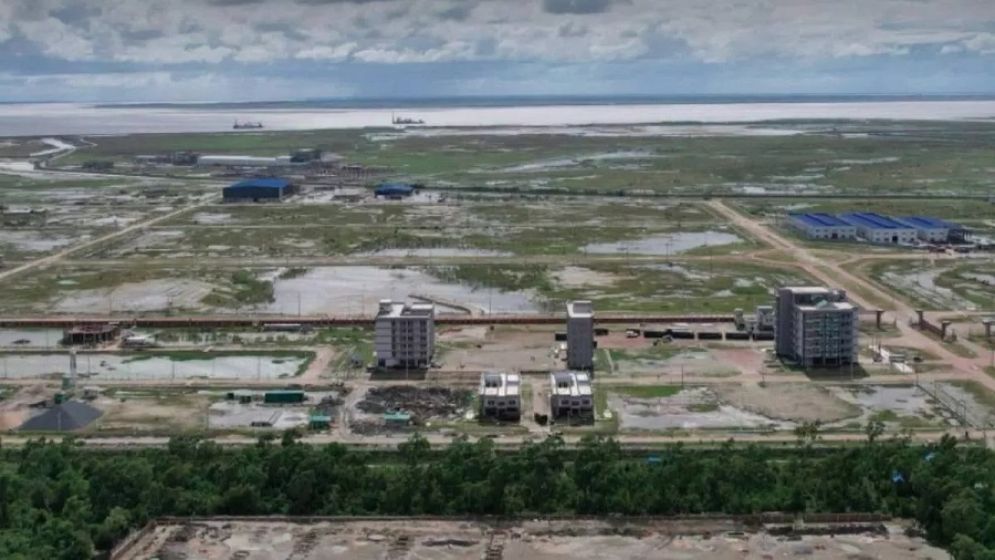
A plan has been made to establish an economic zone on a government-to-government (G2G) basis on about 800 acres of land in Anwara Upazila of Chittagong for Chinese investors. Photo: Facebook
The Cabinet Committee on Economic Affairs (CCEA) has approved a proposal to establish Bangladesh’s first Free Trade Zone (FTZ) in Anwara, Chattogram, in a move aimed at boosting international trade, investment and export competitiveness.
The government hopes the initiative will position Bangladesh as a regional hub for international trade, supply chain management and logistics services.
The proposal was approved at a meeting of the CCEA chaired by Finance Minister Amir Khasru Mahmud Chowdhury on 17 June. The approval was granted as part of broader efforts to enhance the country's trade, investment and export capacities.
The Bangladesh Economic Zones Authority (BEZA) disclosed the development in a press release.
According to BEZA, efforts have been underway for several years to establish a modern Free Trade Zone in line with international standards. To facilitate the process, a high-level committee comprising representatives from 10 government agencies, including the Ministry of Commerce, Ministry of Industries, Finance Division, National Board of Revenue (NBR) and Ministry of Shipping, was formed.
The committee reviewed the legal frameworks, policies, incentive structures and operational models of Free Trade Zones in various countries before preparing a detailed report.
Based on the report's recommendations, Anwara, located on the banks of the Karnaphuli River, was selected as the site for the country's first FTZ, considering its infrastructure, international trade connectivity, logistics capacity and future expansion potential.
BEZA believes the proposed Free Trade Zone will open a new chapter in Bangladesh’s international trade and supply chain management. It is also expected to play a significant role in attracting foreign direct investment, diversifying exports, developing an international logistics hub and creating employment opportunities.
The proposal to establish the country’s first FTZ was initially approved at the ninth meeting of BEZA’s Governing Board on 26 January this year.
BEZA said the process of reforming relevant laws and policies has already begun. Reviews and updates are currently underway for several regulatory frameworks, including the Bangladesh Economic Zones Authority Act 2010, Customs Act 2023, Warehouse Licensing Rules 2024, Import Policy Order 2021–24, Export Policy Order 2024–27, Foreign Exchange Management Guidelines, National Industrial Policy 2022 and National Logistics Policy 2024.
The authority expressed confidence that the FTZ would help establish Bangladesh as a key trade and logistics hub connecting South and Southeast Asia.
BIDA and BEZA Executive Chairman Ashik Chowdhury said Bangladesh is now at an appropriate stage to adopt the Free Trade Zone model.
“With the improvement of the country's logistics capabilities, Bangladesh now has the opportunity to be utilised as a regional warehousing and trading hub,” he said.
Describing exports as one of the principal drivers of the economy, Ashik said the establishment of a Free Trade Zone was a natural next step for Bangladesh.
“Countries such as the United Arab Emirates, China and several Southeast Asian nations have successfully implemented this model, and Bangladesh also wants to follow that path,” he said.
He added that some budgetary amendments and changes to the Import Policy Order had already been introduced to facilitate the FTZ initiative, although further amendments to several laws and regulations would be required before full implementation.