



 For all latest news, follow the Daily Sun's Google News channel.


Railway’s western zone to lease out add’l trains to boost revenue
Revenue figures further illustrate the scale of the challenge
Daily Sun Report, Kushtia
Published: 28 Jun 2026, 04:45 PM
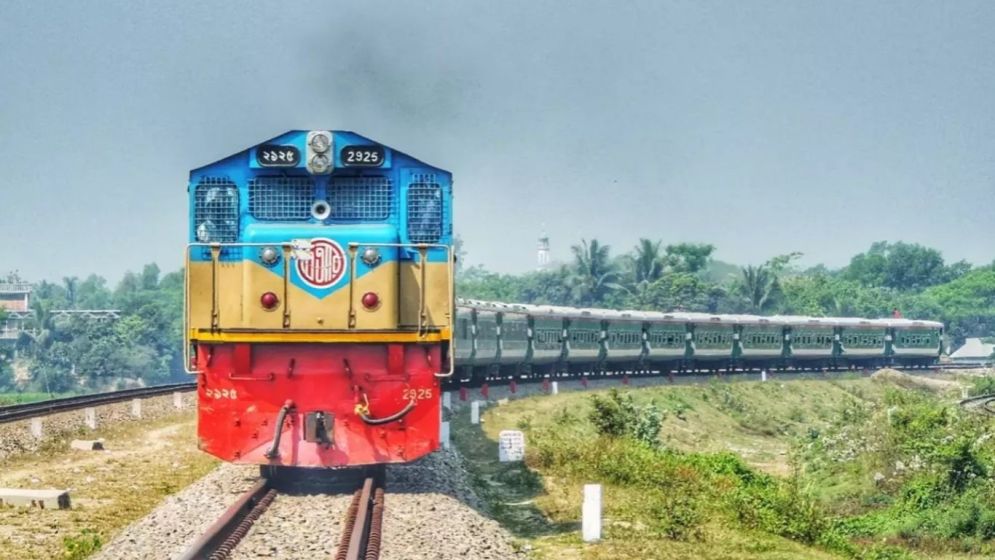
A moving train operated by Bangladesh Railway. File Photo
Bangladesh Railway's western zone has initiated a plan to lease 11 additional mail and local trains to private operators over facing persistent revenue shortfalls, widespread ticketless travel, manpower shortages and mounting losses on mail and local train services.
A proposal regarding this has already been submitted
to Railway Headquarters for approval.
However, while railway officials expect the move to
strengthen revenue collection and improve operational efficiency, observers
warn that privatisation could eventually result in higher fares for passengers.
Western zone General Manager Farid Ahmed said the
proposal is currently awaiting approval. Once cleared, the railway will
complete the necessary procedures before handing over the train operations to
private operators.
According to railway officials, mail and local
trains have been operating with heavy losses for years, prompting the
authorities to explore alternative management models to reduce financial
pressure and improve operational efficiency.
Currently, Bangladesh Railway's western zone operates 62 intercity,
55 mail and commuter, and 12 local trains. Of these, 24 mail, commuter, and
local trains have already been leased to private operators, generating
approximately Tk13.3 million in monthly revenue.
Encouraged by this experience, the railway now plans
to expand the leasing programme by including 11 more trains.
However, officials acknowledge that the railway's
financial problems extend far beyond the operation of loss-making services.
While only 10 to 12 intercity trains consistently generate profits, most mail
and local trains continue to incur losses because of low fares, high operating
costs, and widespread fare evasion.
One of the most pressing challenges is ticketless
travel. Railway officials say many passengers on local routes travel without
purchasing tickets, while others allegedly pay railway staff directly instead
of buying tickets through official counters. Such practices deprive the
government of substantial revenue each year.
Ansar Ali, additional chief commercial manager of
the western zone, said the railway lacks sufficient manpower to conduct
effective ticket inspections on all trains. As a result, revenue leakage
remains a persistent problem that is difficult to control.
Revenue figures further illustrate the scale of the
challenge. In the 2023–24 fiscal year, the western zone earned Tk649 crore
against a revenue target of Tk1,077 crore. In 2024–25, revenue fell to Tk621
crore, well below the target of Tk1,160 crore. During the first ten months of
the 2025–26 fiscal year, the railway collected Tk566 crore, compared with a target
of Tk825 crore.
Railway officials believe that recruiting additional
staff, strengthening monitoring mechanisms, and maintaining separate
profit-and-loss accounts for individual train services could improve financial
performance.
However, given current resource constraints, they
view the leasing model as the most practical short-term solution for increasing
revenue and reducing operational losses.
Transport analysts, however, argue that leasing
trains alone is unlikely to resolve the railway's long-standing financial
difficulties. They stress that sustainable improvement will require structural
reforms, including stricter enforcement against ticketless travel, expanded
digital ticketing, stronger accountability, and greater operational efficiency.
They also caution that unless fare levels and
service quality are effectively regulated, increased private-sector involvement
could place an additional financial burden on ordinary passengers while doing
little to address the underlying causes of the railway's revenue crisis.