


 For all latest news, follow the Daily Sun's Google News channel.


PM’s Japan visit to focus on $14b investment, project cost cuts
Dhaka hopes to sign 3-4 MoUs, seeks support for major infrastructure projects
Daily Sun Report, Dhaka
Published: 20 Oct 2026, 04:04 PM

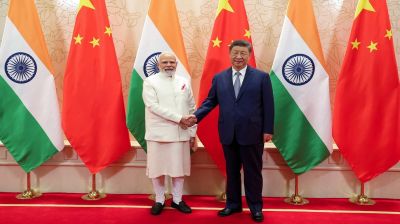
Bangladesh Prime Minister Tarique Rahman and Japan's Prime Minister Sanae Takaichi | Photo Collage: Collected
Prime Minister Tarique Rahman’s four-day state visit to
Japan from 26 October is expected to focus on infrastructure cooperation,
investment, trade expansion, development assistance and skilled manpower
exports.
Bangladesh also planning to raise concerns over rising costs
of major Japanese-funded projects and loan interest rates.
Addressing a presser on Tuesday, Foreign Secretary Asad Alam
Siam said Tarique and his Japanese counterpart, Sanae Takaichi, would discuss
infrastructure cooperation, including Japan’s technical assistance as well as financing
and lending support, during their bilateral meeting on 27 October.
“We want to obtain loans at lower interest rates from all
countries,” he told reporters at the foreign ministry on Tuesday, responding to
a question about the rising costs of Dhaka’s MRT Line-5 and Line-1 projects.
The costs of the two metro rail projects have reportedly increased.
The foreign secretary said the outcome of discussions on
project costs and interest rates would become clear after the negotiations.
Japan has long been one of Bangladesh’s major development
partners, providing assistance for large infrastructure projects, including the
Dhaka Metro Rail, the Matarbari port and power project, and the third terminal
of Hazrat Shahjalal International Airport.
Bangladesh is also preparing a proposed $14 billion package to
attract Japanese investment and cooperation in 12 priority sectors for 2026-31,
some of which fall under the Bay of Bengal Industrial Growth Belt (BIG-B)
initiative.
The proposed package includes $3.45 billion for transport and
urban connectivity, $3.14 billion for integrated industrial, port and
commercial hubs, including the Matarbari hub, $2.22 billion for energy and
climate resilience, $1.57 billion for manufacturing, semiconductors and
automobiles, and $1.22 billion for agriculture, the blue economy and tourism.
The visit is expected to provide an opportunity to seek
greater Japanese investment, sustain development assistance and expand economic
cooperation beyond traditional infrastructure financing.
3-4 MoUs expected
Bangladesh and Japan are discussing around eight memorandums
of understanding (MoUs), of which three or four may be signed during the visit,
the foreign secretary said.
He said human resource development could provide a framework
for discussing several areas of cooperation and creating opportunities for
future collaboration.
The two countries are also negotiating a joint statement,
with discussions expected to continue until the final stage of the visit.
The proposed agreements may cover several areas of bilateral
cooperation, including skilled manpower, technology and other economic and
development priorities. However, the foreign secretary did not confirm the
final list of agreements to be signed.
Expanding employment opportunities for Bangladeshi workers in Japan is another potential priority. Bangladesh is interested in sending more trained and skilled workers to Japan to meet demand in sectors facing labour shortages as the country’s population ages.
The two countries signed two memorandums in May 2025 to
develop skilled human resources for the Japanese market. A further
understanding on sending Bangladeshi workers is also under discussion, although
no final announcement has been made about a new agreement during the upcoming
visit.
EPA awaits domestic approval
The implementation of the Economic Partnership Agreement
(EPA) between Bangladesh and Japan will also be an important issue as the two
countries seek to expand bilateral trade.
The foreign secretary said the agreement had been signed but
was yet to complete the necessary domestic procedures in both countries.
It will come into effect after those procedures are
completed, he said.
Asked about concerns that Bangladesh’s leather goods exports
to Japan could decline by around 10% after the EPA takes effect, Asad Alam Siam
said the agreement should be assessed as a whole rather than through the
performance of a single product category.
He said some sectors might face disadvantages while others
could benefit from the comprehensive agreement.
After the EPA comes into force, the two countries will need
to examine which sectors gain or lose and why, he said, adding that there would
be opportunities for further discussions if specific industries faced
difficulties.
Bangladesh is seeking to expand its export opportunities in
Japan while attracting investment in manufacturing and other industries. The
EPA is expected to provide a framework for deeper economic engagement, although
its impact on individual sectors will need to be assessed after implementation.
Matarbari expansion linked to future trade
Responding to a question about the regional significance of
the Matarbari port project, the Foreign Secretary said Bangladesh’s port
infrastructure must expand in line with the country’s economic growth and
future import-export requirements.
He said the country needed sufficient port capacity to
handle the volume of containers expected over the next decade.
The concept of expanding Matarbari port had emerged from
that requirement, he said, adding that future assessments would consider
whether available capacity matched actual demand.
Japan’s support for Matarbari is part of its broader
engagement in Bangladesh’s infrastructure development. The port and associated
industrial facilities are also expected to strengthen trade and connectivity.
The proposed investment package places particular emphasis
on integrated industrial development, port facilities and commercial hubs,
reflecting Bangladesh’s intention to use infrastructure to support export
growth and industrialisation.
Bangladesh to seek broader strategic cooperation
Asked about Bangladesh’s strategic approach to strengthening
relations with Japan, the foreign secretary said Dhaka valued its relations
with all countries independently.
“Bangladesh does not compare its relationship with one
country against its relationship with another. We do what we do in our own
interests, for the needs of our people and for the welfare of our country,” he
said.
The two countries have been exploring cooperation in trade,
investment, energy security, green energy, defence, technology and human
resource development.
At the seventh Bangladesh-Japan Foreign Office Consultations
held in Dhaka on 12 August, the two sides discussed trade, investment, energy
security, green energy, defence cooperation and the EPA, according to a foreign
ministry statement.
During the meeting, Japan’s Senior Deputy Foreign Minister
Hiroyuki Namazu conveyed an invitation from Japanese Prime Minister Sanae
Takaichi to Tarique Rahman to visit Japan. Bangladesh also invited the Japanese
prime minister to visit Dhaka at a mutually convenient time.
During the upcoming visit, Tarique Rahman is scheduled to
hold bilateral talks with Takaichi on 27 October, meet the president of the
Japan International Cooperation Agency (JICA) and address the Japan-Bangladesh
Economic Forum.
The visit is expected to build on earlier efforts to deepen economic ties and broaden cooperation beyond traditional development assistance, according to the foreign ministry.