



 For all latest news, follow the Daily Sun's Google News channel.


NBR fast-tracks digitisation under interim govt
Reforms advance, but taxpayers have yet to see full benefits


Despite chronic shortfalls in meeting national budget targets, the National Board of Revenue (NBR) is pressing ahead with an ambitious plan to digitise all operational activities, aiming for faster, more efficient, and transparent revenue collection.
Earlier, digitisation efforts had been slow and uneven, but following the mass uprising, the NBR has accelerated its reform agenda, introducing a series of major digital measures -- a clear shift toward technology-driven revenue administration.
Digital payments and tax modernisation
One of the most notable initiatives is the launch of digital corporate tax and VAT payments via mobile financial service providers, beginning with bKash. The move forms part of a broader push to reduce reliance on manual, paper-based processes.
As part of the reform drive, the NBR has started digitising tax audit selection, replacing the discretionary manual system with automated, data-driven processes designed to enhance transparency and reduce taxpayer anxiety.
Customs and trade digitisation
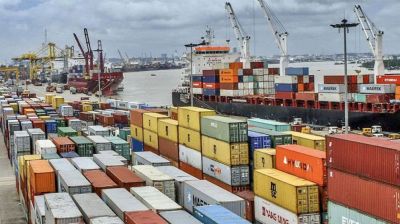
Under the Customs Strategic Plan 2024-28, operations are being modernised with a focus on AI-based fraud detection, planned by early 2027 to curb misdeclaration and revenue leakage.
Significant progress has been made in bond management through the electronic interconnection of ASYCUDA World and BGMEA’s e-Utilisation Declaration (e-UD) system. Simultaneously, the Customs Bond Management System (CBMS) now offers fully online services for Utilisation Permission (UP).
The Bangladesh Single Window (BSW) initiative is also being rolled out to facilitate paperless trade and faster clearance by integrating multiple government agencies into one platform.
Non-Intrusive Inspection (NII) using scanners and advanced technology reduces physical inspections, while the digitised Authorised Economic Operator (AEO) programme allows compliant businesses to use green channels, cutting delays and compliance costs.
VAT automation and Electronic Fiscal Devices
VAT automation remains central to the strategy. The NBR plans to launch a common VAT software for SMEs to directly connect to the e-VAT system for automated returns. Over the next five years, three lakh Electronic Fiscal Devices (EFDs) will be installed to improve transparency and curb underreporting at the retail level.
An online VAT refund module has also been launched, allowing taxpayers to submit, process, and receive refunds directly into their bank accounts.
Strategic digital infrastructure
A flagship project, the nearly Tk1,000 crore World Bank-funded Strengthening Domestic Revenue Mobilisation Project (SDRMP), aims to fully automate NBR operations with systems like e-Audit, e-Tax Office, and e-Support, reducing human intervention and improving service delivery.
A Risk Management Engine is also under development to analyse taxpayer data and automatically select audit files using objective criteria. These reforms align with the 10-year Medium- and Long-Term Revenue Strategy (MLTRS), which envisions moving all NBR activities onto a comprehensive digital platform.
Revenue challenges persist
In several programmes, NBR Chairman Md Abdur Rahman Khan emphasised that the commitment to full digitisation represents a decisive shift in revenue administration, especially as persistent shortfalls continue to constrain fiscal space.
According to officials, mandatory online income tax returns for corporate taxpayers from FY26 are expected to improve compliance, reduce processing delays, and limit discretionary intervention by tax officials.
Official data show revenue collection during July-December stood at Tk1.85 lakh crore, falling short by Tk45,980.37 crore, or 19.88%, of the half-year target of Tk 2.31 lakh crore.
Although revenue rose 14.19% year-on-year in the first six months of FY25 to Tk1.62 lakh crore, it remains insufficient to meet revised targets.
The FY26 revenue target, initially set at Tk4.99 lakh crore, was later revised to Tk5.54 lakh crore by the Budget Monitoring and Resource Committee. Meeting this goal is now seen as a major challenge, making the success of the digitisation drive critical for domestic revenue mobilisation and fiscal sustainability.
Experts call for user-friendly reforms
Dr Mustafa K Mujeri, former chief economist of Bangladesh Bank and executive director of the Institute for Inclusive Finance and Development (InM), welcomed the reforms but stressed that ordinary citizens have yet to fully benefit.
“Consumers are not getting proper advantages from the government’s digitisation plans. All initiatives must be service-friendly,” he said, noting that the NBR’s digitisation system must become more efficient and user-friendly to truly serve taxpayers.