


 For all latest news, follow the Daily Sun's Google News channel.


Energy crisis is a 17-year legacy: Titumir
PM’s adviser says govt is shifting towards solar and renewables to reduce fossil fuel dependence
Daily Sun Report, Dhaka
Published: 30 Aug 2026, 12:00 AM
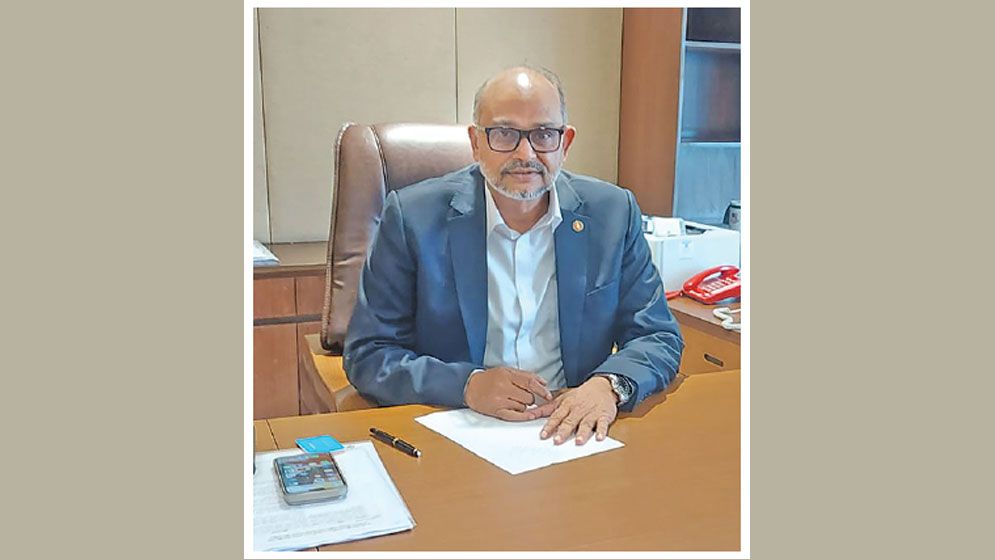
Bangladesh’s ongoing power and energy crisis is the direct result of policies pursued over the past 17 years, Prime Minister’s Adviser on Finance and Planning Prof Dr Rashed Al Mahmud Titumir said Saturday, criticising the past policies for building an import-dependent energy framework.
Speaking at a news briefing at the NEC Auditorium in Dhaka, Titumir emphasised that the government is working to diagnose root causes rather than hide the severity of the crisis.
“The electricity crisis we are facing is a legacy of the previous 17 years,” Titumir said, noting that shifting the national energy mix toward renewables is essential to lowering generation costs and securing long-term energy independence.
To reduce reliance on imported fossil fuels, the government is executing a roadmap to add 2,000 megawatts of solar capacity, backed by a Tk2,000 crore budgetary allocation dedicated to solar development.
Central to the strategy is transforming electricity consumers into active producers through rooftop solar installations and net-metering systems.
Titumir reported that officials have cleared more than 300 stalled net-metering applications, while approximately 200MW of solar power has already been integrated into the national grid.
The government is now developing a financing framework to expand solar generation on a larger scale.
Under the proposed model, institutions such as Infrastructure Development Company Ltd (IDCOL) and Bangladesh Infrastructure Finance Fund Ltd (BIFFL) would provide financing.
A consumer or producer would contribute 20% of the project cost, another institution or aggregator would provide another 20%, and the remaining 60% would come through government-backed loans.
This could bring the interest rate down to around 6%-7%, allowing more consumers to become power producers, Titumir said.
He also highlighted the potential savings from replacing expensive LNG-based power generation with solar energy.
While gas-fired power generation can be relatively inexpensive, electricity generated from LNG can cost as much as Tk64 per unit, he said.
Moving towards 1,000MW of solar power could potentially reduce electricity subsidies by around Tk3,000 crore a year, according to Titumir.
The savings could be redirected to other sectors, while expansion of the solar industry could also create new jobs.
Solar power should not be viewed only as a source of electricity but also as a tool for transforming the rural economy, he said.
“If rural people become involved in solar power generation, they will not remain only consumers but also become producers,” he said, adding that this could improve their economic independence and capacity.
Criticising the previous energy policy, Titumir said Bangladesh had pursued an import-dependent model instead of building sustainable energy security.
He said a patronage-based system had developed in the power and energy sectors under the previous government, leaving the current administration to deal with the consequences.
“We now want to move away from that system and build sustainable energy security,” he said.
10 million jobs targeted
Titumir also spoke about the government’s employment target.
Several government foundations have outlined plans to create around 10 million jobs over the next five years, while combined initiatives could potentially generate more than that number, he said.
However, he stressed that the government’s objective was not simply to announce employment targets but to ensure that jobs were actually created.
Monitoring and evaluation mechanisms would therefore be strengthened, he said.
Economic data under review
The adviser also questioned the accuracy of some of Bangladesh’s economic statistics.
He said a forensic audit was being conducted into national income and national accounts data prepared by the Bangladesh Bureau of Statistics. The figures are being cross-checked against independent sources to determine whether there were discrepancies in previous calculations.
The findings, he said, would help establish the extent of any discrepancies in the country’s economic data.