


 For all latest news, follow the Daily Sun's Google News channel.


Govt eyes AI-driven market surveillance for essentials
• Minister says the system will analyse production, imports, weather, global market trends • AI aims to prevent shortages, price spikes and market instability • Pricing framework for sensitive essentials under consultation with stakeholders • Government plans 2,000 cold storage facilities to boost farm exports
Daily Sun Report, Dhaka
Published: 03 Jul 2026, 11:03 PM
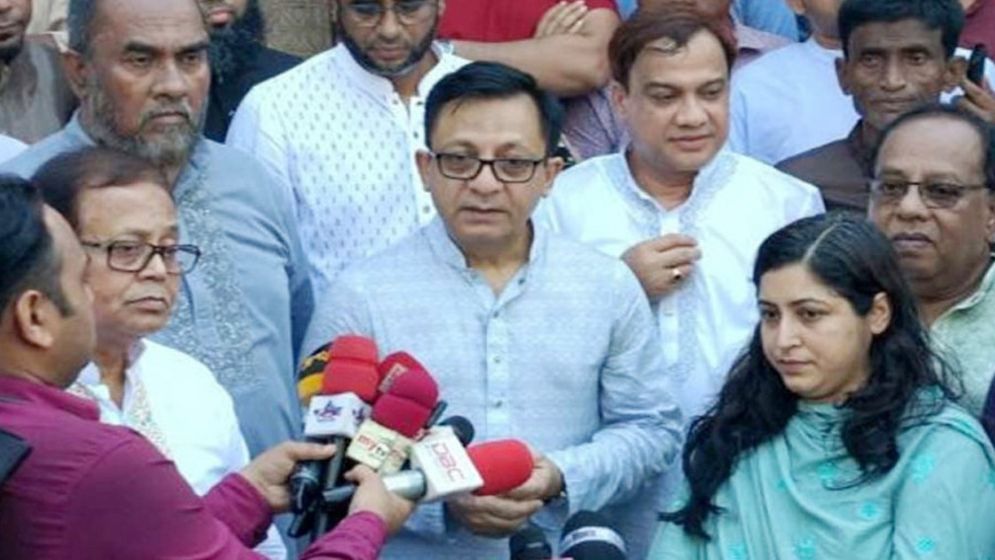
Industries and Commerce Minister Khandaker Abdul Muqtadir is speaking to reporters after a prize-giving ceremony marking National Education Week 2026 at the Sadar Upazila Auditorium in Sylhet on 3 July 2026. Photo: Collected
Industries and Commerce Minister Khandaker Abdul Muqtadir said on Friday that the government is planning to introduce an artificial intelligence (AI)-based monitoring system for 30 essential commodities in a move to strengthen price surveillance, improve market oversight and enable faster policy responses to supply disruptions.
Speaking to reporters after a prize-giving ceremony marking National Education Week 2026 at the Sadar Upazila Auditorium in Sylhet, the minister said several government agencies already monitor commodity prices, but the proposed AI platform would make the process more institutionalised, data-driven and effective.
The system will analyse domestic production, weather-related risks to crop output, global market trends, import requirements and supply chain conditions, allowing the government to anticipate shortages and take timely measures to stabilise markets.
“The AI-based system will make market monitoring more institutional, data-driven and effective. It will help the government respond more quickly to prevent artificial shortages, abnormal price hikes and market instability,” he said.
Responding to a question on commodity pricing, Muqtadir said prices of most goods in Bangladesh are determined by market forces. However, the government is developing a pricing framework for sensitive essential commodities to help maintain market stability. The framework will be finalised after consultations with relevant stakeholders, he added.
On liquefied petroleum gas (LPG), the minister said media reports highlighting instances of retailers charging above the government-fixed price would encourage greater compliance with the official rates.
Commenting on exports, he said slower export growth was a global phenomenon rather than one unique to Bangladesh. The government is also working to restart factories forced to suspend operations because of energy shortages, he added.
The minister said the government had adopted a zero-tolerance policy against drug trafficking and was also working to increase public spending on education and healthcare, with plans to allocate 5 per cent of GDP to each sector.
He said multi-storey service complexes would be established at every upazila parishad to bring major public services under one roof. Teaching centres in tea garden areas would gradually be upgraded into primary schools and, where necessary, secondary schools, alongside new healthcare centres and ambulance services.
Highlighting Sylhet’s export potential, Muqtadir said the government wanted to develop the district into one of Bangladesh’s leading vegetable export hubs.
“Nearly half of Bangladesh’s vegetable exporters are based in Sylhet. However, export potential is being constrained by inadequate packaging and certification facilities,” he said.
To address the problem, he said the Agriculture Ministry was preparing a special project to train farmers in scientific production methods and ensure product traceability in line with international export standards.
The minister also announced plans to build around 2,000 cold storage facilities nationwide to improve the preservation of agricultural produce, with a substantial number to be located in Sylhet.
Earlier in the day, Muqtadir distributed financial assistance from his discretionary fund, handed over wheelchairs to persons with disabilities, distributed goat feed among members of marginalised ethnic communities, participated in a tree plantation programme and attended a Partner Congress organised by the Sadar Agriculture Office.