


 For all latest news, follow the Daily Sun's Google News channel.


India, Bangladesh flag trade barriers in first talks after prolonged gap
Two-way trade was worth $12.36 billion in FY26
Hindustan Times, New Delhi
Published: 12 Oct 2026, 07:05 PM
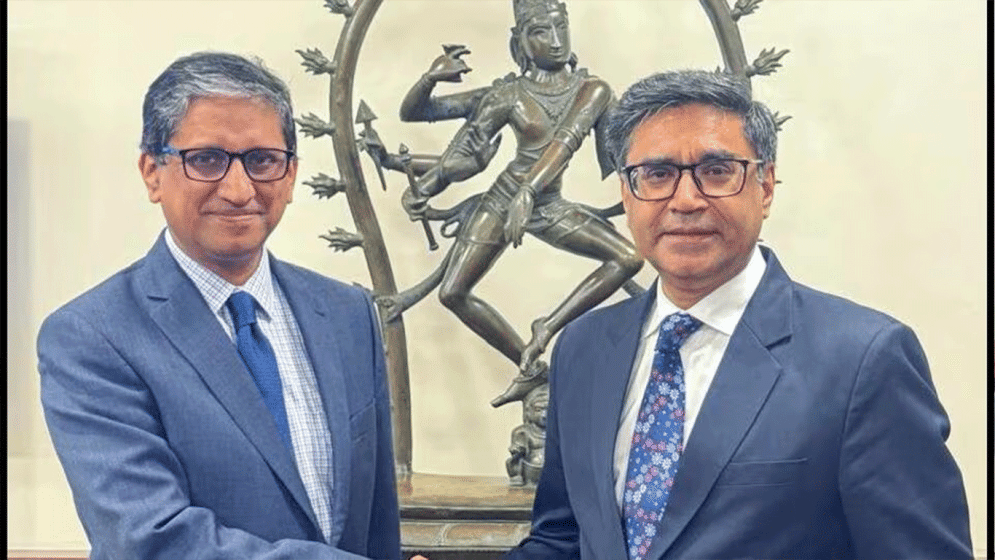
Photo: Collected
Bangladesh called for removal of restrictions on its exports through Indian land ports and withdrawal of anti-dumping duties on jute products and PET film during the meeting of the joint working group on trade held in New Delhi during 8-9 October 8-9, the people said on condition of anonymity.
This was the first meeting of a bilateral joint
working group after a prolonged gap as the two sides work on normalising
bilateral relations, which had witnessed a downslide under the interim
administration led by Muhammad Yunus. The two sides are also working to arrange
meetings of other working groups on issues such as consular matters, Hindustan
Times reports.
The people described the trade talks as positive and
said the deliberations will help prepare for a planned meeting of the commerce
secretaries of the two sides. During the talks, the Indian side raised the
restrictions imposed by Bangladesh’s interim government on Indian cotton
exports, the high import duties on Indian commodities such as fruits, rice,
iron and steel, and Dhaka’s use of positive lists for trade through land border
posts in the northeastern states, they said.
While Bangladesh’s trade with states such as West
Bengal is done on the basis of a negative list, or a small list of items whose
export isn’t allowed, trade with the northeastern states is done on the basis
of a positive list, or a list specifying limited items whose exports are
permitted. The Indian list has for long sought the adoption of a negative list
for the northeastern states to provide a level playing field, the people said.
The Indian side also sought the revival of border “hats”
or markets and integrated check posts and land customs posts that were shut
during the term of the interim government, they said.
The meeting focused specifically on trade barriers,
land port infrastructure and connectivity. The Bangladesh side sought a review
of restrictions on its goods entering India through land ports, including the
withdrawal of anti-dumping duties on jute products and polyethylene
terephthalate (PET) film, and the harmonisation of product standards and
simplification of certification procedures under the Bureau of Indian Standards
(BIS).
The Bangladesh side also sought the retention of
existing tariff preferences for its products following the country’s graduation
from the least developed country (LDC) status.
The discussions focused on regional freight
movement, with Bangladesh seeking greater access for its trucks going to Nepal
and Bhutan through Indian territory. It also called for better infrastructure
at Indian land customs posts, including access roads, warehouses, and
quarantine facilities, and increased land port capacity and faster cargo
clearance. These measures will help reduce delays and the cost of
transportation, the people said.
Two-way trade was worth $12.36 billion in FY26, with
India’s exports accounting for $10.58 billion. The people said the Bangladesh
side is unlikely to take steps to ease restrictions for Indian exports in view
of the current deficit in trade.