


 For all latest news, follow the Daily Sun's Google News channel.


Indian high commissioner urges Bangladesh to get away from past events
The high commissioner also pointed to India’s “Neighbourhood First” policy as a reflection of New Delhi’s importance to its relationship with Bangladesh
Daily Sun Report, Dhaka
Published: 18 Aug 2026, 11:55 PM
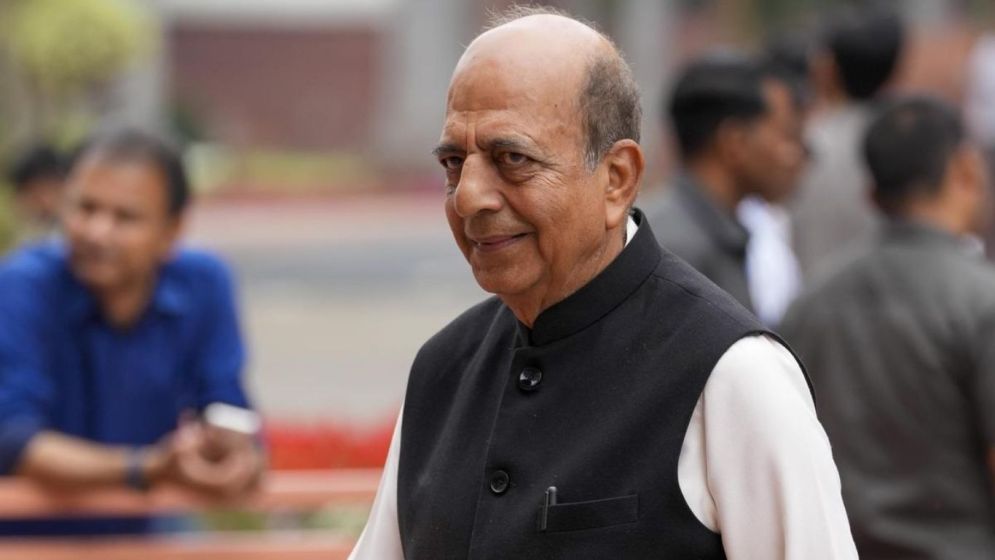
File Photo
Indian High Commissioner to Bangladesh Dinesh Trivedi on Tuesday called for a renewed effort by the two neighbours to overcome existing differences and rebuild bilateral ties on the foundation of “mutual and unconditional trust".
Trivedi also stressed the importance of the future
relations to reflect the hopes and aspirations of the two countries’ young
generations.
“We need to get ourselves together. Move on. I’m not
telling you to forget the past, but keep the past and sort out the differences
of the past. But move on. Don’t get stagnant,” he said while addressing a
reception hosted in honour of leading Bangladeshi business leaders and a
visiting delegation of the Confederation of Indian Industry (CII) at a hotel in
the capital.
State Minister for Foreign Affairs Shama Obaed Islam
and Director General of CII Chandrajit Banerjee also addressed the reception,
sharing their views on strengthening Bangladesh-India relations.
Trivedi said Bangladesh and India are both
aspirational nations, with their young populations seeking greater
opportunities, prosperity and a better quality of life.
He said, “The day I came in, I just walked in,”
describing it as a symbol of the close connection between the two countries.
He identified “mutual and unconditional trust” as
the key foundation for any enduring relationship.
“Friends really understand each other’s issues, and
we are not friends if we don’t understand,” he said, stressing the importance
of understanding each other’s concerns.
While acknowledging that differences exist between
the two neighbours, the high commissioner said these could be addressed through
sustained engagement and dialogue.
“I can tell you I fully understand there are issues,
but these issues can definitely be sorted out once the Prime Minister of
Bangladesh Tarique Rahman and our Prime Minister Narendra Modi meet,” he said.
The envoy also conveyed the Indian prime minister’s
assurance that Bangladesh’s prime minister would receive a warm and honourable
welcome during a future visit to India.
“After meeting the prime minister in Dhaka, I went
straight to Delhi and had a great meeting with our prime minister. He (Modi) just
mentioned one thing: we need to meet,” he said.
Citing Modi, Trivedi added, “You can tell them on my
behalf that you have the Indian prime minister’s assurance that when the prime
minister of Bangladesh visits India, he will have such an honourable reception
as he deserves.”
Describing the proposed visit as an opportunity to
reset ties, he said it would be “a memorable visit” with the potential to
deliver tangible benefits to people and businesses in both countries.
Emphasising the importance of economic and people-to-people
connectivity, the high commissioner said the private sector could play a vital
role in bridging differences and strengthening bilateral relations.
“No government in the world can provide everything.
It always needs the private sector,” he said, appreciating the contributions of
business communities in both countries.
He identified people-to-people contacts, employment,
education and healthcare as key areas where Bangladesh and India could further
expand cooperation.
The high commissioner also pointed to India’s
“Neighbourhood First” policy as a reflection of New Delhi’s importance to its
relationship with Bangladesh.
Acknowledging that Bangladesh-India relations have
experienced “hiccups” at different times, Trivedi said such temporary
difficulties should not be allowed to overshadow the longstanding ties between
the two neighbours.
He emphasised the deep-rooted connections between
the two countries, saying, “We have shared history, we have shared culture, and
this is where we need to foster.”
The high commissioner also spoke highly of
Bangladesh’s prime minister, describing him as “a people’s person”. He noted
that Indian Prime Minister Narendra Modi was the first foreign leader to
congratulate Tarique Rahman following his landslide electoral victory and was
also the first to invite him to India.
Trivedi said a series of recent high-level
engagements, including visits by the Indian external affairs minister and Lok
Sabha speaker, along with his own posting in Dhaka, demonstrated New Delhi’s
strong interest in further strengthening bilateral relations.
“There are issues,” he said, adding that Indian
officials have been working closely with Bangladesh’s ministers in recent weeks
to address differences and understand the concerns of the Bangladeshi people.
Turning his attention to Bangladesh’s younger
generation, High Commissioner Trivedi said the country’s youth had endured
considerable struggle and sacrifice and now deserved greater opportunities to
pursue peace, prosperity and a better future.
“This is a new Bangladesh, and this new Bangladesh
has the youth. And youth has also gone through a lot of struggle and a lot of
sacrifice,” Trivedi said.
Urging the business communities of Bangladesh and
India to play a greater role in strengthening bilateral cooperation, the high commissioner
called for a joint effort to take the relationship forward.
“Let’s have this journey together,” Trivedi said,
expressing hope that this would be a golden chapter in the history of the
relationship between India and Bangladesh.
The high-level Indian business delegation from the
Confederation of Indian Industry (CII) is scheduled to leave Dhaka on Wednesday
morning.
Led by CII Director General Chandrajit Banerjee, the
delegation includes 14 business leaders from leading Indian companies and
institutions, including Bharat Biotech, Infravision Foundation, Godrej
Industries, Arvind Limited, LMW Global, Mahindra Group, Larsen & Toubro
(L&T), Forbes Marshall, Numaligarh Refinery Limited, Apollo Hospitals and
Indian Oil Corporation, as well as officials from the CII Secretariat.