



 For all latest news, follow the Daily Sun's Google News channel.


PUBLIC EXPECTATIONS FROM AN ELECTED GOVERNMENT – LAST PART
Will tolerance, good governance and a healthy society remain mere slogans?
Special Correspondent, Dhaka
Published: 03 Feb 2026, 12:00 AM
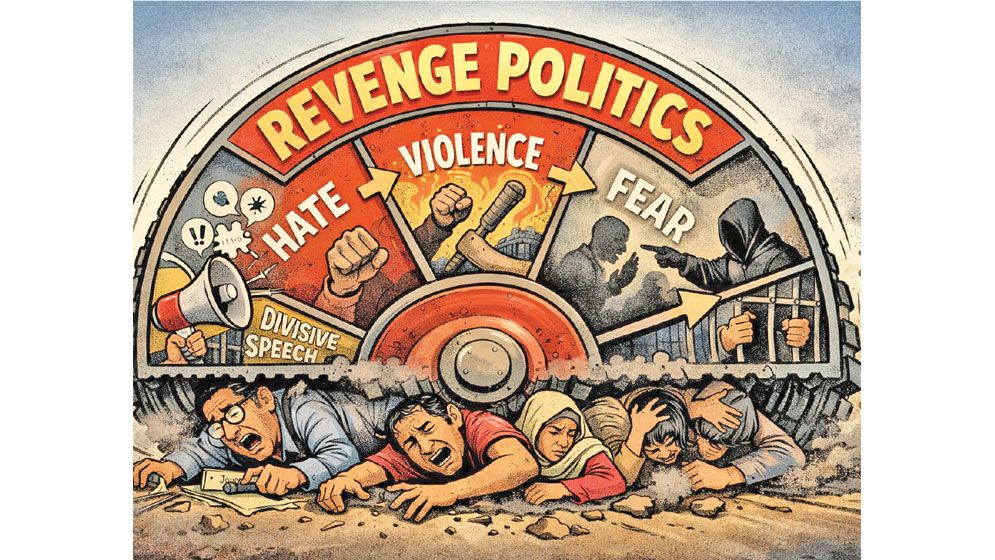
Bangladeshi society is becoming increasingly intolerant and violent. The idea that “might makes right” has slowly shifted from being an exception to becoming a norm.
Suppression of dissent and the mindset of eliminating opponents have spread alarmingly. Intolerance has existed in the country for a long time, but during the fifteen years of Awami League rule it reached its most extreme form, driven by politics of vengeance.
All limits were crossed in silencing dissent. Anyone who criticised the government risked enforced disappearance, a reality now detailed in the recently published report of the Commission on Enforced Disappearances.
Criticism was not limited to the government itself. Even questioning those who acted as its enforcers was unacceptable. Media organisations were attacked for exposing widespread corruption and irregularities. During this period, former inspector general of police Benazir Ahmed accumulated enormous wealth while holding public office. An investigative report by Kaler Kantho on his illegal assets caused nationwide outrage. In response, eight cases were filed against the Bashundhara Group, none of which had any legal basis and were clearly intended to harass. There are many similar examples.
Criticism on social media was also met with repression. Those who spoke out faced persecution. Many were jailed, some disappeared, and others were killed. This environment of fear gradually shaped an intolerant society. At the same time, drug abuse spread across the country. Drug syndicates flourished under political patronage, and armed groups emerged in many areas with state backing.
On 5 August, people protested against these injustices, leading to the fall of the Awami League government after fifteen years in power. Carrying the dream of a new Bangladesh, people demanded change. Yet that promise remains unfulfilled. Social instability has not declined, and public safety has not improved. Instead, the country is now facing a new wave of mob violence. Teenage gangs have become more dominant, and new criminal groups have emerged under fresh political protection. Intolerance has grown even more dangerous.
Media outlets are again under attack for expressing dissenting views, with offices vandalised and set on fire. Acts of mob violence have resurfaced, reflecting a breakdown in social order. Ordinary citizens now find themselves hostage to a handful of newly empowered groups.
As the country moves towards another election, a new government will soon assume office. One of its most important responsibilities will be to reduce social instability, ensure public safety and establish good governance. To do so, it must act decisively from the outset.
Zero tolerance towards mob violence must be established. No individual or group should be allowed to take the law into their own hands under any circumstances. Those involved in mob attacks must face firm and visible legal action.
Freedom of expression must be guaranteed. A climate of fear has taken deep root in society and must be dismantled. Citizens must feel safe to express dissenting views without fear of repression. Free thought and open debate are essential for a healthy democracy.
The language of politics must also change. One of the greatest sources of social intolerance in Bangladesh is the aggressive and dehumanising tone of political discourse. For years, political opponents have been portrayed as enemies, particularly during election periods. Incendiary speeches by political leaders fuel violence at the grassroots level, and ordinary people pay the price. If the new government sends a clear message of tolerance from the top and rejects revenge-driven politics, that message will gradually filter through society. When politics becomes restrained, society begins to calm.
Breaking the culture of impunity is equally critical. Violence persists largely because criminals are often shielded by political identity. When people see that offenders escape punishment due to party affiliation, violence becomes normalised. The new government must make it clear that criminals have no party. Justice must be swift, impartial and visible in cases of political violence, attacks on minorities and acts of retaliation. Filing cases is not enough; justice must be delivered and seen to be delivered.
The security of minority communities must receive special attention. Preventive measures in vulnerable areas, rapid rehabilitation after attacks and firm action against perpetrators are essential. The state must also avoid denying or downplaying such incidents. When the government stands clearly with victims, trust in the state is restored.
The morale of law enforcement agencies must be rebuilt. After 5 August 2024, many members of the force became fearful and demoralised. Restoring their confidence is vital for maintaining public order. At the same time, law enforcement must act professionally and impartially. Political interference and selective enforcement erode public trust. Accountability and respect for human rights within the force are necessary for lasting peace.
Rumours and misinformation have become major drivers of intolerance, particularly on social media. By exploiting religious sentiments and political or ethnic divisions, violence can erupt within moments. The government must counter false information with swift and credible communication. Hate propaganda must be restrained without silencing legitimate voices. Promoting truth, rather than suppressing expression, should be the goal. Improving digital literacy is also essential.
The politics of dialogue must be revived. In the absence of dialogue, conflict becomes inevitable. Regular communication with opposition parties, civil society and social leaders can significantly reduce tensions. Accepting dissent as a normal part of democracy, rather than treating it as anti-state activity, will demonstrate political maturity. Dialogue is the alternative to violence, and compromise is the foundation of stability.
Young people must be brought back to educational institutions. Since August 2024, many campuses have lacked a proper learning environment. Instability and extremist tendencies among students are increasing. The elected government must urgently restore a healthy academic atmosphere and ensure that students return to classrooms.
Finally, building a drug-free society is essential. The spread of drugs is one of the deepest causes of social decay, and drug networks have long been linked to those in power. This link must be severed. Preventing drug abuse among the younger generation is crucial, because without a healthy youth, no national vision can succeed.
After the election, curbing intolerance and violence will be a defining test for the new government. Meeting this challenge requires justice, dialogue and political will, not simply the use of force. A peaceful society is not created overnight. It is built through fair governance, responsible political language and public trust. If the new government truly seeks to build a tolerant Bangladesh, it must choose justice and humanity over intimidation and power. History shows that power may endure through violence, but a nation can only move forward through peace and unity.
Read More