


 For all latest news, follow the Daily Sun's Google News channel.


Iran hits Israel amid mixed signals over talks to end war
Agencies, Tehran, Beirut, Washington
Published: 25 Mar 2026, 12:00 AM
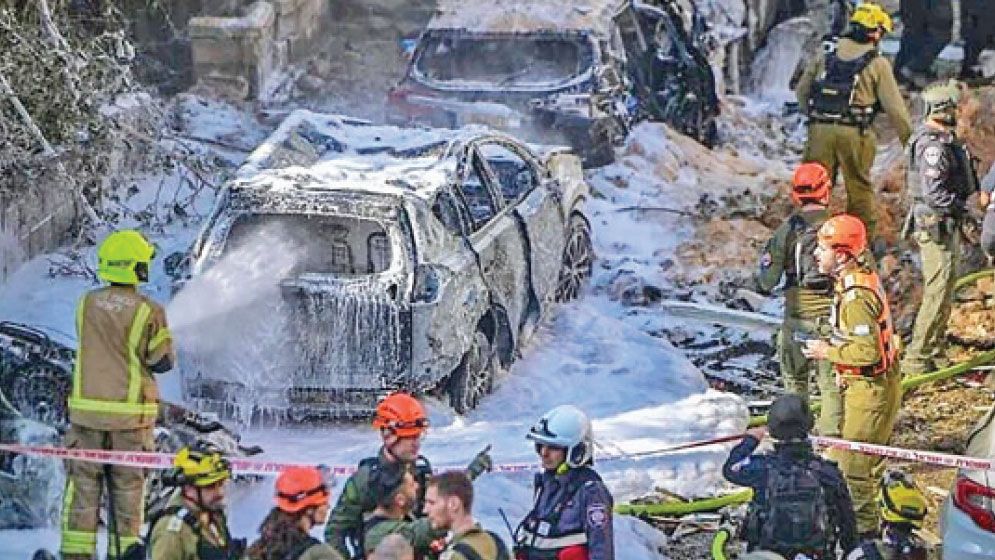
Israeli security and rescue forces respond at the site of an Iranian missile strike in Tel Aviv, Israel, on Tuesday. AP Photo
Iran launched waves of missile attacks at Israel on Tuesday, even as conflicting signals emerged over potential talks aimed at ending the ongoing conflict across the Middle East.
The escalation came a day after US President Donald Trump said there had been “very good and productive” discussions regarding a possible ceasefire. However, Iranian officials denied that any formal negotiations had taken place, insisting that no talks had occurred. Three senior Israeli officials, speaking on condition of anonymity, said Trump appeared determined to reach a deal but believed Iran would be unlikely to accept US demands in any new round of negotiations.
Trump also said his special envoy Steve Witkoff and adviser Jared Kushner had been engaged in discussions with a senior Iranian official, with talks expected to continue through intermediaries. A European official confirmed that while no direct negotiations had taken place, Egypt, Pakistan and Gulf states were relaying messages between the two sides. There were also indications that US officials could meet Iranian counterparts in Islamabad as part of ongoing indirect diplomatic efforts.
Iran sends waves of missiles into Israel
Iranian missiles triggered air raid sirens in Tel Aviv, where a multi-storey residential building sustained significant damage. It remained  unclear whether the destruction resulted from a direct hit or debris from an interception. Israeli emergency services said they were searching for civilians trapped inside the building.
Israel carried out airstrikes on Beirut’s southern suburbs, targeting what it described as infrastructure used by the Iran-aligned Hezbollah group. Lebanese authorities reported that at least three people were killed in a strike on a residential area southeast of the capital.
Regional spillover and escalation across the Gulf
Elsewhere in the region, the conflict widened. In Kuwait, power outages occurred after electrical lines were damaged by debris from air defence systems. Missile alert sirens sounded in Bahrain, while Saudi Arabia said it intercepted 19 Iranian drones targeting its oil-rich Eastern Province. The United Arab Emirates also reported intercepting five ballistic missiles and 17 drones launched from Iran.
The US and Iran have also intensified their rhetoric over the strategic Strait of Hormuz. President Trump postponed a plan to strike Iranian energy infrastructure, extending a deadline for Tehran to reopen the waterway, which is critical for global oil shipments. Iran, however, has warned it may target vessels linked to the US and its allies if attacked, and has previously suggested it could disrupt shipping or mine the Arabian Gulf if US forces attempt a military landing.
The Israeli military said it carried out a large wave of airstrikes in Tehran, targeting command centres linked to the Islamic Revolutionary Guard Corps (IRGC), including intelligence facilities and positions associated with Iran’s security apparatus.