


 For all latest news, follow the Daily Sun's Google News channel.


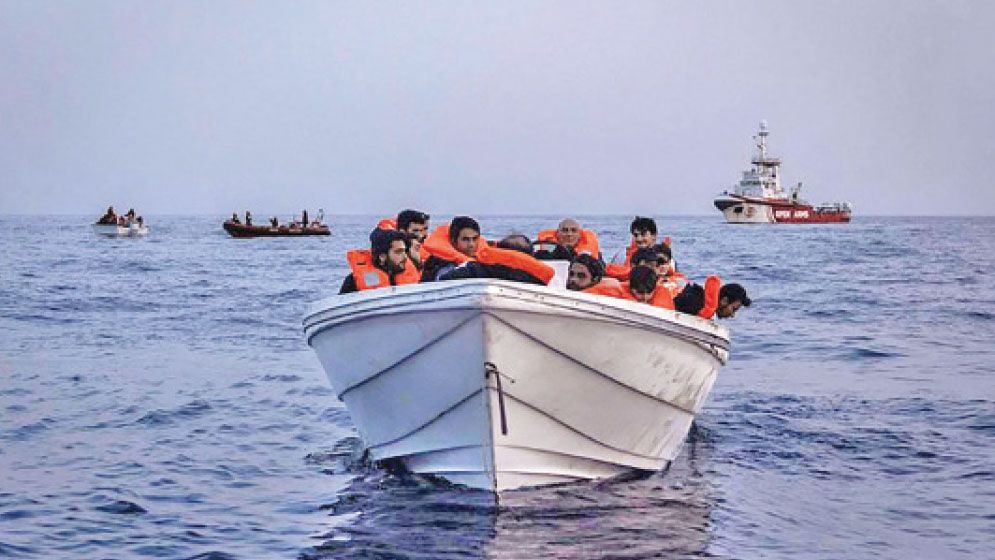
As major overseas labour markets become increasingly inaccessible to Bangladeshis, job seekers are turning to brokers, creating greater opportunities for trafficking networks that operate with little fear of prosecution due to weak legal enforcement and slow judicial processes.
Consequently, the number of repatriated irregular workers and the bodies of victims continues to rise, with many having faced deception, abuse, or torture overseas, particularly in Libya. Meanwhile, their families and fellow survivors endure distress and uncertainty.
Migration experts observe that the government must encourage the private sector to generate employment and explore new destinations for Bangladeshi workers, in addition to bringing perpetrators involved in trafficking gangs to justice.
“Human trafficking in Bangladesh has continued unabated for two reasons. Firstly, the number of international destinations for Bangladeshi workers has decreased significantly, limiting options for legal migration. Secondly, the syndicates involved in human trafficking rarely face punishment due to delays in trial proceedings,” migration expert Asif Munier told the Daily Sun.
“If you look at the human trafficking trends in our country, the routes to Malaysia and Libya are two crucial channels of this crime. In particular, the tendency to send workers to Italy and Greece via Libya, crossing the Mediterranean, has escalated in recent years. The police must play a proactive role in arresting criminals to curb this,” he added.
The government has no specific data on the number of returning Bangladeshi workers. However, according to the Expatriates’ Welfare Desk at Hazrat Shahjalal International Airport, around 70,000 Bangladeshi workers returned from different countries last year.
Crucial labour markets such as the UAE, Malaysia, Qatar, Oman, Bahrain, Iraq, Egypt, and Romania have either closed or contracted.
Wave of job seekers persists
The first two months of 2026 recorded a historically high number of migrant deaths in the Mediterranean, even as fewer people attempted the journey to Europe, according to data from the International Organization for Migration.
At least 655 people (excluding the deaths of 22 migrants, including 18 Bangladeshis) died or went missing in January and February – more than twice the 287 reported during the same period last year.
Bangladesh has emerged as the leading country of origin for people attempting to reach Italy and Greece by crossing the Mediterranean via Libya, according to Frontex, the European Union’s border agency.
Approximately 100,000 Bangladeshis have travelled to Europe through this route, with many others perishing during the dangerous journey between 2009 and 2024.
A recent report by the Mixed Migration Centre (MMC) also highlights that thousands of Bangladeshi youths lose everything each year in pursuit of a better life, and many even lose their lives.
According to MMC estimates, the annual market value of the Bangladesh–Libya–Italy smuggling route is around 160 to 190 million US dollars (138 to 164 million euros).
Each migrant is charged between 10,000 and 17,000 US dollars for the journey. Families in rural and semi-urban areas of Bangladesh often raise this money by selling land or taking high-interest loans, which smugglers view as a “guaranteed investment”.
People from at least 10 to 12 districts in Bangladesh, including Madaripur, Shariatpur, Sylhet, and Sunamganj, are desperately trying to reach Europe through this route.
On the other hand, over 50,000 undocumented Bangladeshi aspiring workers have voluntarily returned from Libya since 2011. According to the Labour Welfare Wing of the Bangladesh Embassy in Tripoli, around 8,000 Bangladeshis have been repatriated to Dhaka from June 2023 to date.
State Minister for Expatriates’ Welfare and Overseas Employment Nurul Haque Nur expressed concern over the issue.
“Travelling to Europe via Libya is extremely risky. We are working with the IOM to raise awareness and are arranging the return of those stranded in Libya. The government is emphasising the development of skilled manpower through BMET and language training so that Bangladeshi workers can work in Europe with dignity through regular and legal channels,” he told the Daily Sun.
Cases filed, justice remains elusive
A total of 4,546 cases were filed on human trafficking charges from 2019 to January this year. Some 19,280 individuals have been named as accused in these cases, according to the Ministry of Home Affairs and the Bangladesh United Nations Network on Migration (BDUNNM) Counter-Trafficking in Persons Technical Working Group.
Following the completion of judicial proceedings, only 157 individuals were convicted. Among them, 24 received life sentences, while 133 were given varying terms of imprisonment. This means that less than 1% have been brought to justice.
Despite the severity of the allegations in these cases, there is no notable instance of exemplary punishment. In fact, over the past six years, 3,141 accused individuals in human trafficking cases have been acquitted, with the highest number of acquittals recorded in 2023 and 2024.
Strong coordination between ministries vital
Migration experts have repeatedly blamed the lack of coordination between different ministries for the failure to prevent human trafficking and ensure justice in related cases.
No representatives from the Ministry of Law, Justice and Parliamentary Affairs, the Ministry of Expatriates’ Welfare, the Ministry of Foreign Affairs, or the Ministry of Overseas Employment were available to comment on the matter.
Assistant Inspector General (Media) of Police AHM Shahadat Hossain described human trafficking as an international and organised crime involving networks of racketeers, brokers, and collaborators abroad.
“Poverty, unemployment, the desire to migrate, and the lure of fraudulent job offers are all challenges in controlling human trafficking. Often, victims themselves approach brokers through family or relatives, which makes collecting evidence and testimony difficult. Because international legal procedures are lengthy and complex, swift trials are often not possible,” he told the Daily Sun.
The reporter can be reached at: [email protected]