


 For all latest news, follow the Daily Sun's Google News channel.


Dhaka wants new Ganges treaty, not renewal: Anee
Daily Sun Report, Dhaka
Published: 25 Sep 2026, 12:00 AM
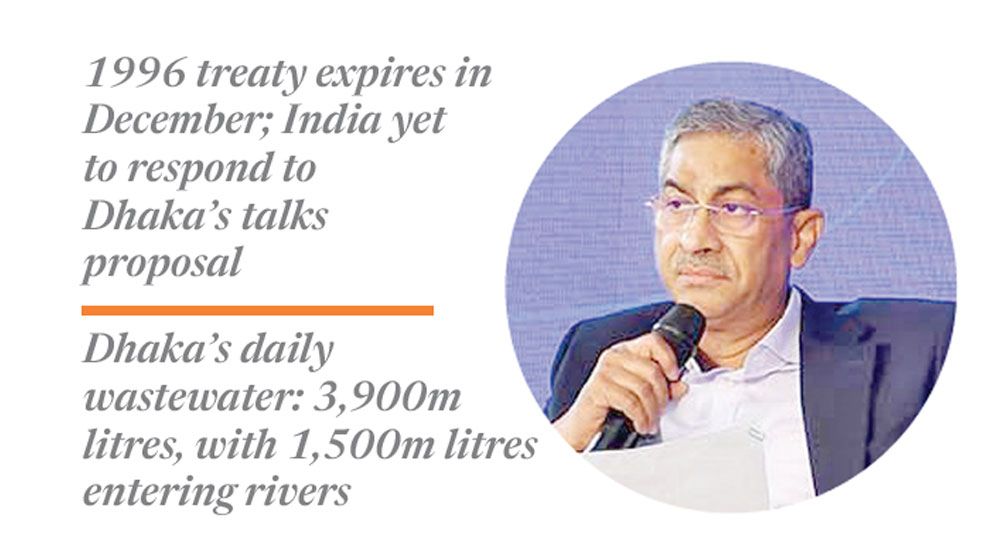
Water Resources Minister Md Shahiduddin Chowdhury Anee said on Thursday that Bangladesh wants to negotiate a new Ganges Water Sharing Treaty with India rather than simply renew the existing agreement.
The new treaty should include a guarantee clause to protect the country’s water rights, he added.
“We want a new agreement that protects Bangladesh’s national interests,” he told a high-level event in Dhaka on river pollution control, conservation and management of the rivers surrounding the capital.
The 30-year Ganges Water Sharing Treaty, signed on 12 December 1996, governs the sharing of dry-season flows at the Farakka Barrage. The river is known as the Padma in Bangladesh. The treaty expires this December.
Formal renewal talks have yet to begin publicly. Dhaka has proposed negotiations to New Delhi and is awaiting a response.
Anee has previously said Bangladesh wants the guarantee clause restored. A similar provision was part of the 1977 Ganges Water-Sharing Arrangement but was not retained in the 1996 treaty. Dhaka is also seeking stronger provisions on access to information and more reliable dry-season flows.
Under the current treaty, water is shared from 1 January to 31 May according to the flow measured at Farakka. It also contains provisions for periods of reduced flow.
The minister said the government was reviewing existing water-sharing arrangements with India. He also called for a stronger Joint Rivers Commission and integrated river-basin management involving the countries that share the region’s major river systems.
Anee said Bangladesh’s rivers are vital to its economy, environment and livelihoods but face growing pressure from industrialisation and climate change. He said the government treats river protection as a priority and called for the root causes of pollution to be identified.
He said the Buriganga, Turag, Balu, Shitalakkhya and Dhaleshwari must be protected from pollution and encroachment.
No single ministry or agency can control river pollution alone, he said, and he called for coordinated action by the Water Resources, Environment, Shipping, Local Government and Industries ministries, city corporations, Rajuk and other agencies. He also urged the protection of canals and water bodies connected to rivers, and the restoration of their connectivity where necessary.
The event was told that Dhaka generates about 3,900 million litres of wastewater daily, of which about 1,500 million litres flows into rivers. Team Europe organised the event, which government officials, development partners and diplomatic missions attended.