


 For all latest news, follow the Daily Sun's Google News channel.


Nobel in medicine awarded for studyon mysteries of brain
US-German trio wins the prize this year
Agencies, Stockholm
Published: 06 Oct 2026, 12:00 AM
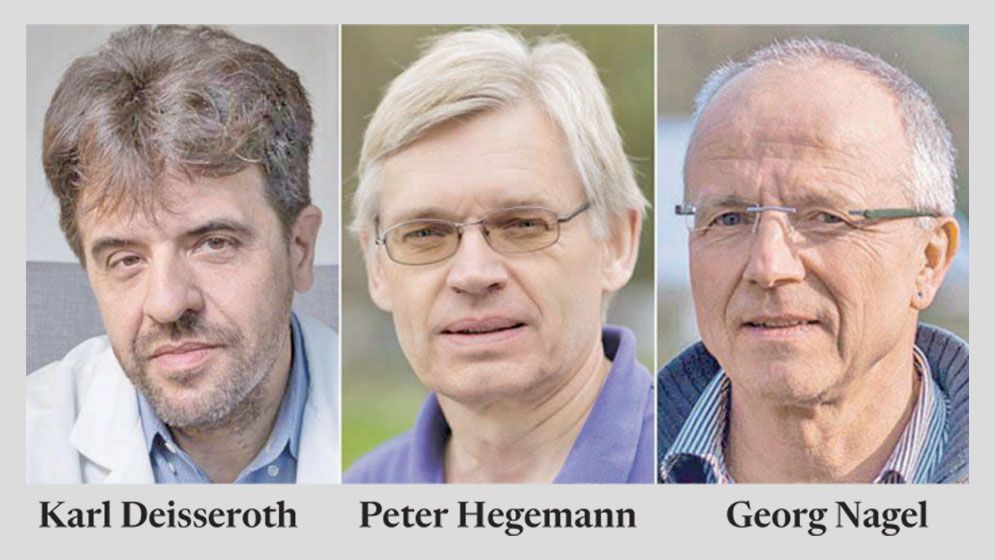
The 2026 Nobel Prize in physiology or medicine was awarded to three scientists from the US and Germany for their work on investigating the mysteries of the brain.
Karl Deisseroth of both Howard Hughes Medical Institute and Stanford University, Peter Hegemann of the Humboldt University of Berlin, and Georg Nagel of the University of Würzburg have been awarded the prize for developing a technique to decode the inner workings of the brain.
Their pioneering work in the neuroscience field of optogenetics has helped scientists learn more about the inner workings of the brain, to better understand how the human mind works.
The Nobel Assembly of Sweden's Karolinska Institute said Deisseroth, 54, Hegemann, 71, and Nagel, 73, were selected for their "discoveries concerning light-gated ion channels and optogenetics." They will share a prize sum of 12 million Swedish crowns ($1.2 million).
"This method makes it possible to switch on, or off, the activity of individual nerve cells in a living brain," said Thomas Perlmann, Secretary-General of the Nobel Assembly at Karolinska Institutet.
"This method is now being used in laboratories around the world to reveal the brain's mysteries," he said.
The breakthrough began in the early 1990s when Hegemann investigated how the alga Chlamydomonas reacts to light in half a millisecond. He hypothesised that a single protein both captured light and acted as an ion channel.
Nagel tested this hypothesis by injecting Chlamydomonas genes into frog eggs, discovering channelrhodopsin-2, a light-sensitive ion channel.
In 2003, they published findings that this protein could be introduced into human and hamster cells to generate electrical impulses using light. At Stanford, Deisseroth demonstrated the technique in rat nerve cells two years later, and the method was named optogenetics in 2006.
Perlmann said all three laureates were "surprised and delighted" when informed of the award.
"All three said the same thing — that they thought it was absolutely wonderful to receive the prize together, calling each other friends. That it's such an honour to receive it together."
The trio's research is already providing insights about brain disorders. Animal models are being used to understand schizophrenia, Alzheimer's disease, Parkinson's disease, epilepsy and addiction — conditions that affect millions of people worldwide and have limited treatment options.