



 For all latest news, follow the Daily Sun's Google News channel.


Youth demand protection from harmful effects of nicotine products
According to the Indian Society for the Study of Lung Cancer, e-cigarettes may also pose a risk of developing “popcorn lung”
Daily Sun Report, Dhaka
Published: 10 Aug 2026, 08:39 PM
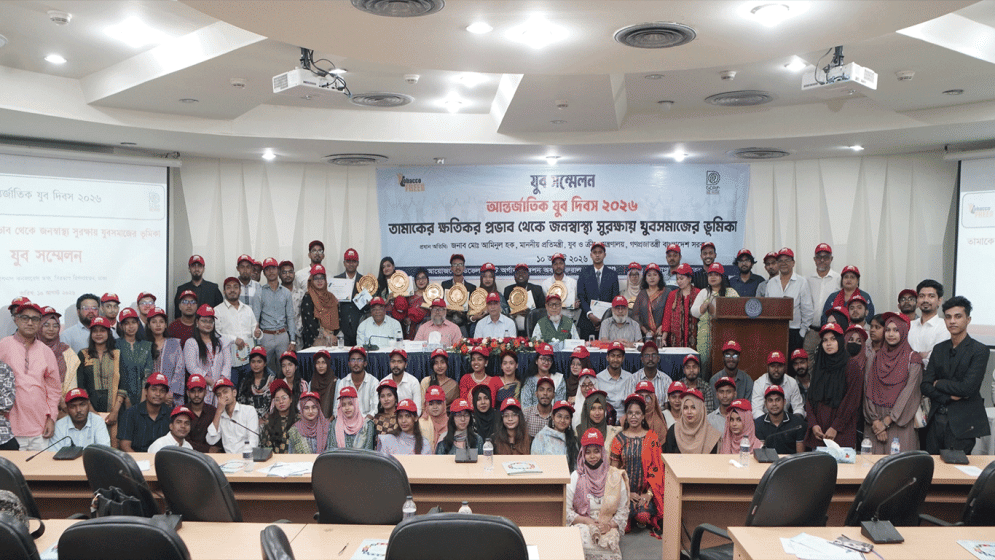
Photo: Daily Sun
Anti-tobacco youth advocates of the Development Organisation of the Rural Poor-DORP have demanded protection for young people from the harmful effects of e-cigarettes and nicotine pouches, along with the prompt formulation of rules under the Smoking and Tobacco Products Usage (Control) Act, 2005 (amended in 2026).
The demand was made by more than a hundred
anti-tobacco youth advocates at a youth conference titled “The Role of Youth in
Protecting Public Health from the Harmful Effects of Tobacco,” organised by the
Development Organisation of the Rural Poor-DORP at the CIRDAP Auditorium in the
capital on Monday morning, marking International Youth Day 2026.
Md Akhter-Uz-Zaman, director general of the National
Tobacco Control Cell, attended the event as chief guest. He said that one of
the key commitments of the current government’s election manifesto is to ensure
public health protection and effective tobacco control.
Akhter-Uz-Zaman added the youth of the country are
the main force of future leadership. Therefore, it is essential to protect the
younger generation from the harmful effects of new nicotine products, including
e-cigarettes and nicotine pouches.
He further said the concerns and demands raised by
youth advocates regarding the potential health risks of these products need to
be viewed from the perspective of public health protection. He expressed hope
that government cooperation and support would continue for such youth
initiatives.
In his welcome address, DORP Chairman Mohammad Nurul
Amin said that at least 16 countries, including Singapore, France, Belgium, the
Netherlands, and Russia, have banned nicotine pouches to protect public health
and safeguard young people from nicotine addiction.
However, taxes have been imposed on nicotine
pouches, nicotine granules, and heated tobacco products (HTPs) in Bangladesh’s
budget for the 2026–27 fiscal year, which could create opportunities for the
expansion of these products in the market and increase the risk of nicotine
addiction among young people, he added.
He further said the discussions regarding the
potential health risks of new nicotine products and their impact on young
people are important considerations for policymakers.
In his address, DORP Founder and Chief Executive AHM
Noman said that nearly 200,000 people die prematurely every year in Bangladesh
due to tobacco-related diseases. In 2024, the health and environmental costs
caused by tobacco amounted to approximately Tk87,000 crore, more than twice the
revenue generated from the sector.
According to the World Health Organization, young
people who use e-cigarettes are three times more likely to subsequently become
addicted to conventional cigarettes or other tobacco products. In this context,
Noman emphasised the need to strictly enforce the amended Tobacco Control Act
2026, with the highest priority given to public health protection, and to take
effective measures to prevent the expansion of new and emerging nicotine
products.
The youth advocates said nicotine pouches contain
high levels of nicotine, which can cause severe addiction and increase risks to
brain development among children and adolescents, as well as cardiovascular and
other health risks.
Similarly, e-cigarette aerosols or vapour may
contain harmful chemicals such as formaldehyde, arsenic, lead, and propylene
glycol, which can increase the risk of serious lung diseases such as EVALI.
According to the Indian Society for the Study of
Lung Cancer, e-cigarettes may also pose a risk of developing “popcorn lung.”
Therefore, to protect children, adolescents, and
young people, the youth advocates demanded a ban on the production, import,
marketing, and sale of nicotine pouches, e-cigarettes, and other emerging
nicotine products.
They also called for strict legal measures to
prevent the promotion and easy availability of such products, as well as the
prompt formulation of rules under the amended Tobacco Control Act 2026.