


 For all latest news, follow the Daily Sun's Google News channel.


Migrants recover only 12%-15% of migration costs thru’ arbitration
OKUP study finds 61% of 85 complaints still pending
Daily Sun Report, Dhaka
Published: 26 Nov 2026, 12:00 AM
Migrant workers who seek redress for recruitment fraud and workplace exploitation through Bangladesh's official grievance mechanism recover only 12-15% of their migration costs, while most complaints remain unresolved, a new study has found.
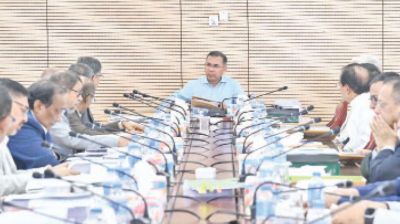
The study, "Justice by Procedure? A Legal and Institutional Audit of BMET Arbitration for Migrant Workers in Bangladesh", was conducted by the Ovibashi Karmi Unnayan Program (OKUP) and unveiled at a hotel in Dhaka on Wednesday. It tracked 85 complaints filed with the Bureau of Manpower, Employment and Training (BMET) between November 2024 and June 2026, from filing through hearings, settlement and payment of compensation. Some 61% of them were still pending.
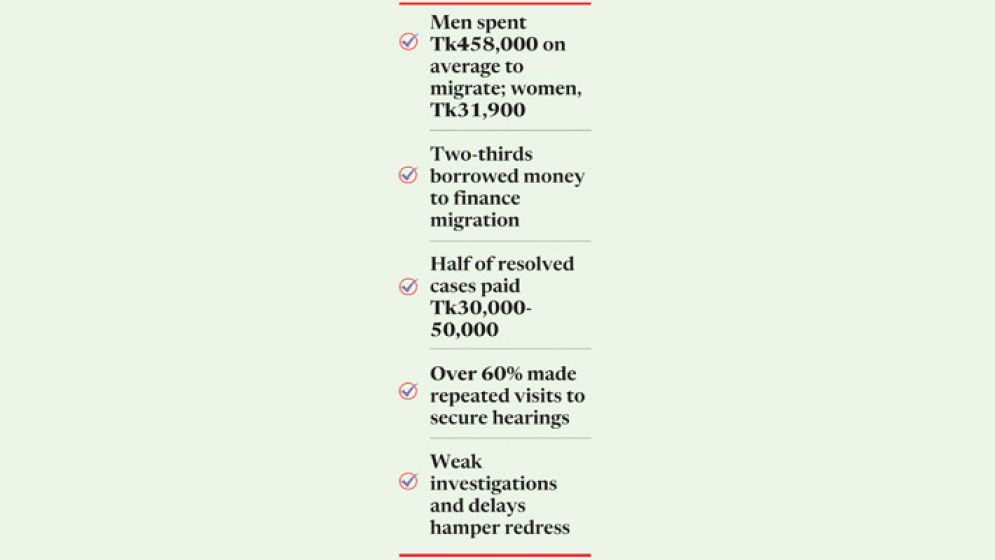
According to OKUP, mediated compensation covered about 15% of average migration costs for men and 12% for women. Male complainants spent Tk458,000 on average to migrate, against Tk31,900 for women. Around two-thirds financed their migration with loans from banks, microfinance institutions and local moneylenders, often paying interest. Many also lost money through unpaid wages, work permits, workplace injuries and return travel.
Of the 28 complaints classified as resolved, half ended in settlements of Tk30,000-50,000. Among women, 71% received less than Tk30,000. The study documented cases in which workers felt pressured to accept far less than their losses after prolonged delays and repeated visits to government offices.
One male worker, who spent about Tk450,000 to go to Saudi Arabia, told researchers he was left without work for months after arrival and depended on his family. At the arbitration hearing, the recruiting agency offered him Tk75,000, while he demanded at least Tk150,000. The agency later stopped attending hearings and ignored his calls. After repeated visits to the District Employment and Manpower Office, he accepted the lower offer, fearing he could lose even that if the case went to the central BMET.
The study identified inadequate investigation, procedural delays, unequal participation and weak enforcement of compensation agreements as the main weaknesses in the process. More than 60% of complainants had to follow up at least twice to secure a hearing date, incurring travel costs and lost working days while already in debt.
OKUP also questioned the practice of treating administrative closure as a measure of justice, arguing that a complaint should not be considered successfully resolved merely because a partial payment has been secured. It recommended strengthening investigation and arbitration, ensuring fair assessment of financial losses and improving enforcement so that compensation is proportionate to actual losses.