



 For all latest news, follow the Daily Sun's Google News channel.


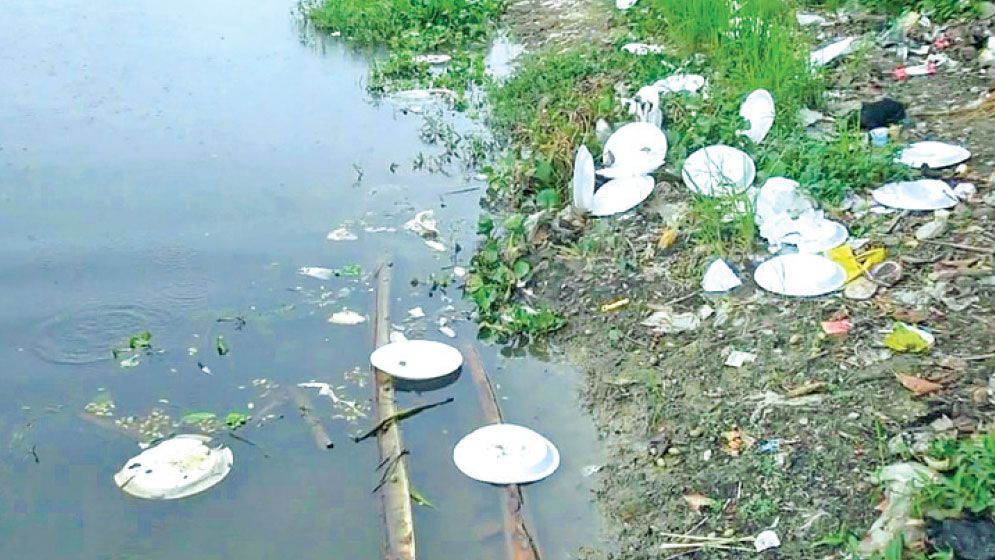
Chalan Beel, once renowned for its abundant fish and agricultural produce, is increasingly threatened by plastic pollution, indiscriminate waste disposal and the use of prohibited fishing nets, raising concerns over its biodiversity and ecological balance.
The vast wetland, spread across Natore, Sirajganj and Pabna districts, covers about 800 square miles, or 2,072 square kilometres. It supports the livelihoods of thousands of people and serves as an important source of fish and agricultural produce.
During the monsoon, the beel attracts tourists, with boats navigating its extensive waterways. However, discarded single-use plastic plates, cups, spoons, water bottles and snack packets are increasingly polluting the wetland.
At tourist spots, shrine areas, boat terminals and other gathering places, visitors often leave plastic waste after eating. The rubbish floats in the water or accumulates on farmland as water levels recede, damaging the wetland’s natural beauty and potentially harming aquatic life and agricultural land.
Environmental activists said the indiscriminate disposal of plastic and polythene is polluting the water, threatening fish habitats and affecting soil fertility. The Tishikhali shrine area draws large crowds every Friday. Plastic plates, cups and food packets discarded after religious and other gatherings are adding to the pollution, raising concerns about the impact on aquatic animals and farmland.
In January this year, the upazila administration and environmental organisations conducted a cleanup campaign in the area and urged visitors to avoid disposable utensils and dispose of waste in designated places.
However, hotel and tea stall owners said many customers insist on using disposable utensils, forcing businesses to provide them despite the additional costs. The lack of designated waste disposal facilities also makes proper waste management difficult, they added.
Molla Md Emran Ali Rana, president of Singra Environment and Nature Movement, said single-use plastic containers were widely used at hotels, restaurants, tea stalls and picnic spots across Chalan Beel.
“Used containers must be managed properly; otherwise, they will pollute the environment,” he said, adding that the area had experienced rising temperatures and natural disasters, including droughts and untimely floods, over recent decades. He stressed the need for planned initiatives to preserve the wetland’s ecological balance.
Singra Upazila Nirbahi Officer Abdullah Al Rifat said improperly managed single-use plastics could adversely affect the environment and biodiversity.
“Cleanliness drives are continuing to prevent environmental pollution. We have also provided dustbins on tourist boats,” he said, warning that legal action would be taken against those who violate the rules.