


 For all latest news, follow the Daily Sun's Google News channel.


Zubaida calls for affordable, inclusive healthcare for all
Daily Sun Report, Dhaka
Published: 14 Sep 2026, 12:00 AM
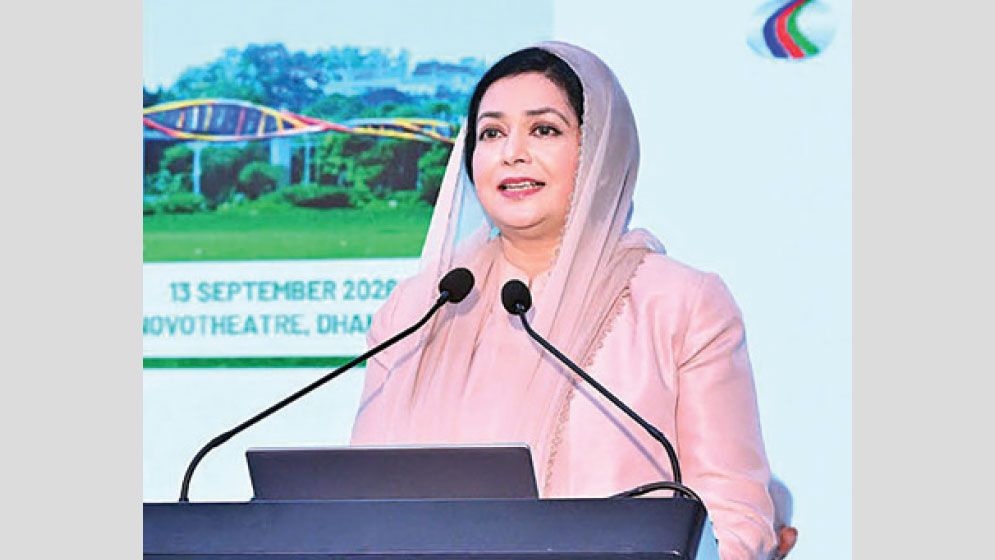
Ziaur Rahman Foundation’s Vice President Dr Zubaida Rahman on Sunday called for making quality healthcare accessible and affordable to every citizen regardless of income, location or social status, stressing that healthcare is a basic human right, not a privilege.
Sophisticated hospitals or procurement of advanced apparatus should not be considered the sole measure of the level of healthcare, she said while speaking at a discussion meeting at plenary hall of Novotheatre in the capital, Dhaka.
The fair is being held under the auspices of the Ministry of Sciences and Technology titled "Health Innovation for All: Expanding Access to Affordable and Inclusive Care at Bangladesh Innovation Fair 2026”.
Zubaida said many patients travel long distances for healthcare and seek specialist treatment only after their conditions become complicated because essential services are often unavailable close to their homes.
Modern tertiary healthcare has become increasingly expensive, a challenge faced not only by Bangladesh but also by many developed countries, she said.
The patients suffering from dengue should not need to travel long distances for treatment, she said.
She also stressed the need to link all screening programmes with confirmatory diagnosis, counselling, treatment, medication, monitoring and referrals.
“Bangladesh can also start preparing for the healthcare needs of an ageing population, including dementia, Parkinson’s disease and other geriatric conditions,” Dr Zubaida said.
She said the country’s health sector’s vision should focus on strengthening primary healthcare, bringing services closer to people, expanding preventive programmes, developing the health workforce and gradually increasing public investment in healthcare to five percent of the GDP.
She expressed hope that the planned recruitment of 100,000 health workers would create opportunities for women and help lay the foundation for transforming the healthcare system.
She said the health workers could support screening, maternal and child healthcare, health education, chronic disease management and referrals at the community level.
Dr Zubaida also underscored the need for an effective referral system to ensure smooth transfer of patients from community and primary care facilities to district and specialist hospitals, while ensuring that treatment information is sent back to primary care providers.
Bangladesh also needs a nationally coordinated blood management system covering voluntary donation, safe collection, infectious disease screening, component separation, storage, transportation and full traceability from donor to patient, she said.
Dr Zubaida said innovation would be central to these efforts, but it does not necessarily mean developing expensive machines or launching new applications.
She said Bangladesh has many of the institutions and resources needed to make this possible, including reputed researchers, a strong pharmaceutical industry, experienced clinicians, growing digital capabilities, community-based organisations and a vibrant generation of entrepreneurs.
“Research can connect with validation, validation with regulation, regulation with responsible procurement and innovation with service delivery,” she said, adding that every part of the healthcare system must remain connected to patients’ needs and rights.
“Only then can we provide healthcare as a basic human right to every citizen of the country,” she said.
State Minister for Health and Family Welfare Dr M A Muhit attended the programme as the special guest, while Prime Minister’s Special Assistant for Health Dr S M Ziauddin Haider moderated the session and Prof AK Azad Khan delivered the keynote speech.