


 For all latest news, follow the Daily Sun's Google News channel.


Necessity and Viability of Padma Barrage Project
Helal Uddin Ahmed
Published: 25 Aug 2025, 03:39 AM
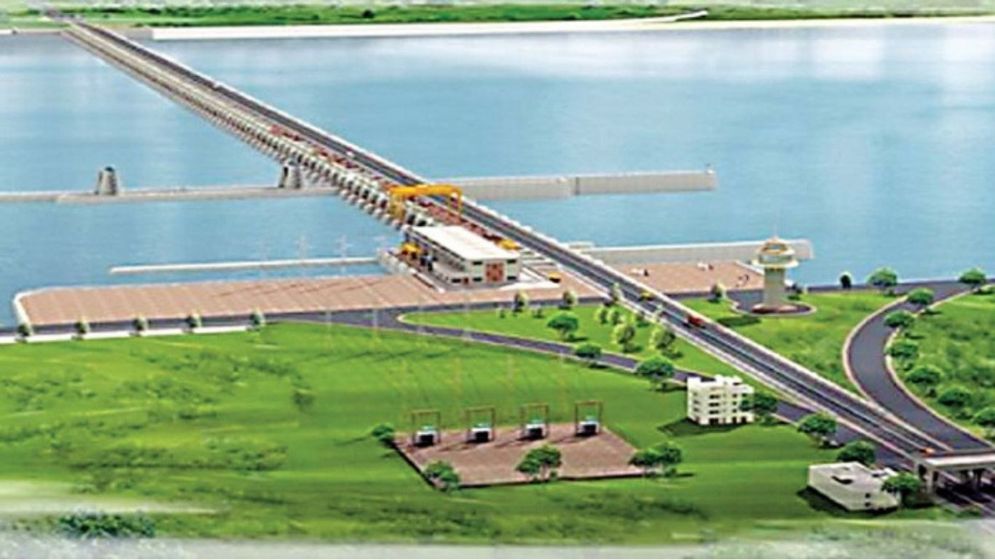
Bangladesh’s economy is an agriculture-based economy. The country’s Water and Power Development Authority (WAPDA) started its journey in 1959. As a component of this institution, the Water Development Board (WDB) has been making contribution to the country’s agriculture sector by implementing projects related to irrigation, flood control, drainage, prevention of river erosion, and environmental conservation. One of the most promising projects identified by the WDB for proper water management has been the ‘Padma Barrage Project’. The flow of the river Ganges (known as Padma in Bangladesh) has decreased in the downstream areas of Bangladesh ever since the commissioning of the Farakka Barrage by India in the mid-1970s. It has been wielding a highly negative impact on the agriculture, fisheries, forestry, navigation and environment of south-western Bangladesh. And the people of Bangladesh have felt the need for a Padma Barrage most acutely for a long time to overcome this problem.
Meanwhile, a number of feasibility studies have been conducted for the proposed barrage over the previous decades. The latest study was finalised and submitted to the government back in 2012, but the then regime ditched it altogether apparently succumbing to Indian pressure. The findings of that study, carried out through multidimensional analyses, showed the project to be quite viable and implementable when considered in terms of economic, technical, social and environmental criteria. Around Taka 320 billion was needed to implement the 7-year project, and the cost could be recouped within five years. But non-execution of the project has led to exacerbation of the negative impacts of Farakka Barrage over the years.
The Context: Bangladesh is situated on a delta carved by the rivers Ganges (Padma), Brahmaputra and Meghna. The south-western region of the country comprising 37 per cent of its land area is dependent on the river Padma. The total length of the Ganges is about 2,600 kilometres, of which 240 kilometres fall inside Bangladesh. After emerging from the Himalayas, the river enters Bangladesh through Jangipur of Rajshahi district, takes the name of Padma, and ultimately flows into the Bay of Bengal. The area dependent on the water of Padma in Bangladesh is around 46,000 square kilometres.
Due to the commissioning of the Farakka Barrage, the flow of the Padma decreased drastically, and agriculture, fisheries, forestry, navigation and household activities were seriously hampered. Expansion of industries was obstructed and Sundarbans – the largest mangrove forest in the world – faced unprecedented threat due to decrease in the flow of river water and increase in salinity. The conditions of the river Gorai – a tributary of the Padma, as well as its distributaries named Kumar, Kalindi, Dakua etc. also underwent abysmal deterioration in recent years. There is therefore an urgent need for constructing a barrage on the river Padma for integrated river-water management in the greater districts of Rajshahi, Pabna, Kushtia, Jashore, Khulna, Faridpur and Barishal, in order to facilitate economic growth in the country’s south-western region.
The feasibility studies conducted for the Padma Barrage identified a few probable places between the Hardinge Bridge and the confluence of Padma-Jamuna for constructing the barrage. A pre-feasibility study was conducted by WARPO in the earlier part of the decade of 2000s for determining the available options; by analysing river morphology through that study, two probable sites were identified at Thakurbari of Kushtia district and Pangsha of Rajbari. The latest feasibility study recommended Pangsha as the site of the barrage.
Project-Cancellation by Hasina Regime: An agreement was signed by the WDB and DDC Ltd. for carrying out a feasibility study and detailed design of the Padma Barrage project in May 2009. Later, they were also assigned the task of preparing the land acquisition and resettlement action plan. The consultant submitted the final feasibility study in September 2012 that contained detailed design as well as land acquisition and resettlement plan. A proposal titled ‘Ganges Barrage Project’ was also submitted to the Planning Commission via the Ministry of Water Resources by the WDB. But the Hasina regime shelved the project by showing deference to India’s desire. Following her visit to India in April 2017, the then prime minister announced at a press conference that her government was postponing the project, as it would be implemented jointly with India after corrections were made to its design. The initiative was then abandoned completely.
Financial and Economic Analyses: Financial and economic analysis of the proposed Padma Barrage project had demonstrated that the rate of return would be highly positive. The net present value of the project would be Taka 80.42 billion in economic terms and Taka 51.21 billion based on financial criteria. A cost-benefit analysis yielded the ratios of 1: 1.53, and 1: 1.261 in economic and financial terms respectively. The average crop intensity in the project area would rise by 10% to reach 204% in seven years from the previous 194%.
Environmental Impact: The increased water-flow through the Hisna-Mathabhanga, Gorai-Modhumoti, and Chandana-Barasia systems resulting from the Padma Barrage would provide the needed volume for preserving the ecosystem and reduce environmental degradation in the Ganges-dependent area. Approximately over 43 million people belonging to over 9 million families lived in the 165 upazilas of the project-dependent area. An assessment of environmental impact of the proposed project demonstrated that all important environmental components (IEC) except two (sedimentation and bank erosion) would show positive impacts. The components yielding positive impact would be: river morphology, navigation, river-flow, and water level, flooding, drainage congestion, drought, ground water hydrology, crop production, crop damage, irrigated area, fish habitat and productivity, pond fish culture, terrestrial ecosystem, aquatic ecosystem, wildlife habitat, wetland fauna, and ecosystem of the Sundarbans.
Social Impact: Social impact assessment of the project demonstrated that all the indicators would mark positive improvements. These included food security based on rice production, fish as nutrition source, employment in agriculture and non-agriculture sectors, migration, poverty, surface water for domestic use, health and sanitation, drinking water, electricity, literacy, communication, land acquisition, industry, and economic development.
Challenges to Project Implementation: The cost of the project was estimated to be Taka 314.14 billion in 2012, and the time-frame for implementation was set at 7 years. In line with the feasibility report, an amount of Taka 23.54 billion was required to acquire 2012.15 hectares of land. This process could give rise to social complications and resistance at local the level.
As of 2018, media reports claimed that 940 dams and barrages were built on the river Ganges in India, which were restricting its flow and posing grave threats to its rejuvenation. Besides, India was planning to construct 16 more barrages then on the river Ganges at different points of its territory, although India was not allowed to construct any new infrastructure on the Ganges without informing Bangladesh under section-96 of the Ganges Water-Sharing Treaty. If water is withdrawn after constructing these additional barrages, the rivers in the south-western region of Bangladesh would almost dry up, 30 districts would be seriously harmed, and salinity in the southern region of the country would rise to a dangerous level.
The implementation of the Padma Barrage is very urgent for ensuring food security, reduction in salinity, protection of forestry resources, bio-diversity conservation of the Sundarbans, and maintaining environmental cum ecological balance of the country’s south-western region. Feasibility studies conducted on the project in the past have all demonstrated clearly that it was quite viable in terms of financial, technical, social and environmental criteria. The interim government should therefore take immediate steps for the implementation of the project.
___________________________________________
The writer is a retired Additional Secretary and former Editor of Bangladesh Quarterly. He can be reached at: Email: [email protected]