


 For all latest news, follow the Daily Sun's Google News channel.


Shaheed Zia: Architect of a progressive Bangladesh
Prof Dr Morshed Hasan Khan
Published: 30 May 2026, 10:36 AM
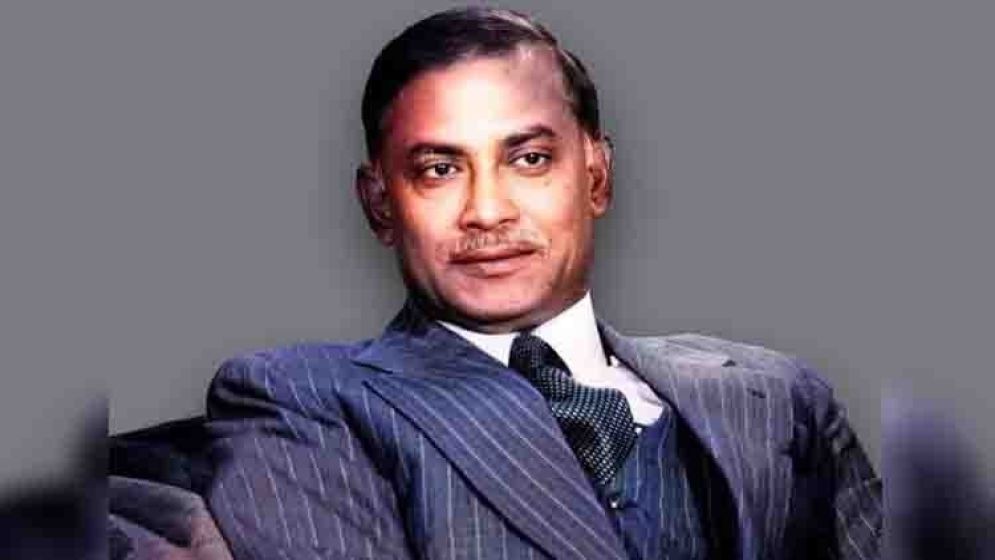
File Photo: Shaheed President Ziaur Rahman
Shaheed President Ziaur Rahman was the leader who steered Bangladesh towards development after the disorder and plunder that marked the post-1971 period. From his early days as a soldier, he embraced the ideals of patriotism, which later inspired him to dedicate himself to nation-building. He emerged as the visionary of a progressive Bangladesh and became a driving force behind development, production and the creation of a strong national identity. As long as this land endures, Shaheed President Ziaur Rahman will remain deeply embedded in the hearts and minds of the Bangladeshi people.
Ziaur Rahman was born on 19 January 1936, into a respected Muslim family in Bagbari village of Bogura district. He was the second of five brothers. In 1952, he passed his secondary school examinations with distinction from Karachi Academy School. The following year, he enrolled at DJ College in Karachi and joined the Kakul Military Academy as a cadet. He received his commission in the armed forces in 1955.
After serving for two years in Karachi, he transferred to the East Bengal Regiment in 1957 and returned to East Pakistan. Between 1959 and 1964, he served in the intelligence branch of the Pakistan Army. During the 1965 Indo-Pak war, he earned a gallantry award for exceptional bravery in the Khem Karan sector. In 1966, he joined the Pakistan Military Academy as an instructor and also attended the Command Course at the Staff College in Quetta. Promoted to major in 1969, he assumed the role of second-in-command of the 2nd East Bengal Regiment in Joydebpur, East Pakistan.
On the night of 25 March 1971, when the Pakistani military launched a brutal crackdown against unarmed Bengalis, killing civilians and torching homes across East Pakistan, Ziaur Rahman rebelled against the occupation forces and joined the Liberation War. Despite knowing that his wife and children could face grave danger, he formed the Z Force under his own command to strengthen the struggle for independence. He also served as the sector commander of Sector 1 and made significant contributions to the Liberation War through his courage and leadership.
After nine months of bloody conflict, Bangladesh achieved independence. Following the victory, Ziaur Rahman returned to military service in the newly independent nation. In 1972, he became Deputy Chief of the Bangladesh Army and was promoted to major general at the end of 1973. In recognition of his valiant role in the Liberation War, the government awarded him the title of Bir Uttam.
The political landscape changed dramatically after the assassination of Sheikh Mujibur Rahman and most of his family members on 15 August 1975. As the country plunged into uncertainty amid a series of coups and counter-coups, Ziaur Rahman re-emerged on the national stage. On 7 November 1975, the Sipahi-Janata Revolution and Solidarity movement freed him from house arrest and placed him at the centre of public hopes and aspirations. His unquestioned popularity and acceptance within the armed forces paved the way for his rise to state leadership.
In April 1977, Ziaur Rahman assumed office as the President of Bangladesh. Later, in the country's first free, fair and competitive presidential election held on 23 June 1978, he secured a decisive victory over General MAG Osmani, the commander-in-chief of the Liberation War and the candidate backed by the Awami League.
What followed marked a turning point in Bangladesh’s history. Ziaur Rahman moved swiftly to dismantle the one-party BAKSAL system introduced during the previous administration. Through the Fifth Amendment to the Constitution, he abolished BAKSAL and restored multi-party democracy, a move that brought a sense of relief to the people. He also lifted restrictions on the media and repealed laws that curtailed press freedom.
In January 1976, he introduced the President’s Award, established grant funds, initiated the creation of a Film Institute and approved government recognition for excellence in cinema through presidential awards. During the same period, he formed the National Population Council and integrated health and public welfare initiatives into national planning.
To honour the martyrs of the 1952 Language Movement and recognise outstanding contributions in various fields, he introduced the Ekushey Padak in 1976. A year later, he established the Independence Award, the country’s highest state honour, to recognise exceptional service by individuals and institutions.
Ziaur Rahman also prioritised the welfare and development of children. He laid the foundation stone of the Bangladesh Shishu Academy and inaugurated its new building beside the old High Court premises. In 1979, he established the National Children’s Park at Shahbagh in Dhaka and founded a dedicated children’s hospital in Shyamoli to improve child healthcare and treatment facilities.
His administration expanded the country’s healthcare infrastructure significantly. In 1978, he established the Cholera Hospital. In 1981, he founded the Nursing College and the National Institute of Cardiovascular Diseases and Hospital at Mohakhali in Dhaka. Under his patronage, institutions such as NIPSOM, the Institute of Public Health Nutrition and the Expanded Programme on Immunisation (EPI) were established. He also laid the foundation stones of the Cancer Institute and Hospital, Shaheed Suhrawardy Hospital, the National Institute of Traumatology and Orthopaedic Rehabilitation, the C-Block of PG Hospital, the National Institute of Ophthalmology and the BMA Bhaban.
To strengthen Bangladesh’s cultural and intellectual institutions, he promulgated the Bangla Academy Ordinance in 1978, providing a stronger institutional framework for the country's premier literary organisation.
Recognising that agricultural development was essential for national progress, Ziaur Rahman launched a nationwide canal excavation programme aimed at achieving food self-sufficiency. He inaugurated the project on 1 November 1976, by launching the excavation of the Ulshi-Jadunathpur canal in Jashore. Later, on 22 May 1977, he announced his landmark 19-Point Programme, often described as Bangladesh’s Magna Carta for development and national reconstruction.
His contributions also extended to the cultural sphere. He introduced the National Film Awards and supported the organisation of the Dhaka International Film Festival in March-April 1981. In 1978, Islamic Cultural Centres were established in four divisional cities. To encourage children's creativity and cultural development, he reintroduced the popular “Notun Kuri” competition on Bangladesh Television in 1976.
On 11 February 1980, Ziaur Rahman launched a nationwide literacy campaign aimed at eradicating illiteracy. He also played a pivotal role in promoting regional cooperation among South Asian nations and emerged as one of the key architects behind the establishment of the South Asian Association for Regional Cooperation (SAARC).
To facilitate the practice of all religions and promote religious harmony, he established the Ministry of Religious Affairs. He also created the Ministry of Science and Technology to support development driven by scientific and technological advancement.
Zia introduced a rural healthcare system and, in its first year, trained around 27,000 people as village doctors. Through the Fifth Amendment on 6 April 1979, he restored a multi-party democratic system in the country.
On 19 January 1981, he led a delegation of distinguished students, teachers and intellectuals aboard the vessel Hizbul Bahar on a deep-sea voyage from Chattogram. The initiative later contributed to the emergence of the concept of the blue economy in Bangladesh.
He established the central office of the Muktijoddha Sangsad and founded the Rural Electrification Board to expand electricity access across the country. He also set up the National Institute of Population Research and Training (NIPORT) and created the Ministry of Family Planning to strengthen population control efforts. To preserve environmental balance, he launched nationwide tree plantation campaigns.
Beyond domestic reforms, Ziaur Rahman enhanced Bangladesh’s international standing. He took diplomatic initiatives to mediate the Iran-Iraq war, bringing greater recognition to both himself and Bangladesh on the global stage. His efforts to strengthen regional connectivity through SAARC also left a lasting impact on South Asian diplomacy.
Under his leadership, Bangladesh secured a non-permanent seat on the United Nations Security Council in 1978. Through numerous initiatives and reforms, he helped place the young nation on a path of development and progress.
On the night of 30 May 1981, a group of renegade soldiers assassinated President Ziaur Rahman at the Chattogram Circuit House. The founding architect of modern Bangladesh left behind a legacy that continues to influence the nation’s political and development trajectory.
Among the remarkable statesmen of the modern era, Ziaur Rahman stands out for the sweeping changes he introduced within a relatively short period. Today marks the 45th anniversary of his martyrdom. On this occasion, the nation remembers him with deep respect and enduring admiration.
The writer is Secretary General of the University Teachers Association of Bangladesh (UTAB)