


 For all latest news, follow the Daily Sun's Google News channel.



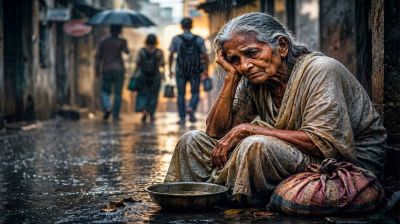
AI-generated photo
The government appears unable to free itself from a succession of challenges. Since assuming office with what many describe as a mountain of burdens, it has faced one crisis after another. Some of these problems are said to be of the interim government's own making, while others stem from natural causes or global developments.
Just 11 days after the current administration took office, the United States-Iran war began. The conflict has had a direct impact on Bangladesh’s economy. Since 15 March, 613 children have reportedly died from measles or measles-related symptoms. Rising fuel prices have also affected the cost of goods nationwide, leaving people struggling under increasing living expenses. Amid the measles outbreak, dengue fever is emerging as another major threat, with concerns that this year’s situation could surpass all previous records. Child abuse and rape have increased at an alarming rate, while people are being killed by muggers in public places. Social unrest and a deterioration in law and order have created instability across the country. Along border areas, India’s Border Security Force (BSF) has allegedly attempted to push people into Bangladesh. Taken together, these challenges continue to mount.
Geopolitical Crisis
Soon after the current government assumed office, unprecedented difficulties emerged due to geopolitical instability. A series of domestic and international shocks has placed ordinary people under immense pressure. On one hand, global conflict has driven essential commodity prices to record highs; on the other, health risks such as measles and dengue are threatening public well-being. Non-performing loans have become a major obstacle to keeping the economy functioning, and authorities have struggled to recover these debts. Efforts to secure fresh loans from the Asian Development Bank (ADB) and the International Monetary Fund (IMF) have reportedly failed to yield positive results. Overall, the country’s challenges are becoming increasingly severe.
Severe Impact of Rising Prices
The United States-Iran war has led to higher fuel prices on the international market, which has negatively affected Bangladesh’s domestic economy. Prices of petrol, octane and kerosene have been increased, along with electricity tariffs. As transport costs rise, the prices of rice, lentils, cooking oil and other daily necessities have moved beyond the reach of many ordinary citizens. Middle- and lower-income households are facing severe hardship under the burden of increased living costs, and millions of families are struggling to balance their incomes and expenditures.
Double Blow to Public Health: Measles and Dengue
Amid economic difficulties, Bangladesh is also facing a serious public health crisis. Since 15 March, 613 children across the country have reportedly died from measles or measles-related symptoms. Although the official figure stands at 613, concerns remain that the actual number may be higher. Critics claim that the interim government’s reluctance to procure vaccines has contributed to the deaths of children.
Adding to the crisis, dengue fever is emerging as a new source of concern. Health experts warn that this year’s dengue outbreak could exceed all previous records. Parents are spending their days in deep anxiety over the safety of their children amid the dual threats of measles and dengue. Concerns also extend to expectant mothers, who fear for the health of their unborn children. There is no guarantee that newborns will not be exposed to these diseases shortly after birth.
Social Unrest and Deteriorating Law and Order
Alongside the economic and health crises, social instability has increased significantly. Incidents of child abuse and rape have reportedly risen dramatically in recent times, causing widespread concern among civil society. Cases have also been reported in which children were brutally murdered.
At the same time, the law-and-order situation has deteriorated sharply. Public safety is increasingly under threat, with robberies and violent crimes occurring on roads, highways and even in the capital. Ordinary people are reportedly losing their lives to muggers over mobile phones or small amounts of cash. Despite visible efforts by law enforcement agencies, criminal activities continue unabated.
No Positive News for the Economy
The IMF has reportedly withheld the latest two instalments of its ongoing $5.5 billion loan programme and instead called for discussions on a new lending arrangement. The government has also sought $1 billion in budgetary support from the ADB to help manage the crisis, but no positive response has yet been received.
Meanwhile, the proposed budget for the 2026–27 fiscal year allocates Tk127.5 billion for interest payments, equivalent to nearly 2% of GDP. In the current fiscal year, Tk122 billion had initially been allocated for this purpose, but the revised budget increased the amount to Tk127 billion. As a result, the government is paying Tk5 billion more in interest than originally projected. Analysts believe this is placing additional strain on the country’s macroeconomic stability.
Non-Performing Loans: A Major Obstacle to Economic Progress
Amid weak loan recovery and governance shortcomings, non-performing loans in the banking sector reached 32.26% of total loans during the first three months of 2026. According to Bangladesh Bank data, the total volume of classified loans stood at Tk588,704 crore at the end of March, up from Tk557,217 crore in December. This represents an increase of Tk31,487 crore in just three months.
Overall, banks have disbursed loans worth Tk1,824,668 crore. Due to extensive loan rescheduling under Bangladesh Bank’s special policy support programme, the default loan ratio had fallen from 36% to around 31% by the end of last year.
Business Community Under Pressure
Businesses are facing numerous challenges, including high lending rates, a shortage of US dollars, energy constraints, insecurity, and legal complications. Many entrepreneurs say they feel helpless in the absence of meaningful support. Industrialists are increasingly concerned about the future of factories built with investments worth thousands of crores of taka.
Business leaders say fresh investment is not taking place, and without investment, employment opportunities cannot be created. They argue that various policies imposed by the previous Awami League government have contributed to the current difficulties. According to them, widespread bank looting took place under state patronage, while shortages of foreign currency and other resources have left significant gaps throughout the economy.
Businesses of all sizes—small, medium and large—are experiencing the effects of these challenges. As a result, operating businesses, maintaining employment and remaining profitable are becoming increasingly difficult. Traders in Dhaka and other districts identify high bank lending rates as a major obstacle, discouraging new investment and forcing many companies to suspend expansion plans. Small and medium-sized enterprises, in particular, are facing severe financial constraints.
Market analysts argue that controlling inflation, providing affordable credit and improving supply chains are essential to maintaining a stable business environment. They add that greater policy support for businesses would help them overcome current challenges and play a more effective role in the economy.
Attempts at Push-Ins Along the Border
Border Guard Bangladesh (BGB) has reported preventing attempts by India’s Border Security Force (BSF) to push people illegally into Bangladesh through various border points in recent days. The BGB has also intensified intelligence surveillance and patrol activities to prevent any future attempts.
In a statement, the BGB declared unequivocally that no individual or group would be allowed to enter Bangladesh illegally through the border. It said any push-in attempt that violates international border management practices, existing laws and bilateral agreements would be firmly resisted. To this end, intelligence monitoring, patrols and operational activities along the border have been strengthened.