


 For all latest news, follow the Daily Sun's Google News channel.


International Day of the Victims of Enforced Disappearances 2026
Beyond the Darkness of Enforced Disappearances: A New Bangladesh
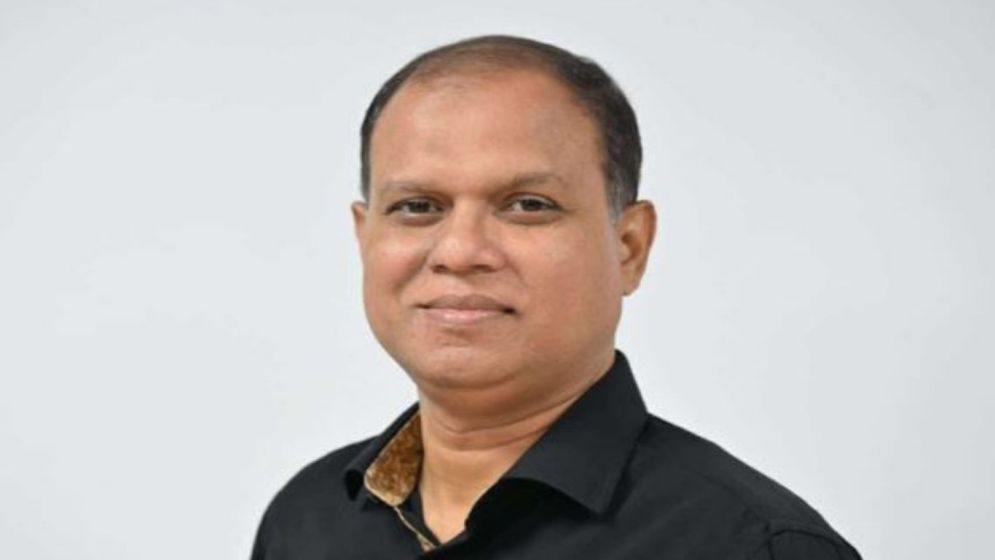
Atikur Rahman Ruman
Published: 30 Aug 2026, 10:53 AM
Atikur Rahman Ruman
The pain of losing someone may, over time, find expression through tears. But there are no words to describe the agony of waiting year after year without knowing where a loved one is—whether they are alive or dead. Such waiting is not only a profound source of grief; it is also a life defined by uncertainty.
30 August is observed as the International Day of the Victims of Enforced Disappearances. The day is not only about remembering those who have disappeared. It is also a day to remember the tears of mothers, the waiting of wives, the emptiness felt by children, and the anguish of families whose loved ones suddenly vanished. Countless families have spent years living with the unanswered questions: Where is their loved one? How are they? Are they even alive?
Bangladesh has also witnessed this brutal reality. Allegations of enforced disappearances became increasingly serious and frequent during the 16-year rule of the Awami League government led by Sheikh Hasina. After the fall of the Awami League government amid the student-led mass uprising in 2024, the interim government led by Dr Muhammad Yunus formed a commission to investigate allegations of enforced disappearances. At the time, a series of allegations of disappearances during Sheikh Hasina's prolonged and repressive rule had generated widespread concern both at home and internationally.
After reviewing 1,913 complaints submitted to the Commission of Inquiry on Enforced Disappearances, the commission classified 1,569 cases as enforced disappearances. Of these, 287 were categorised as “missing and dead.” Members of the commission have said the actual number of enforced disappearances could be even higher.
Meanwhile, a report published by Daily Samakal on 5 January 2026 said at least 312 leaders and activists of the Bangladesh Nationalist Party (BNP) and its affiliated organisations had been victims of enforced disappearance during Sheikh Hasina's rule. Of them, 107 never returned. It is suspected that they were killed by the law enforcement agencies that allegedly took them away.
But these figures are not merely numbers. Behind every number is a person, a mother, a father, a wife, a child, a family and an unfinished dream. Every case carries stories of tears, waiting and unspoken suffering.
For some children, a photograph of their father may still be their most treasured possession. Some mothers may still look toward the door, hoping their son will return. Some wives may still believe that their husband will suddenly knock on the door one day. But the years pass, and the person never returns. The waiting only grows longer.
An enforced disappearance does not merely separate a person from their family; it can make a family's normal life disappear as well. When a person goes missing, their family is immediately plunged into uncertainty. Relatives continue searching for their loved one while simultaneously struggling every day with fear, frustration and uncertainty.
According to the report of the Commission of Inquiry on Enforced Disappearances, 1,564 cases of enforced disappearance were documented between 2009 and 2024. The highest number—215 cases—was recorded in 2016. The commission documented 194 cases in 2017, 192 in 2018, 118 in 2019, 110 in 2022 and 65 in 2023.
The commission's report further said enforced disappearances increased ahead of elections, with allegations that opposition political leaders, activists and supporters were targeted. Among the 948 victims whose political affiliations were identified, a significant number were leaders and activists of the BNP and its affiliated organisations. The report said BNP members and activists accounted for 68% of those who remain missing.
Behind these statistics are countless untold stories of human suffering. Families of people such as BNP leader Ilias Ali have waited for years. After he went missing on 17 April 2012, his family was repeatedly given assurances by the Sheikh Hasina government that there was hope of finding him. They were even given information suggesting that he might be found. But ultimately, the long wait produced no resolution.
What could be more painful for a family than this? Even if they knew that their loved one had died, they might eventually be able to accept the reality and begin to grieve. But when they do not know where the person is or what condition they are in, the family is forced to experience the pain of loss anew every day. They cannot fully grieve, nor can they completely give up hope. It is a profound and unbearable form of psychological suffering.
After this prolonged period of darkness, Prime Minister Tarique Rahman, now in charge of the state, has not treated the suffering of families of enforced disappearance victims merely as a subject for political speeches. He has gone to meet them, listened to their stories and become visibly emotional as he shared their grief.
At a meeting with families of victims of enforced disappearance, killing and torture on 17 January 2026, Bangladesh Nationalist Party (BNP) Chairman Tarek Rahman was deeply moved as relatives recounted their years of suffering and heartbreaking experiences. At one point, he broke down in tears in response to their pain and cries for their loved ones. Daily Desh Rupantor reported on his emotional response.
The event was jointly organised by “Amra BNP Poribar” and “Mayer Dak.” Family members of victims of enforced disappearance and killing shared their long years of pain and anguish and expressed their desperate desire to have their loved ones returned.
Some of the scenes from that day will remain etched in the hearts of the people of Bangladesh for a long time. One child said that the dream of going to school holding his father’s hand had still not come true. Another child said he had never been able to call his father “Dad” because he was only two months old when his father disappeared. In this way, family members shared their years of pain, suffering and loss. Every word they spoke and every tear they shed touched our hearts deeply.
These tears are not the tears of just one family. They are the tears of Bangladesh’s conscience. They remind us that the state’s greatest responsibility is to protect the lives, security, dignity and rights of its people.
That day, Tarique Rahman spoke with a heavy heart and expressed solidarity with the suffering of the victims’ families. He said many children are still waiting, hoping that their fathers may one day knock on the door, while many mothers may still be waiting for their missing children to return. This sentiment was not merely a political statement; it reflected the humanitarian responsibility of a leader toward his people.
The biggest demand of families of enforced disappearance victims is that they want the truth and justice. They want to know what happened to their loved ones, where they were taken and who was responsible for their disappearance. It is the responsibility of the state to answer these questions and ensure justice.
Tarique Rahman has also clearly said that the enforced disappearances and killings that occurred under the previous government must be brought to justice. A report in Daily Jugantor quoted him as saying that unless Sheikh Hasina and others accused in the cases of enforced disappearances and killings are brought to justice, opportunities for injustice may emerge again. He also said it was essential to ensure justice for the affected families and bring those responsible for wrongdoing under the law.
However, justice must be based on the rule of law and due process. Every allegation must be investigated impartially, evidence must be properly assessed, and trials must be conducted in accordance with the law. Our path must be justice, not revenge. In a democratic state, no crime can be prosecuted on the basis of political vengeance.
The current government does not want merely to remember the incidents of the past; it also wants to ensure that no one is subjected to enforced disappearance in the future. In 2026, the Cabinet approved a draft of the “Enforced Disappearance Prevention and Remedy Act,” proposing to recognize enforced disappearance as a distinct, cognizable, non-bailable and non-compoundable offence. The draft also proposes strict penalties where an enforced disappearance results in death or where the victim cannot be recovered even after a prolonged period.
Such an initiative is not merely about enacting a law; it represents an important commitment by the state. The state must ensure that no citizen is unlawfully taken away in the future because of their political views, beliefs, identity or any other reason. Abuse of power by law enforcement agencies or state institutions must never be tolerated.
On this International Day of the Victims of Enforced Disappearances, our biggest question is: Do we want a Bangladesh where families have to wait year after year for a loved one?
No. We want a Bangladesh where no one is unlawfully taken away because of their political views, beliefs or identity. No family is left in the dark. No mother has to wait for years to learn the fate of her child. No child has to spend their childhood hoping that their father will return.
The state’s responsibility toward families of enforced disappearance victims cannot end with expressions of sympathy. They must be given the truth, access to justice and the necessary humanitarian, medical and social support. The state must stand beside them, listen to them and ensure their legitimate rights.
Above all, the state must tell them: You are not alone. The state hears your cries. The state sees your waiting. Your questions matter to the state.
May the tears of the mother who still looks toward the door never go in vain. May the child still waiting for a father’s touch finally receive an answer. May the wife who has spent years counting the days in the hope that her husband will return one day finally see an end to the long sigh of uncertainty in her heart.
On the International Day of the Victims of Enforced Disappearances, let our pledge be that Bangladesh will never again return to the darkness of enforced disappearances. In this state, people will have political rights, security and the rule of law, and crimes will be brought to justice.
No family should ever again have to spend years waiting without knowing the fate of a loved one. No mother’s tears should ever again be invisible to the state. No child’s childhood should ever be put on hold while waiting for a father. No wife should be forced to spend her life in uncertainty, hoping for the return of a loved one. No family should ever disappear into darkness again.
Let us aspire to a Bangladesh where people’s lives, dignity and rights are protected, and where the rule of law and justice prevail. On the International Day of the Victims of Enforced Disappearances, let our pledge be that every person’s life and security will be equally important to the state.
The writer is an additional press secretary of the prime minister, editor and publisher of Daily Dinkal, convener of Amra BNP Poribar and member of BNP Media Cell