


 For all latest news, follow the Daily Sun's Google News channel.


Beyond the Classroom
Dhaka University TSC and the Changing Meaning of a University Community
Md. Kafi Khan
Published: 22 Sep 2026, 12:37 PM
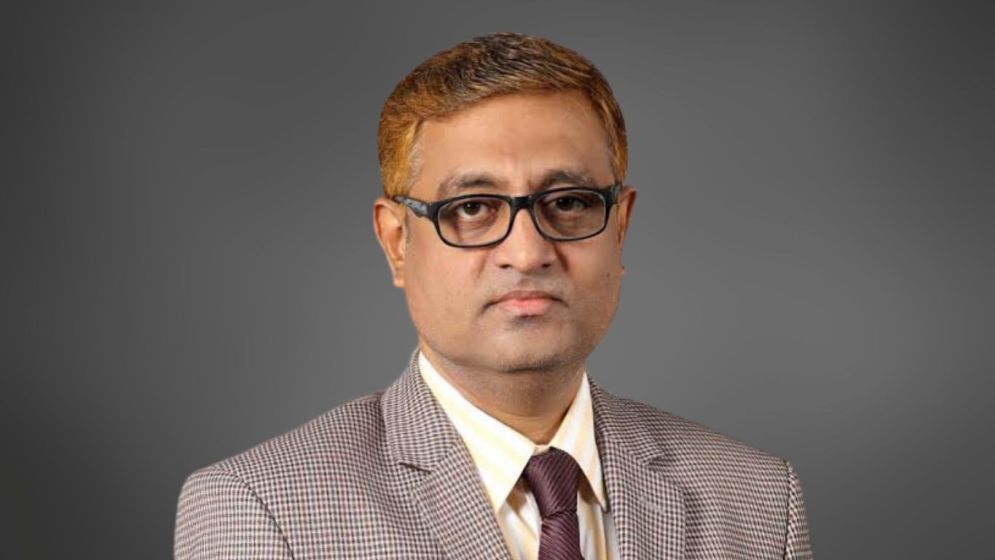
Md. Kafi Khan
A university is not completed by its classrooms, laboratories, libraries and examination halls. Those facilities may transmit knowledge, assess competence and confer degrees, but they cannot by themselves create a community of thoughtful and responsible human beings. A complete university must also provide a space where teachers and students can meet beyond the boundaries of formal authority, where culture can converse with scholarship, where disagreement can mature into reasoned debate and where young people can learn that freedom is inseparable from responsibility.
The Teacher Student Centre of the University of Dhaka, universally known as TSC, emerged from precisely this broader philosophy of higher education. Established in 1961, it was not conceived merely as an auditorium, cafeteria or recreational building. It was intended to become the social and cultural heart of the University, a place where formal education would be supplemented by association, creativity, leadership, service and civic consciousness.
More than six decades later, TSC remains one of the most recognisable public spaces in Bangladesh. It is at once a university facility, an architectural landmark, a cultural address, a meeting place, a centre of student organisation and a symbolic platform for public expression. Its contemporary identity, however, is more complex than its original institutional description. To understand TSC fairly, one must distinguish its founding purpose from its present activities and its formally managed premises from the wider public space that has grown around it.
The original educational vision
The University of Dhaka officially describes TSC as an all campus activity centre designed for “relaxation and guidance.” It was created as a community centre capable of bringing together different dimensions of university life. More significantly, the University states that the Centre was intended to encourage self directed activities through which students would learn responsibility for the welfare of both their university and their country.
This language reveals the depth of the original vision. TSC was not created merely to entertain students after classes. It was meant to educate them through experience. By organising debates, cultural programmes, exhibitions, publications, competitions, voluntary services and collective initiatives, students would learn how to lead, cooperate, disagree, decide and accept responsibility for consequences.
The Centre was also expected to foster a form of campus community life that would supplement the formal academic programme. The word “supplement” is crucial. TSC was never supposed to replace the classroom. It was meant to provide what the classroom often could not provide: human interaction across disciplines, informal intellectual exchange, cultural refinement, organisational experience and a sense of belonging to a larger community.
Its very name expressed another important aspiration. It was to be a Teacher Student Centre, not exclusively a student club. Teachers and students were expected to meet in a less hierarchical environment than the classroom. Dining rooms, lounges, reading rooms, meeting spaces and recreational facilities were intended to reduce unnecessary social distance and encourage conversation between generations of scholars.
Designed by the renowned Greek architect and planner Constantinos A. Doxiadis, the complex translated this social philosophy into physical form. Its courtyard, shaded corridors, open areas, meeting rooms and climate responsive design encouraged circulation and congregation. Architecture here was not merely decorative. It was intended to facilitate community.
The living TSC of the present
TSC continues to perform many of its original functions. Its auditorium and adjoining facilities regularly host cultural programmes, seminars, departmental ceremonies, orientation programmes, freshers’ receptions, farewell events, competitions and commemorations. Music, theatre, dance, film, photography, literature and debate continue to occupy important places within its activities.
Recent University records demonstrate that these are not simply historical memories. In February 2025, the Dhaka University Tourist Society organised a two day Bangladesh Tourism Carnival at TSC. The programme combined exhibitions, seminars, discussions, quizzes, cultural performances and a cleanliness campaign. It connected student initiative with cultural understanding, environmental awareness and the development of Bangladesh’s tourism sector.
In May 2026, the Department of Computer Science and Engineering held its annual cultural programme and prize giving ceremony at the TSC Auditorium. Students, teachers and alumni participated in music, dance, drama, speeches and the recognition of academic and extracurricular achievements. Such an occasion reflects the original philosophy of TSC particularly well because it brings together academic identity, cultural expression and intergenerational community.
The Centre also provides an institutional home for a number of student organisations. The University identifies debating, film, tourism, journalism, photography, chess, Rover Scout, voluntary blood donation and other sociocultural organisations as being associated with TSC. Through these organisations, students acquire practical experience in leadership, communication, event management, creative production, teamwork and public service.
These activities are not secondary ornaments of university life. A student who learns to conduct a debate fairly, organise a film festival, publish a journal, manage a cultural programme or mobilise assistance during a disaster is learning forms of responsibility that no written examination can adequately measure.
TSC as an informal university
Much of TSC’s actual life takes place outside scheduled programmes. Every day, students gather in its cafeteria, corridors, lawns and surrounding spaces. They eat, rest, converse, form friendships, discuss books and politics, plan programmes and sometimes simply pass the interval between classes.
This familiar culture of adda is occasionally dismissed as unproductive. Such a dismissal would be too simplistic. Informal conversation has always been part of intellectual life. Ideas often begin in unstructured encounters before they acquire the discipline of a seminar paper, policy proposal, stage production or social campaign. Many cultural organisations, friendships, publications and public initiatives have grown from conversations that initially appeared purposeless.
Nevertheless, informal congregation cannot by itself fulfil the entire mandate of a Teacher Student Centre. Relaxation was one of TSC’s objectives, but it was joined expressly with guidance, responsibility and community development. If relaxation becomes detached from learning, or if socialisation becomes detached from creativity and service, the Centre risks retaining the appearance of campus life while losing part of its educational substance.
A related concern involves the participation of teachers. TSC remains extremely visible as a student space, while sustained informal interaction between teachers and students appears less prominent than the founding vision anticipated. Teachers certainly participate in departmental ceremonies, seminars, cultural events and organisational programmes. What is less visible is the continuous culture of informal mentorship and intellectual companionship that the name Teacher Student Centre seems to promise.
This should be presented as an institutional question, not as a definitive statistical conclusion. The University does not publish regular data showing how frequently teachers and students use the Centre, how many interactions are academic or recreational, or how participants assess the quality of its programmes. Without such evidence, sweeping claims would be irresponsible. Yet the question remains legitimate: how effectively does the modern TSC bring teachers and students together outside formal academic authority?
Culture, service and responsible citizenship
TSC’s humanitarian role is among the strongest expressions of its original purpose. Badhan, the student led voluntary blood donation organisation, maintains an association with the Centre. Student organisations also use TSC and its surrounding spaces for blood donation, public awareness, emergency assistance and disaster relief.
During the floods of August 2024, students used TSC as a collection point for relief materials. As the volume of donations increased, the principal collection operation was moved to the University’s Physical Education Centre, while cash and emergency medicines continued to be received at TSC. This was not merely charity conducted on university premises. It was civic education in action. Students were learning organisation, accountability, empathy and public responsibility through direct service.
Such activities fulfil the foundational expectation that students should understand their responsibility not only to the University but also to the country. They demonstrate that TSC can still transform youthful energy into organised public good.
The political identity of the TSC area
No honest account of contemporary TSC can avoid its political and civic importance. The wider TSC area, especially the Anti Terrorism Raju Memorial Sculpture and adjoining roads, has become a prominent site for protests, human chains, vigils, torch processions, remembrance programmes, public demands and national solidarity gatherings.
This role must be described with precision. The TSC complex and the wider TSC precinct are not identical. A gathering at Raju Sculpture may occur beside TSC without taking place inside the Centre’s administratively managed rooms. Nor does the use of the TSC area by a political or civic group necessarily imply endorsement by the University or the TSC administration.
It is equally important not to rewrite history by claiming that TSC was originally established as a political headquarters. The available institutional evidence does not support that proposition. Its formally declared objectives were educational, cultural, social, recreational and developmental. Its political significance developed because a place dedicated to association, dialogue and self directed student activity inevitably became a location for collective expression.
Political consciousness is not inherently foreign to university education. Universities should allow students to examine public questions, challenge ideas and participate in peaceful democratic discourse. The problem begins when reasoned discussion is displaced by coercion, when organisations attempt to monopolise common space, when disagreement becomes intimidation, or when affiliation becomes more important than intellectual independence.
A healthy TSC should therefore protect political awareness without becoming captive to partisan control. It should welcome debate without rewarding aggression. It should permit dissent while preserving the equal rights and safety of those who dissent from the dissenters.
Public space, university space and the problem of boundaries
TSC occupies an unusual position between institutional space and national public space. Although it belongs to the University, its cultural and historical significance attracts alumni, visitors, activists, artists and members of the wider public. This openness has helped make TSC a national cultural landmark. It has also created pressures involving congestion, security, maintenance, commercial activity and the appropriate use of university facilities.
Food outlets, banking facilities, publication services and utility shops support everyday campus life. They are legitimate supplementary functions. Yet a Teacher Student Centre should never be defined primarily by food consumption, commerce or casual crowds. Its facilities should ultimately serve the educational, cultural and communal purposes of the University.
The challenge is not to close TSC to society. Such closure would deny its history and diminish its public value. The challenge is to maintain a principled boundary through which public engagement enriches university life without overwhelming it.
What cannot yet be proved
Public discussion about TSC frequently relies on personal impressions. Some claim that it has become predominantly political. Others describe it mainly as a place for food and adda. Still others regard it as the continuing cultural heart of the campus.
Each description contains part of the truth, but none can responsibly be presented as the whole truth without systematic evidence. Dhaka University does not appear to publish a comprehensive annual report on TSC showing the number and nature of programmes, allocation of facilities, attendance by teachers and students, financial information, satisfaction levels, organisational performance or measurable student development outcomes.
This absence of accessible data creates a space in which nostalgia, criticism and political opinion can substitute for institutional evaluation. A centre established to cultivate responsible citizenship should itself practise transparent and evidence based governance.
An annual public report could record cultural programmes, seminars, voluntary initiatives, student organisation activities, facility utilisation, expenditure, income, participation and complaints. It could also assess whether TSC is fulfilling its mission of relaxation, guidance, teacher student engagement and responsible self directed activity. Such reporting would not reduce TSC to statistics. It would help protect its purpose from assumption and institutional drift.
Renewal without erasing memory
TSC does not need to be converted into a museum of its own past. A living university centre must change with new generations. Contemporary students require digital facilities, accessible spaces, improved safety, better programme management, modern creative infrastructure and opportunities for interdisciplinary collaboration. Renewal is therefore necessary.
But modernisation should strengthen the founding philosophy rather than merely renovate the structure. A visually impressive building would be an incomplete achievement if teachers and students remained distant, cultural organisations lacked resources, common spaces were monopolised, or guidance existed only as an old sentence on an official webpage.
The most meaningful renewal would combine physical conservation with institutional revitalisation. It would protect the architectural identity of the complex, expand student led activities, restore regular teacher student dialogue, establish mentorship and counselling programmes, ensure fair access to facilities and introduce transparent governance.
A continuing national responsibility
TSC remains far more than a building. It is a place where the University of Dhaka encounters itself and where, on many occasions, the country encounters its students. Its history contains music and mourning, debate and protest, friendship and disagreement, celebration and public service. This complexity should neither be romanticised nor condemned wholesale.
From an independent and neutral perspective, TSC has not abandoned its founding mission. Its cultural programmes, student organisations, departmental events, voluntary services and social life continue to supplement formal education. At the same time, its original promise of sustained teacher student engagement and structured guidance deserves stronger institutional attention. Its role as a platform for civic expression must be preserved, but protected from coercive or exclusive political control. Its public accessibility should remain a strength, but not at the cost of its educational identity.
The central question is therefore not whether TSC belongs to culture, politics, recreation or public service. It has become a meeting point of all four. The real question is whether these activities are governed by the values for which a university should stand: knowledge, dignity, openness, responsibility, fairness and respect for differences.
TSC was founded on the understanding that education continues after a lecture ends. That understanding remains its greatest relevance. If preserved with wisdom, the Centre can continue to teach generations of students that a university is not only where people acquire knowledge. It is where they learn how to live with others, use freedom responsibly and carry their education into the service of society.
Disclaimer: This article is an independent academic and historical analysis based on publicly available information and sources considered reliable at the time of writing. It does not represent the views of the University of Dhaka, the author’s employer or any other institution. No statement is intended to allege wrongdoing against any person or organisation. Observations and interpretations are offered in good faith for educational and public-interest discussion and remain subject to correction if more authoritative information becomes available.