


 For all latest news, follow the Daily Sun's Google News channel.


Jamaat Ameer assures textile industry leaders of raising their concerns at parliament
Daily Sun Report, Dhaka
Published: 06 Oct 2026, 09:21 PM
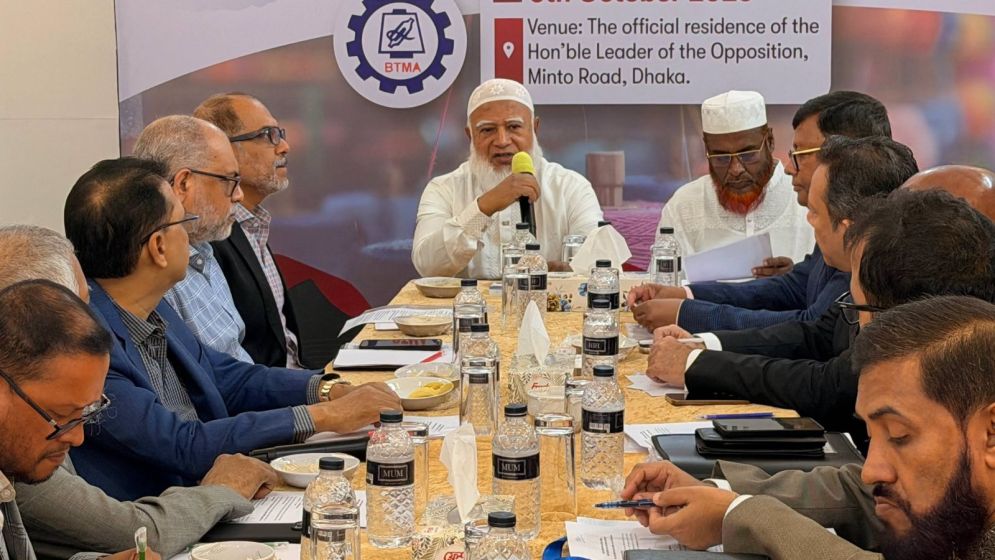
Photo: Courtesy
The Opposition Party, Jamaat-e-Islami, will raise the textile
sector’s problems and concerns in the parliament and work with the government
to help resolve these, said party chief Shafiqur Rahman during a meeting with industry
leaders on Tuesday.
Mia Golam Porwar, assistant secretary general of Jamaat, detailed
the issues discussed in the meeting at a post-meeting briefing.
“He will always speak about the country’s issues and will
work with the government on these matters,” Porwar told reporters, conveying the
opposition leader’s position.
Porwar said the Jamaat ameer also told the textile industry leaders that
the opposition would support government initiatives in the public interest
while opposing measures it considers harmful, describing the approach as
constructive opposition.
Earlier, in the meeting, a delegation of the Bangladesh
Textile Mills Association (BTMA) raised sectoral concerns during a meeting with
Shafiqur at his official residence in the capital.
The government has taken corrective steps over the
persistent shortages of gas and electricity in the country, but still some
textile mills are suffering disruptions, industry leaders told Shafiqur at the
meeting.
“There has been considerable improvement, but some factories
are still facing problems over gas and power supply,” BTMA Vice President
Shafiqul Islam Sarker told the Opposition Leader.
He said the association also discussed problems related to
incentives, increased taxes, Bangladesh’s graduation from the least developed
country (LDC) category and misuse of bonded yarn.
“We have informed the opposition leader about our existing
problems, including issues related to incentives, gas and electricity, LDC
graduation and increased taxes,” he said.
He said the government had already addressed some of the
concerns raised by the industry, while discussions were continuing on others.
He informed that the textile sector has around $32 billion
in investment and serves as a key backward-linkage industry for Bangladesh’s
readymade garment (RMG) sector by supplying raw materials.