



 For all latest news, follow the Daily Sun's Google News channel.


In Bangladesh, drug addiction has emerged as a national public health emergency in recent years. In addition to conventional drugs, many deadly synthetic drugs have permeated every nook and corner of the country alarmingly. At present, the common drugs are cannabis, phencyclidine, heroin, cocaine, yaba and crystal meth. Cannabis, phenedyl, heroin and cocaine enter into the country from India, and yaba and crystal meth enter through the Myanmar border. The majority of the seized drugs are yaba in Bangladesh. About 80% of yaba and crystal meth entered in the country are consumed in the country, and the rest are trafficked to other countries. The majority of the users of the synthetic drugs belong to the age group of 16 to 30. According to Department of Narcotics Control’s (DNC) Annual Drug Report 2025, amphetamine-type stimulants (ATS) seizures rose by 90.58% in 2025 compared to the previous year.
Albeit Bangladesh is not a drug-producing country, it is at high risk of cross-border drug trafficking. As per the government report, around 82 lakh people are addicted to drug, which consists of 5% of the country’s total population. And only in Dhaka city, around 23 lakh people are drug addicted. There is a direct link between chronic drug addiction and crimes, namely sexual assault, rape, domestic violence, and crimes against property like mugging and pilferage. The economic cost of drug trafficking is colossal. According to an official report, around Tk.73 billion is spent on illicit drugs per annum in Bangladesh, and around Tk.59 billion is syphoned off from Bangladesh annually due to drug trafficking.
Geographically, Bangladesh is located in close proximity to the Golden Triangle, Golden Crescent and Golden Wedge, three major drug-trafficking regions of the world. Besides, Bangladesh borders with India and Myanmar, and maximum borders are porous and unguarded. Illicit drugs enter into Bangladesh from India and Myanmar through 105 border points of 18 bordering districts of the country. The main gateways of illicit narcotics are Cox’s Bazar, Cumilla, Brahmanbaria and Jashore. Despite some enforcement initiatives, the crisis created by drug trafficking is aggravating in Bangladesh for some specific reasons. Lately, the drug trafficking routes have changed, and the traffickers in Cox’s Bazar district are opting for coastal and maritime routes for safe transportation of illicit drugs. Some local influential individuals and financiers control the drug markets, keeping close ties with international drug barons working in Myanmar and India. Drug traffickers are changing their modus operandi frequently to eschew the law enforcers. Some tech-savvy young drug traffickers are using the dark web, encrypted apps, cryptocurrency and digital payment platforms, especially MFS, namely bKash and Nagad, for secured communication and transaction. To some extent, a nefarious nexus between a small section of law enforcers and drug peddlers is responsible for today’s grave situation. The drug traders are abusing the legal loopholes to get bail in the case, and thus they sustain this illegal business.
It is imperative to take some pragmatic and effective measures on an urgent basis to control drug trafficking in Bangladesh. The government should take efficacious steps to enhance the capacity of law enforcers with adequate technological apparatus to monitor the dark web, analyse suspicious digital transactions and carry on cyber patrolling to stymie financing in drug trafficking and dismantle transnational drug networks. Technology-based border patrolling infrastructure should be developed, particularly in Teknaf of Cox’s Bazar district. The issue of cross-border drug trafficking should be addressed through diplomatic channels underlining border security and information sharing. Regular dope tests should be made mandatory for public servants, private sector employees, tertiary-level students and drivers. The government should set up more forensic laboratories in strategic areas for quick drug tests. The government should establish at least one special tribunal in every district for quick disposal of narcotics-related cases. The carriers and petty peddlers should be sentenced through summary trial court. A drug rehabilitation centre should be set up at least in every central jail to treat the drug-addicted inmates and quarantine them from others. A coordination cell consisting of the personnel from the Ministry of Home Affairs, ICT, Education and Foreign Affairs can be formed for policy formulation and necessary guidelines to address the drug trafficking.
The concerned authorities know the routes, carriers, dealers, financiers and users. Still, the problem is rampant, and the drug traders have been perpetuating this illicit business for years. All the enforcement efforts will end in smoke if we cannot checkmate the production of illicit drugs and their entry into the country and scupper the supply chain completely. Until and unless local elites, local government representatives, law enforcers, specifically police, RAB, BGB, DNC and Coast Guard, fight drug trafficking vehemently and religiously, we cannot dream a drug-free Bangladesh.
____________________________________________
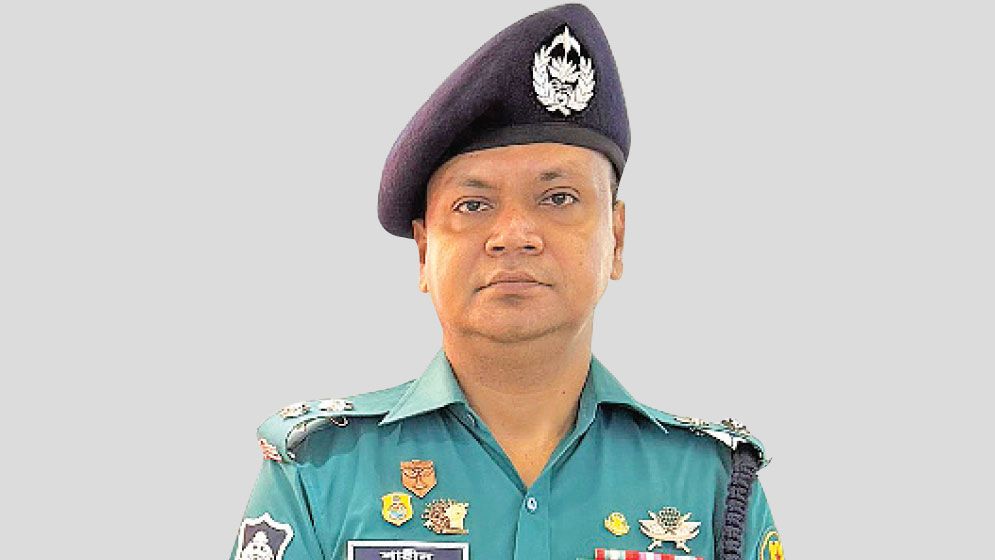
The writer is DC, DB-Wari division, Dhaka Metropolitan Police