


 For all latest news, follow the Daily Sun's Google News channel.


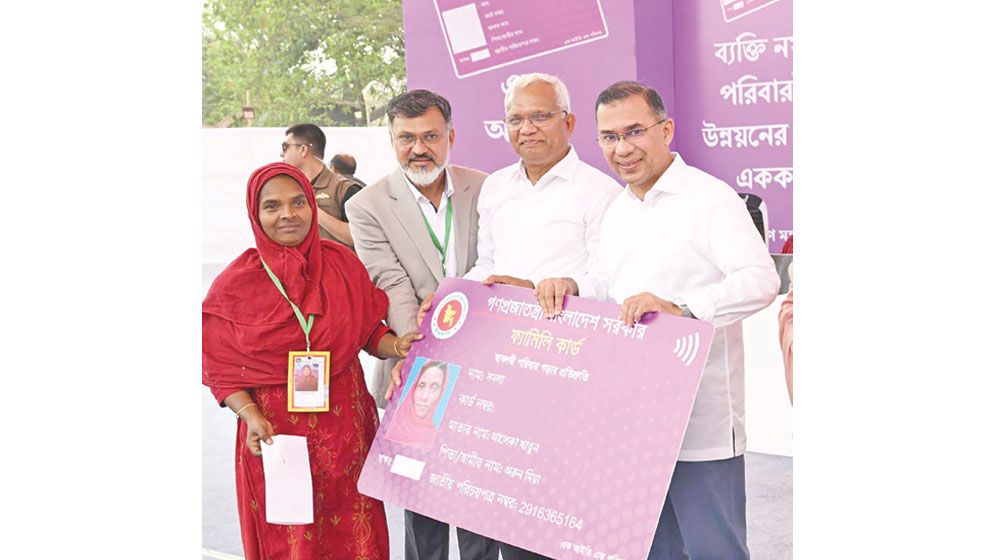
The early days of Tarique Rahman’s premiership have created a sense of optimism among many Bangladeshis who are eager to see the country move towards stability, economic recovery and stronger democratic institutions.
After being sworn in as Prime Minister on 17 February 2026, the chairman of the Bangladesh Nationalist Party (BNP) immediately began outlining an ambitious agenda to rebuild state institutions and restore public confidence in governance. Having returned to Bangladesh after more than 17 years in exile in London, Tarique has taken on the formidable task of reforming what he described as a fragile economy and ineffective constitutional institutions.
Within just a month of assuming office, the new government has already moved to implement several pledges from its election manifesto ahead of the country’s 13th parliamentary election. Efforts have been made to restore order in state institutions, particularly in the administration and the economy. At the same time, the government has begun implementing initiatives such as family cards, farmer support programmes, health cards and a nationwide canal excavation drive—moves that supporters say demonstrate an unusually swift start for a new administration.
Tarique has also emphasised discipline within the administration and law-enforcement agencies. Measures have been introduced to strengthen the chain of command, improve law and order, and address corruption and irregularities in government offices. The prime minister has repeatedly stated that his administration intends to remain accountable to the public.
Perhaps most striking, however, is the personal style of leadership Tarique has sought to project. Rather than exercising authority through grand displays of power, he has attempted to set a different tone by making symbolic but widely noticed changes to official protocol.
One of the most talked-about examples is his decision to follow ordinary traffic rules during official movements. On several occasions, the prime minister’s vehicle has reportedly been seen waiting at traffic signals alongside ordinary commuters—something rarely witnessed in the country’s political culture. The size of his official motorcade has also been reduced dramatically, from more than a dozen vehicles to only four.
He has further ordered an end to the long-standing practice of deploying uniformed police officers along both sides of roads during his travel, a measure that previously caused significant disruption for the public. Such gestures, while largely symbolic, have been widely praised by many citizens who see them as a sign of a more modest and people-centred approach to leadership.
Tarique has also introduced changes to the working culture of government. He has been attending office regularly from around 9 a.m. and has urged civil servants to ensure proper use of working hours.
Cabinet meetings are now being held at the Secretariat instead of the Prime Minister’s Office in Tejgaon, partly to reduce traffic congestion caused by ministerial convoys.
In another notable move, the Prime Minister has chosen to use his personal vehicle instead of a government-allocated one and has announced that he will pay the fuel expenses himself. On his instruction, BNP lawmakers have also pledged not to import tax-free vehicles or accept government-provided residential plots—benefits that have long been associated with political privilege.
Tarique has additionally ordered the removal of banners, billboards and congratulatory advertisements praising him from across the country, including the capital.
Supporters argue that such decisions reflect an effort to discourage political extravagance and cultivate a culture of restraint in public life.
The government has also adopted several austerity measures to reduce state expenditure, particularly amid economic pressures inherited from the previous administration and global economic uncertainties. Offices at the Secretariat have been instructed to switch off half of their lights and set air conditioners at 25.1°C as part of a broader campaign to conserve electricity. Tarique himself has been working on Saturdays in an attempt to speed up administrative processes and clear backlogs.
Another decision reflecting this approach is the cancellation of lavish, state-sponsored iftar programmes during the holy month of Ramadan. The Prime Minister has said he wants to set an example of moderation and discourage unnecessary public spending, describing such steps as consistent with principles of justice and accountability.
Beyond symbolic changes, Tarique has also taken steps to broaden political participation. In line with his 31-point state reform agenda, figures from different political backgrounds have been included in government activities. For example, leaders such as Junayed Saki and Nurul Haque Nur have been brought into the cabinet, signalling an effort to foster political inclusiveness.
Observers have also noted the Prime Minister’s relatively restrained tone towards political opponents. Despite provocations from critics, the BNP leadership has avoided escalating tensions and instead emphasised political tolerance. Economically, the government is focusing on attracting foreign investment, diversifying exports and revitalising industries that have become inactive. Farmers are expected to benefit from the introduction of an agriculture card and loan waivers of up to Tk10,000, while initiatives are underway to expand technical education and prepare young people for skilled employment.
The administration has also pledged strong action against corruption, promising greater independence for the Anti-Corruption Commission and preparing a nationwide drive against extortion networks.
Meanwhile, new initiatives are being planned for expatriate workers through a proposed “Probashi Card”, while the health sector is expected to see expanded services, including the recruitment of 100,000 health workers and the establishment of primary health centres at the union level.
Tarique has also signalled a pragmatic foreign policy. While emphasising a “Bangladesh First” approach, his government aims to maintain constructive relations with neighbouring countries, particularly India, on the basis of mutual respect and equality.
Taken together, these early initiatives suggest an attempt to reshape the country’s political culture and governance style. By projecting accessibility, administrative discipline and political inclusiveness, Tarique appears keen to bridge the long-standing gap between citizens and the state.
Whether these early steps will translate into lasting reforms remains to be seen. Yet for many observers, the first month of his premiership has at least signalled the possibility of a new political chapter for Bangladesh—one that many citizens hope will lead to stronger institutions, greater accountability and a more people-centred democracy.