




 For all latest news, follow the Daily Sun's Google News channel.


COMMENTARY
The link between 1/11 government and Yunus administration
Special Correspondent
Published: 05 Apr 2026, 12:00 AM
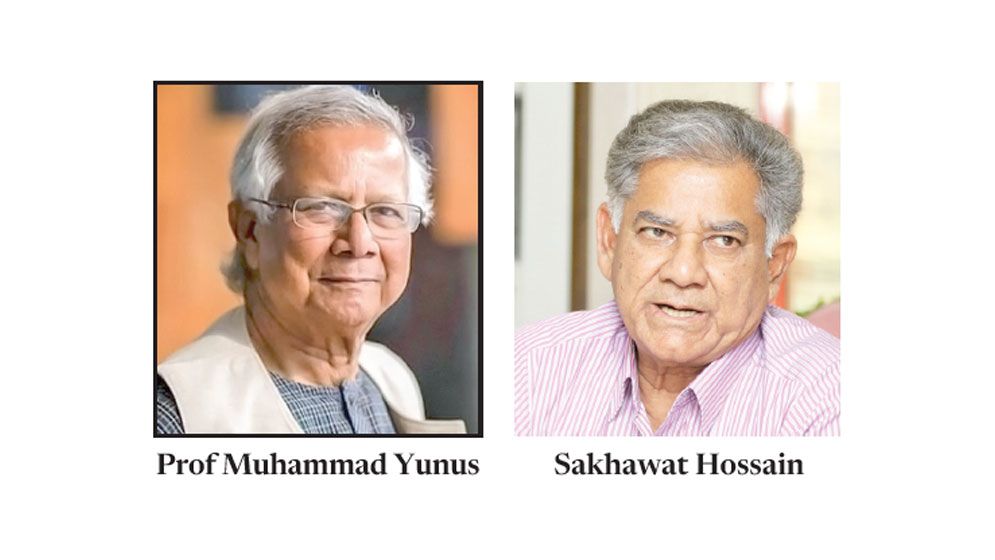
Several individuals involved in or supportive of the 2007 “One-Eleven” (1/11) conspiracy remained influential during the tenure of the interim government. Those who stayed close to power during both non-elected administrations shared a singular goal: the erosion of democracy, the creation of an economy dependent on foreign aid, and the subordination of the country to foreign powers.
Over the past 18 months, these individuals have continued their efforts to implement the unfinished blueprint of One-Eleven. They effectively served as a bridge between the One-Eleven regime and the last interim government. Prof Muhammad Yunus, the head of the interim government, was a key supporter of One-Eleven; indeed, the government formed during that period was originally intended to be led by him.
Brigadier General (retd) Sakhawat Hossain, who was an adviser to the interim government, served as a significant Election Commissioner during the One-Eleven period. He played a central role in attempts to split the BNP and sought to lend questionable legitimacy to Mannan Bhuiyan’s faction of the party. His role in the 2008 election remains contentious. Dr Badiul Alam Majumdar, a key member of the Yunus administration’s reform commission, was another prominent figure associated with One-Eleven. At that time, he played a major role in efforts towards “depoliticisation” under the guise of political reform. Furthermore, at least seven individuals, including Syeda Rizwana Hasan, held key positions in the interim government after having been active during the One-Eleven era. In both instances, they appeared to favour prolonging a “civil society government” without holding elections.
The two editors who promoted the “Minus-Two Formula” during One-Eleven were again prominent during the interim government. When Prof Yunus staged what was described as a “resignation drama”, one of these editors wrote a column expressing strong emotional support for his administration. Over the past year and a half, these two “civil society” voices advocated reforms in place of elections. In 2007, the same newspapers published front-page editorials supporting the “Minus-Two Formula”, insisting that the country’s two leading political figures should step aside. They conducted repeated propaganda campaigns aimed at undermining politicians through character attacks and spreading allegations against private entrepreneurs. For the past 18 months, they have remained consistently critical of politics and democratic processes.
Upon assuming responsibility for governing the country, the present BNP government has initiated steps to bring those involved in the One-Eleven conspiracy to justice. Several key military figures from that period have been arrested and are currently under interrogation. As a result, there is growing public expectation that the depoliticisation efforts initiated in 2007 will finally be scrutinised and judged. Experts suggest that such proceedings could strengthen the country’s democratic institutions and deter future unconstitutional seizures of power.
One-Eleven was not merely a conspiracy by a section of the military; its principal architects emerged from civil society. These actors assumed power following the events of 11 January 2007, with certain elements within the armed forces facilitating their rise. However, these civil society figures have yet to be held accountable. Analysts argue that any serious examination of One-Eleven must include a thorough investigation into their role.
Who were the masterminds?
Who shaped public opinion in favour of such a government prior to the events of 11 January 2007? Who drafted its framework? An analysis of the period suggests that following the BNP’s landslide victory in October 2001, two newspapers – acting as influential voices within civil society – along with sections of the elite and several foreign actors, began advocating for a prolonged, non-elected administration. Some observers contend that Prof Yunus’s receipt of the Nobel Peace Prize in 2006 played a role in advancing this trajectory. Former US president Bill Clinton noted in his autobiography “My Life” that he had recommended Yunus for the award. At a time when the country’s political climate was already volatile, the managing director of Grameen Bank was propelled to the centre of national discourse through the Nobel Prize.
Following this recognition, Prof Yunus turned towards politics and took steps to establish a political party, Nagorik Shakti (Citizens’ Power). The second most prominent figure in this initiative was Mahfuz Anam, editor of The Daily Star. In an effort to build public support, Yunus wrote three open letters, all of which were published in the same newspaper.
These newspapers contributed to escalating tensions between the country’s two major political parties. Along with segments of civil society, they played a role in preventing political consensus. This environment ultimately laid the groundwork for One-Eleven.
Prof Yunus was reportedly the first choice to serve as chief adviser of the One-Eleven government. According to the memoir of former Army chief Moeen U Ahmed, Yunus was offered leadership of the caretaker government in 2007 but declined, reportedly stating that two years would not be sufficient to achieve his objectives. On his advice, Fakhruddin Ahmed was appointed instead. This account suggests that Prof Yunus had long-standing ambitions for extended political influence. After assuming leadership of the interim government, he remained resistant to holding elections for the first ten months. Ultimately, as with the Fakhruddin administration, elections were held under public pressure and international scrutiny following widespread criticism of governance.
The policies of Fakhruddin Ahmed’s government ultimately did not achieve their intended outcomes; however, during its two-year tenure, Bangladesh experienced significant setbacks. Critics argue that aspects of this unfinished agenda resurfaced during the recent interim government, which, over the past 18 months, has also faced criticism across multiple sectors.
It is evident that individuals within the interim administration who sought to delay elections until the final stages were closely associated with One-Eleven. Those who argued over the past year and a half that “reforms must precede elections”, or that “the public supports an extended tenure”, were often linked to that earlier period. Critics contend that they once again attempted to realise the objectives of 1/11. Unless these actors are held accountable, concerns remain that similar challenges to democratic governance could arise in the future. Without decisive action, the stability of democracy and the protection of citizens’ rights in Bangladesh may remain uncertain.