




 For all latest news, follow the Daily Sun's Google News channel.


Mideast war batters Ctg aviation, related businesses
Tk300–350cr loss estimated due to flight, cargo disruptions

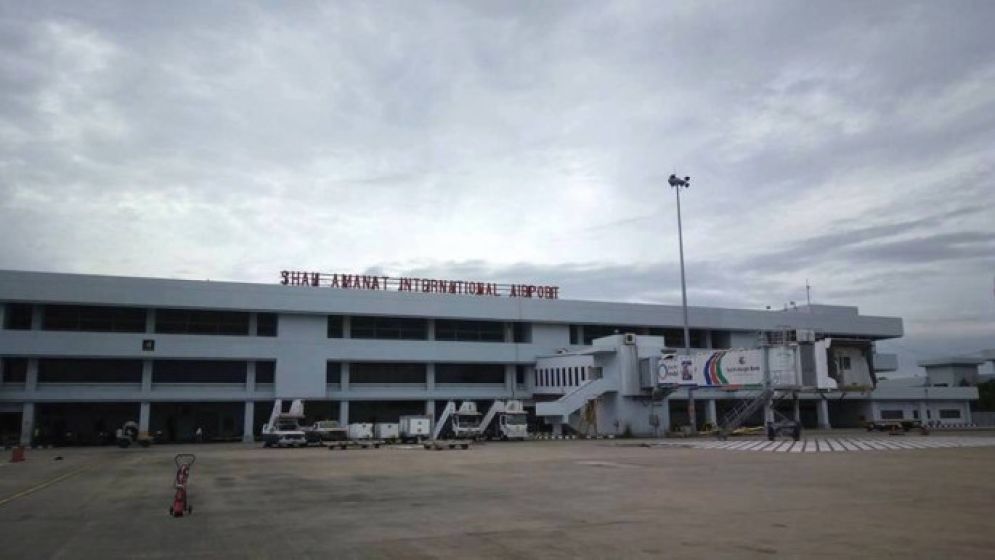
The 38-day Middle East conflict involving the United States, Israel and Iran has dealt a major blow to Chattogram’s aviation and trade ecosystem with Shah Amanat International Airport emerging as one of the worst-hit hubs.
Flight cancellations, disrupted cargo movement and rising operational costs have severely impacted businesses centred around the airport with total losses estimated between Tk300 crore and Tk350 crore, according to industry insiders.
Mohammed Abu Zafar, Association of Travel Agents of Bangladesh’s (ATAB) Chattogram region former chairman and central vice president, said this was an unprecedented loss for the businesses connected to aviation sector.
At the height of the crisis, 277 international flights to and from the airport were cancelled, leaving thousands of passengers, especially Middle East-bound expatriates, stranded and triggering a sharp decline in cargo operations.
Flights to Doha remain completely suspended, while services to Abu Dhabi, Sharjah and Dubai are operating only partially. However, flights to Muscat, Jeddah and Medina continue on a regular basis.
Airport spokesperson Engineer Ibrahim Khalil said the disruption has significantly reduced cargo handling capacity.
“Under normal circumstances, around 25 tonnes of import and export cargo are handled daily. Due to frequent flight cancellations, more than 40% of this capacity has been affected,” he said.
The airport alone lost approximately Tk13 crore in revenue from landing fees, cargo handling and related services during the conflict period. Airlines, meanwhile, have incurred losses exceeding Tk200 crore, he said.
The impact has extended beyond airlines, affecting customs authorities, freight forwarders, clearing and forwarding agents, retailers, fuel suppliers and other service providers connected to the airport economy.
The disruption stems from the wider regional instability triggered by late-February strikes on Iran, which affected shipping through the Strait of Hormuz, a critical artery for global energy and trade. The fallout has driven up fuel prices and freight costs worldwide with direct consequences for Bangladesh’s port city.
Export-oriented businesses in Chattogram have been particularly affected. Perishable goods such as vegetables, fish and baked items – typically transported by air – have seen a sharp drop in shipments.
Chattogram Fresh Foods and Vegetable Exporters Association President Mahbub Rana said exporters were struggling to maintain their operations.
“We used to send around 25 tonnes of goods daily to Dubai, Sharjah and Jeddah. Now shipments are largely limited to Sharjah,” he said, adding that the sector is losing more than $25,000 in export earnings each day.
Freight costs have also surged dramatically. According to industry insiders, container charges have risen by 20% to 40% depending on destination, while air cargo disruptions have further tightened logistics.
Bangladesh Frozen Foods Exporters Association Vice President Dodul Kumar Dutta said freight rates to Middle Eastern destinations have jumped to $8,200 per container from $2,500.
“As buyers do not absorb these additional costs, exporters are forced to bear the burden, making business increasingly difficult,” he said.
He further said that the ongoing ceasefire was unlikely to provide immediate relief as shipments remain delayed.
The aviation crisis has also spilled over into Chattogram’s industrial sector. Manufacturers dependent on imported raw materials are facing higher input costs and slower supply chains.
Confidence Cement PLC Managing Director Zahir Uddin Ahmed said prices of key raw materials, including clinker, limestone, gypsum and fly ash, have risen by 10% to 30% due to disruptions in global supply routes.
This has increased the production cost of a 50kg bag of cement by Tk70 to Tk80, forcing producers to raise prices despite weak market demand.
Transport delays caused by fuel shortages have further compounded the problem, slowing the movement of goods from factories to dealers by up to 20%, Zahir added.
Although a two-week ceasefire has brought some relief, businesses in Chattogram remain cautious. Stakeholders warn that prolonged instability in the Middle East could continue to disrupt aviation, trade and industrial activity in the port city, which serves as a critical gateway for Bangladesh’s economy.