


 For all latest news, follow the Daily Sun's Google News channel.


ALL-PARTY PARLIAMENTARY COMMITTEE TO TACKLE ENERGY CRISIS
A promising start, but a long way to go
Special Correspondent
Published: 26 Apr 2026, 12:00 AM
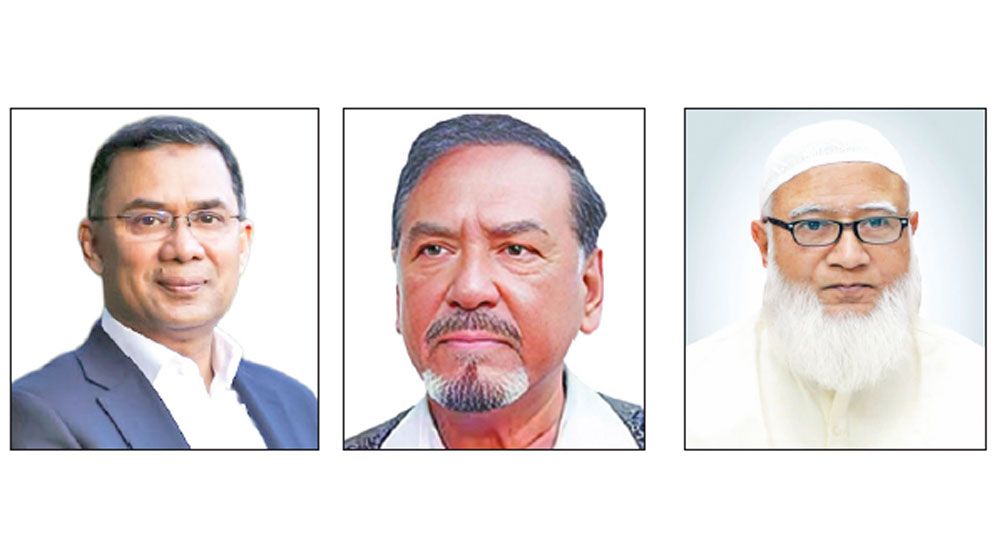
 Leader of the House and Prime Minister Tarique Rahman has set a unique precedent in the history of Bangladesh’s parliamentary democracy. Bangladesh witnessed an event in the first session of the 13th Parliament that had not occurred in the previous twelve. Last Thursday, during the parliamentary session, the leader of the House proposed the formation of a ten-member committee, comprising members from both the treasury and opposition benches, to tackle the ongoing energy crisis. The proposal was immediately welcomed by members of the opposition. This marks a historic milestone in the parliamentary history of the country.
The prime minister did not merely form an all-party committee; he set a rare example by proposing an equal number of members from both the ruling and opposition parties. Despite the ruling party holding a two-thirds majority in parliament, the decision to form a committee with equal representation is a significant event – not only for Bangladesh but also for parliamentary democracies worldwide.
On Thursday, when PM Tarique Rahman proposed the committee with five members from the ruling party and five from the opposition, the speaker formally approved it. The prime minister pledged to take effective initiatives to implement the committee’s recommendations. During the session, Leader of the Opposition Dr Md Shafiqur Rahman expressed his gratitude to the government and voiced his hope that parliament would become the centre for resolving national issues.
In a parliamentary democracy, parliament is the sole platform for resolving issues and the primary forum for decision-making. Here, the ruling and opposition parties carry equal weight. For a meaningful and robust democracy, an effective and balanced parliament is essential – one where the government and opposition work together for the benefit of the people. Political differences are inherent in a democracy; whilst the winning party works to implement its electoral manifesto, the opposition’s role is to monitor government activities, praise good work, and ensure accountability through constructive criticism.
The government and the opposition together constitute Parliament. If a ruling party seeks to impose its will solely through the force of its majority whilst ignoring the opposition, it ceases to be a democracy and risks becoming autocratic – a trend witnessed several times in the past. Conversely, if the opposition fails to act responsibly inside and outside parliament, democracy is jeopardised, and parliament becomes ineffective. Therefore, a responsible role from the opposition is vital. Beyond criticising failures, the opposition must possess the mindset to prioritise national interests over party politics during times of national crisis. Such behaviour not only makes parliament vibrant but also strengthens democracy.
Unfortunately, this culture of responsible behaviour was absent across the last twelve parliaments in Bangladesh. The ruling powers governed at their whim, and the opposition was often denied the floor. On the other hand, the opposition frequently undermined its own credibility by opposing every government move and attempting to topple the government through violent street protests and arson. This led to a dysfunctional parliament and hindered the growth of democracy. In this context, the magnanimity shown by the Leader of the House in the 13th Parliament will be regarded as a significant milestone in the development of Bangladeshi democracy.
Whilst this may be a first for Bangladesh, such practices are standard occurrences globally. In the United States Congress, there are several effective committees comprising members of both the ruling and opposition parties. These committees are so powerful that they can override many executive orders of the President. Following the 9/11 attacks, a joint committee was formed with equal representation from both Republicans and Democrats to advise the President on the necessary course of action. Even in a presidential system, Congress maintains a balance of power.
The United Kingdom, the birthplace of parliamentary democracy, operates on the principle that the government cannot function effectively without the opposition. Parliamentary committees, representing both sides, monitor the work of all ministries. The Leader of the House regularly consults the Leader of the Opposition on critical national issues. Recently, Prime Minister Keir Starmer convened an all-party parliamentary committee meeting regarding the conflict in Iran, where it was decided that Britain would not join the war. Last week, the prime minister held extensive discussions with various political leaders on Middle East issues, following which the Foreign Secretary issued a formal statement. In the UK, the government and opposition set aside their differences during national crises for the welfare of the country, which is why their democracy remains so resilient.
Similarly, in Indian democracy, all parties sit together to discuss and decide on matters of national importance. Despite sharp political differences, they work in unison for the national interest. In August 2024, Prime Minister Narendra Modi called an all-party meeting regarding the situation in Bangladesh. Last year, he convened a similar meeting to determine India’s response following the Pahalgam killings. This is how parliamentary democracy is practised worldwide. Albeit late, Prime Minister Tarique Rahman has introduced this culture in Bangladesh.
This is a hopeful beginning, but we have a long way to go. Beyond the fuel crisis, Bangladesh today is plagued by numerous problems. After a year and a half of the Yunus administration, the country stands on the brink of collapse. The economy has crumbled; the banking sector has deteriorated due to flawed policies and corruption. The private sector is in a state of dire crisis, and citizens are held hostage by “mob justice.” Our right to independent decision-making is entangled in the chains of “slavery-like” agreements with the United States. A vicious cycle of debt is threatening our future. Furthermore, due to the negligence of the Yunus government, children are dying daily from measles outbreaks.
In such a critical situation, it is impossible for the government to solve all problems alone. Therefore, the government and opposition must work together. Political divisions will remain, and the opposition may continue its movements in pursuit of various demands, but such movements must not harm the country or cause suffering to the people. Let parliament be the centre of all solutions. It is the expectation of the people that the government and the opposition unite for the national interest. Only then can we overcome these crises and deliver the country from its current state. The journey of parliamentary practice that began with the formation of the committee to tackle the energy crisis must not stop here; it must go a long way.