


 For all latest news, follow the Daily Sun's Google News channel.


COMMENTARY
Who is the shadow behind the government?
Special Correspondent
Published: 19 Jun 2026, 12:00 AM
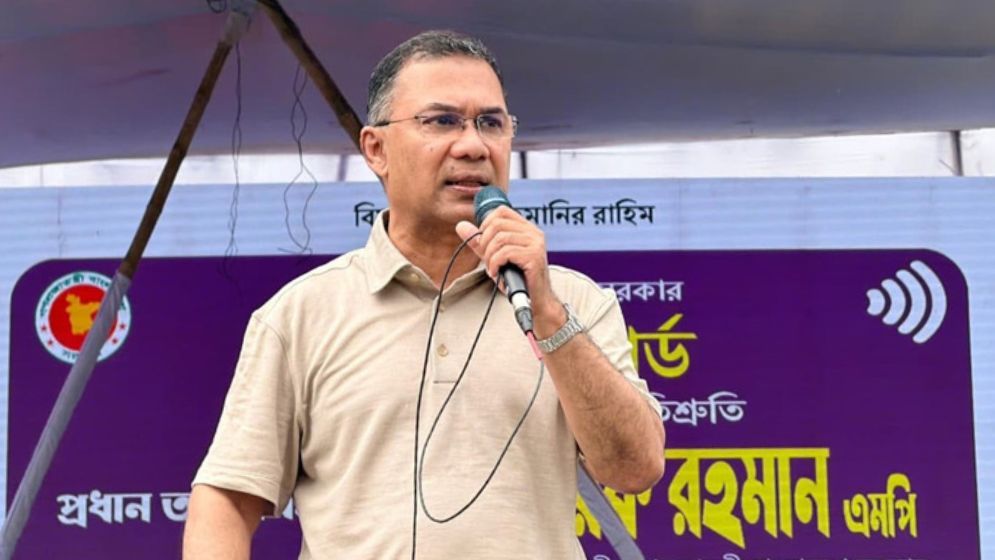
File Photo: PMO
It has been four months since the BNP government, led by Tarique Rahman, assumed power. However, during these four months, a certain quarter within the government has been obstructing the Prime Minister’s and the government’s good initiatives. This faction is preventing the government’s well-intentioned efforts from being implemented. It is as if they are desperate to sustain the old cycle of malice and revenge, instead of embracing Tarique Rahman’s new brand of politics.
The prime minister wishes to govern the country through an inclusive approach, but an internal force within the government seeks to practise politics based on that same old divisive line. Last Tuesday, during an exchange of views with journalists covering the BNP beat, the Prime Minister said, “We must change our vengeful mindset. Let us try to alter our thinking to some extent.” Tarique Rahman added, “Yes, what happened to me—taking revenge now will not bring that back. Therefore, stepping out of the mindset of revenge, we can try to see what we can do for the country. Whether we succeed or not is a later matter; at least we will move forward with a mindset to work for the country.”
But is this aspiration from the prime minister being implemented on the ground? No. The mindset of retaliatory politics remains strong among many within the BNP. Incidents of attacks on political opponents have not stopped in various places. If someone commits an injustice or if there are specific allegations against them, it is the responsibility of the law enforcement agencies and the courts to handle it. Taking the law into one’s own hands is the worst manifestation of vengeance. The politics expected by Tarique Rahman is not visible across all levels of the BNP.
The Human Rights Support Foundation (MSF), an organisation, reported that at least 32 people were killed in mob attacks in Bangladesh in May. This number is the highest in the last six months. The human rights organisation also stated that at least 71 others were seriously injured in around 69 such incidents. According to their monthly report, 21 people were killed and 49 were injured in mob violence in April. Yet, ever since taking office, the prime minister has been speaking of a zero-tolerance stance against mob terrorism. But there is no reflection of this on the ground.
Tarique Rahman and his government have pledged to establish the rule of law and justice from the very beginning. However, in reality, the same old culture is being observed. The unwanted practice of filing new cases to re-arrest individuals even after they secure bail from the Supreme Court is still ongoing.
The Prime Minister repeatedly emphasises economic development. The current government is taking multi-faceted steps to revitalise the private sector. But the reality is quite different. The practical reflection of the government’s initiatives to restore morale and confidence in the private sector is not visible. To revitalise the private sector, its wounds must first be healed. Over the past year and a half, the Yunus government virtually buried the country’s private sector. Various factories fell victim to mob attacks. Many industrial units were destroyed by arson. The BNP government has announced financial incentive packages in the new budget to reopen closed factories. However, the finance minister himself is a businessman and industrial entrepreneur. He knows very well that closed factories cannot be restarted with money alone. Reopening closed industrial enterprises requires an appropriate and supportive environment. During the one-and-a-half-year rule of the Yunus government, the morale of the private sector was shattered. Panic prevails among private sector entrepreneurs. The Yunus government made a despicable attempt to tarnish the image of the private sector. Businessmen were socially harassed through media trials. Unless this situation changes, the private sector will not turn around.
But a circle within the government is preventing the creation of a confident environment in the private sector.
Immediately after taking office, the home minister stated that false cases against businessmen would be withdrawn. Even though four months have passed, these false, harassing cases have not been withdrawn yet. Yunus broke the backbone of the country’s economy by filing these cases. Why were the false cases not withdrawn even in four months? Who is preventing the implementation of the government’s decisions?
The Yunus government illegally froze the bank accounts of numerous industrial entrepreneurs. Punishment before a trial is unprecedented and a clear violation of the constitution. The finance minister had assured the businessmen that he would resolve this issue quickly. But even after four months, the problem remains unresolved.
Today, we live in a globalised era. It is now impossible to do business just by staying within the country. The Yunus government, by brute force, imposed travel bans on many businessmen, industrialists, and individuals from various professions. Such orders are not only a violation of the law and the Constitution but also a contempt of the Supreme Court’s ruling. This is because the Supreme Court ruled that a citizen cannot be barred from travelling abroad solely on the grounds that a case is pending against them. Prof Yunus did not respect the Constitution, the law, or court rulings. But the current government is an elected government of the people. Everyone expects this government to respect the law. The government repeatedly states its position in favour of the rule of law and justice. Then why are these illegal restrictions not being lifted?
Merely providing money to reopen closed factories will not suffice; an investment-friendly environment must be created. False cases, travel bans, and frozen bank accounts destroy the investment climate—which is exactly what the Yunus government did. However, no visible change in that situation has occurred yet. As a result, despite various assurances from the government, the private sector has not caught any wind in its sails.
The prime minister surely knows how the country was run over the past 17 years. Everything was politicised. Even to get a gas line, one had to lobby the government. It was impossible to do business without maintaining a relationship with the government. Therefore, at that time, businessmen were forced to establish ties with the government. There was no alternative to save industries, ensure employment for millions of workers, and keep the wheels of the economy moving. Yet, upon coming to power, Yunus labelled these industrial entrepreneurs as collaborators. Apart from those businessmen who are directly involved in politics, a vast majority of businessmen do not belong to any political party. They have to maintain relations with the ruling party for the sake of industry and the economy. Why should their throats be choked just because there is a change in government?
In the past, every government that came to power wanted to make businessmen and industrial entrepreneurs subservient. The current government spoke of breaking away from this culture, but the reality is different. Once again, the private sector is being divided by digging up the past. Many established and top industrial groups are being treated with a stepmotherly attitude. This division needs to be eliminated for the sake of the country. When the Prime Minister himself places “Bangladesh First” as his political philosophy, who is creating this division and pushing the country backwards?
This government came to power against the backdrop of a mass uprising. The aspiration of that mass uprising was to establish a united, non-discriminatory, and egalitarian Bangladesh. But the Yunus government created division instead of unity. The interim government introduced a horrific tendency to suppress opposing views with brutal force. Yunus did not rid the country of discrimination; rather, he increased it. Instead of an egalitarian Bangladesh, Yunus’s philosophy was a Bangladesh of suppression. To cling to power for a long time, Yunus created a chaotic and anarchic situation in the country. The people of the country were suffocating. To break free from this, people voted for the BNP. The people of this country no longer want violence and conflict. The people of Bangladesh want peace. The BNP gave that message of peace during its election campaign. Now is the time to fulfil those promises. But time is running out fast. If things continue like this, people will lose hope.
The shadow of Yunus still lingers in the administration and law enforcement agencies. They are obstructing the government’s good decisions at every step. Even in four months, the government has been unable to overhaul the administration. In the bureaucracy, associates of Yunus are still ruling, masquerading as BNP sympathisers. It must be remembered that these are the very people who tried until the last moment to foil the election. The core structure of the law enforcement agencies, as arranged by the interim government after taking power, has not yet been changed. The administration or law enforcement forces cannot be changed merely by replacing a few top officials. Changes are needed at the field level. Otherwise, no qualitative change will occur in the country. Recently, allegations have surfaced against the police for assaulting and harassing Bangladesh national cricket team player Nayeem Hasan. Following the incident, the Chittagong Metropolitan Police announced the suspension of two accused police officers. Ever since the tenure of the previous interim government, various questions have been raised regarding the role of the police and other law enforcement agencies in Bangladesh. After this incident, questions have resurfaced as to whether the law enforcement agencies are acting contrary to the government’s political aspirations. BNP leaders themselves are saying that the BNP will not be able to succeed with the administration left behind by the Yunus government.
Most of the law officers appointed across the country by Asif Nazrul—the controversial and corruption-accused law adviser of the Yunus government—are still securely in their positions. They are working against the political intentions of the Prime Minister. The appointments of judges appointed during the Yunus era have not been cancelled. Only a handful of diplomats appointed by the Yunus government in various countries have been removed. The government’s correct message is not reaching the international arena.
BNP Secretary General Mirza Fakhrul Islam Alamgir has spoken out against sycophants. However, just like in the past, the dominance of flatterers has already begun around the BNP government. In the administration and the police force, the dominance of the ‘Neo-BNP’ is on the rise. While the Prime Minister has instructed that postings and promotions in the administration and law enforcement agencies be based on merit and competence, a competition has already begun to prove who was a bigger leader of the Chhatra Dal.
Those who were vocal in their criticism of the BNP from 2001 to 2006, and those who wrongfully advised the arrest of Begum Khaleda Zia, Tarique Rahman, and Arafat Rahman Koko during the 1/11 regime, have now positioned themselves as close associates of the government. A competition of sycophancy has begun.
The day after Eid, the Prime Minister went out to inspect the field situation and found that reality did not match what the City Corporation had claimed. Such surveillance is not possible across the entire country. And that is why, to implement the government’s political commitments and the 31-point agenda, qualified, meritorious, and efficient people are needed much more than sycophants and so-called party men. People who love the country are needed—those capable of swiftly implementing the government’s policy decisions and who have no personal agenda. Otherwise, the wings of the government’s beautiful plans will fly away, and everything will remain confined to imagination.
The time has come for the government to look back. Why has the government been unable to withdraw the false cases even in four months? Why are the sweeping, illegal foreign travel bans imposed by the Yunus government still not being cancelled? Why is mob terrorism not stopping in the country?
Many such questions are now coming to the forefront. The honeymoon period for this government is over. Now, promises must be aligned with actions. If there is a mismatch between words and deeds, mistrust will breed in the minds of the people.
Supreme Court lawyer Manzil Morshed welcomed the government move to criminalise online drug trade.
Speaking to the Daily Sun, he said, “Previously, drugs were not sold online, but now they are being traded through digital platforms. Therefore, including online drug transactions as an offence in the draft law is a positive step.
“Allowing members of the DNC to operate in border areas to combat narcotics trafficking will also be beneficial.”
He also called for raising the term of punishment to curb such offence.