


 For all latest news, follow the Daily Sun's Google News channel.


PM forms panel to address textile sector challenges
Finance, commerce ministers to review industry issues as BTMA, BGMEA seek policy support
Daily Sun Report, Dhaka
Published: 23 Jul 2026, 12:00 AM
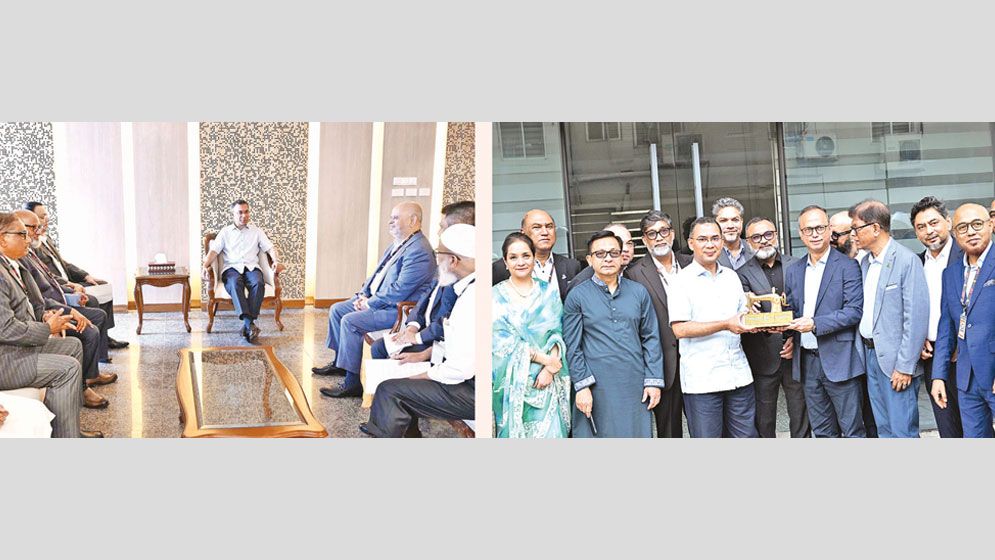
Prime Minister Tarique Rahman formed a high-level committee comprising the finance and commerce ministers to review and resolve longstanding challenges facing the country’s textile industry.
The decision came during separate meetings with leaders of the Bangladesh Textile Mills Association (BTMA) and the Bangladesh Garment Manufacturers and Exporters Association (BGMEA) at the Prime Minister’s Office in the Bangladesh Secretariat on Wednesday.
During the meeting with BTMA leaders, discussions focused on the textile sector’s growth, export potential and persistent challenges, as well as its contribution to employment, industrialisation and the national economy.
BTMA leaders sought greater policy support to enhance the sector’s competitiveness and sustain export growth.
In response, the prime minister praised the industry’s role in creating jobs and driving economic growth, assuring the association of the government’s full support.
The meeting was attended by BTMA President Showkat Aziz Russell, Vice-President Shamim Islam, former president A Matin Chowdhury, former director Syed Enayet Kabir, Engineer Rajib Haider, Director Chowdhury Mohammad Hanif Soyeb, Badsha Mia, Amanat Shah Group Chairman Helal Mia and Munnu Fabrics Managing Director Samiul Islam, among others.
BGMEA seeks policy support
Later, a BGMEA delegation led by President Mahmud Hasan Khan met the prime minister to discuss challenges facing the ready-made garment (RMG) industry, the country’s largest export-earning sector.
The meeting was attended by Commerce Minister Khandakar Abdul Muktadir, PM’s Advisers Dr Rashed Al Mahmud Titumir and Mahdi Amin.
BGMEA leaders sought policy support to address existing challenges, achieve export targets and ensure the sector’s sustainable growth.
Discussions also covered product diversification, export expansion and improving Bangladesh’s global competitiveness.
The association urged the government to adopt coordinated tariff, taxation, financial and export-support policies to help Bangladesh compete with other major apparel-exporting countries.
To support the industry’s long-term growth, BGMEA called for uninterrupted gas and electricity supply, easier customs bond audits, a temporary cargo shed at the airport, land in Gazipur for a workers’ hospital, simplified building regulations, improved logistics at Benapole land port and the inauguration of BATEXPO 2026.
The meeting also reviewed progress toward achieving 100% textile waste recycling in line with European Union circularity goals.
BGMEA President Mahmud Hasan Khan said the association remains committed to promoting sustainable development and complying with EU environmental standards to strengthen Bangladesh’s position in the global apparel market.
The prime minister praised the RMG sector’s role in industrialisation, job creation and export earnings, and assured the delegation of continued government support to enhance competitiveness, ease policy processes, sustain factories and help reopen closed ones.