


 For all latest news, follow the Daily Sun's Google News channel.


Govt turns to solar for energy security
Daily Sun Report, Dhaka
Published: 04 Aug 2026, 12:00 AM
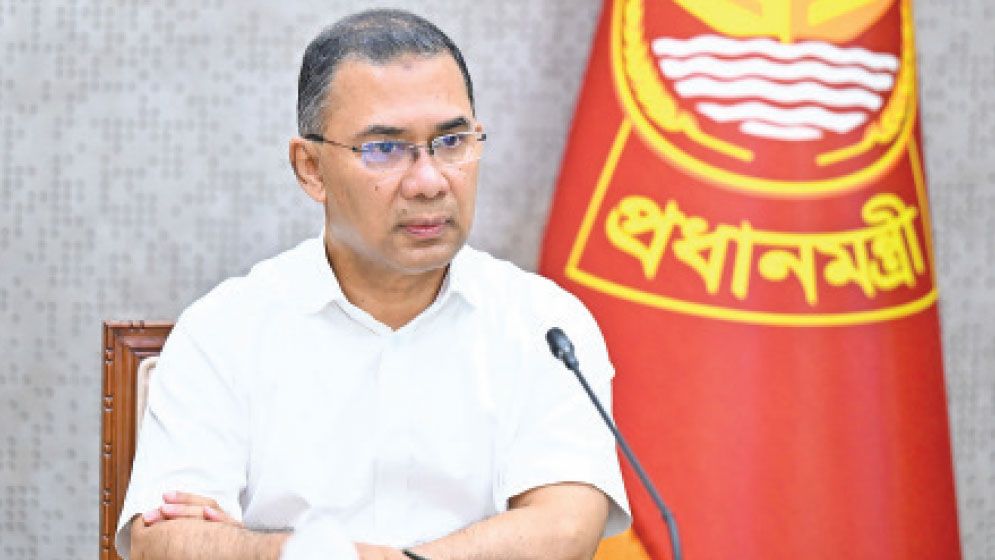
Prime Minister Tarique Rahman on Monday ordered a three-pronged push to expand renewable energy, directing authorities to install solar panels on major government buildings, support domestic solar equipment manufacturing and develop affordable financing to encourage wider household adoption of clean energy.
The directives came at a high-level meeting on solar power at the Prime Minister's Office in the Bangladesh Secretariat, as the government stepped up efforts to strengthen energy security and reduce dependence on conventional power sources.
Under the first directive, rooftop solar systems will be installed in phases at key state buildings, including Bangabhaban, the Prime Minister's Office in Tejgaon, Jatiya Sangsad Bhaban, the Prime Minister's Office and Ministry of Finance buildings at the Secretariat, the Planning Commission building and several other important government establishments.
Rahman also instructed the relevant authorities to facilitate the import of raw materials needed for the domestic production of solar inverters, aiming to strengthen Bangladesh's renewable energy industry and reduce reliance on imported finished products.

His third directive called for a sustainable financing model to make solar power more affordable, accessible and commercially viable for households, encouraging greater use of renewable energy technologies.
The prime minister said installing solar systems on government buildings would demonstrate the practical benefits of renewable energy and help build public confidence in clean energy solutions.
Representatives of PRAN-RFL Group and Walton Group presented proposals to expand rooftop solar installations on residential buildings and allow surplus electricity to be fed into the national grid through net metering. They said wider adoption of rooftop solar could ease pressure on the grid, reduce electricity consumption and create new jobs in the renewable energy sector.
Officials also stressed the need to raise public awareness of the economic and practical advantages of solar power, noting that modern systems are capable of running household appliances, including air conditioners, fans and lifts, making them suitable for both residential and commercial use.
Earlier in the day, Rahman chaired a meeting of the Bangladesh Economic Zones Authority (BEZA) Governing Board, which approved a programme to plant 125,000 trees across the country's export processing zones (EPZs) as part of efforts to promote environmentally sustainable industrialisation.
The board also reviewed plans for new economic zones, discussed the redevelopment of unused state-owned industrial assets, including the former Karim Jute Mills and Latif Bawany Jute Mills in Narayanganj, and considered measures to improve transparency and efficiency in licensing private economic zones.
Later, the prime minister presided over the 15th Cabinet meeting, where ministers approved the draft “Prevention and Remedies for Enforced Disappearance Act, 2026”, formally recognising enforced disappearance as a separate criminal offence.
The proposed law classifies the offence as cognisable, non-bailable and non-compoundable, and creates a legal framework for preventing enforced disappearances, prosecuting offenders, tracing missing persons and ensuring justice, compensation and rehabilitation for victims and their families.
It empowers courts to issue search warrants for missing persons, permits the use of digital evidence, allows trials in absentia where necessary and provides legal protection for victims, witnesses, complainants and whistle-blowers. Families will also have the right to know the progress of investigations and the fate of missing relatives.
The legislation requires investigations and trials to be completed within 120 days each. Convictions may carry life imprisonment and fines, while cases resulting in death, or where a disappeared person remains untraced after five years, may be punishable by either the death penalty or life imprisonment, along with fines of up to Tk100 million.
The Cabinet also gave final approval, subject to legislative vetting, to the “Transfer of Property (Amendment) Act, 2026”, allowing donors to transfer property while retaining lifetime usufruct rights. The change is intended to enable parents and grandparents to transfer assets to children or grandchildren without giving up the right to use them during their lifetime.
In a separate decision, ministers approved the withdrawal of the “Essential Medicines List 2026” and the “Medicine Pricing Policy 2026” following legal concerns over procedural shortcomings. The existing essential medicines list and pricing mechanism will remain in force until revised policies are prepared in consultation with the National Drug Advisory Council.
Read More