





 For all latest news, follow the Daily Sun's Google News channel.


Load shedding: Devastation caused by the five Pandavas
Special Correspondent
Published: 09 Sep 2026, 12:00 AM
Unbearable load shedding has gripped the entire country. Helpless people are distraught over the power crisis. Many are asking, “What is the government doing?” Anger and discontent are growing among the public. But how far is the six-month-old BNP government responsible for this crisis?
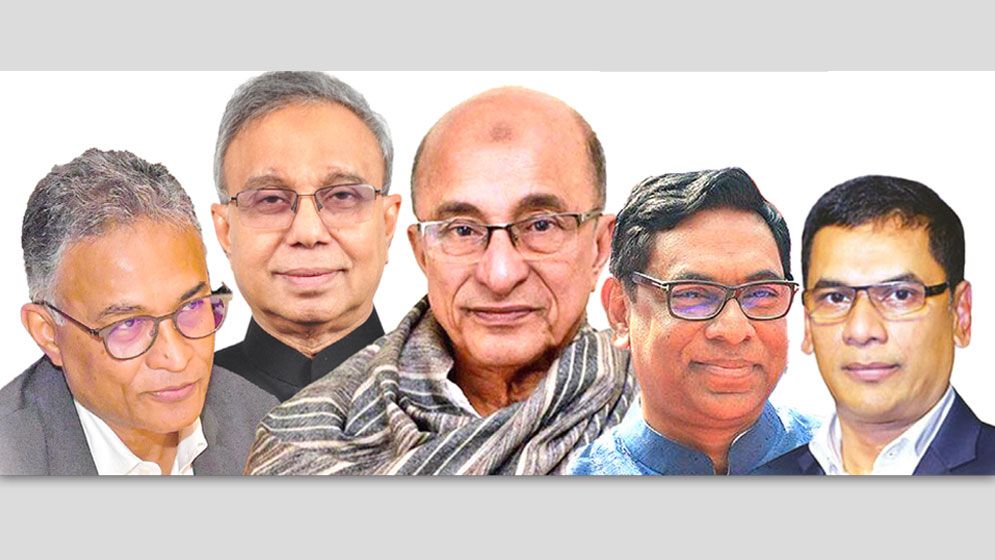
Going a little deeper reveals that the main culprits behind this disastrous power breakdown in Bangladesh are five plunderers nurtured under the patronage of the Awami League government. Sacrificing the national interest, they lined their own pockets. By destroying the power sector, they allegedly siphoned off thousands of crores of taka abroad. These five plunderers are the former prime minister’s power and energy adviser Dr Tawfiq-e-Elahi, former secretary Abul Kalam Azad, former state minister Nasrul Hamid Bipu, his younger brother Opu, and former power secretary Dr Ahmad Kaikaus. Today’s load shedding is the direct result of the looting by these Pandavas.
To understand the core cause of the power crisis, one must first confront a mathematical puzzle. According to official data, the country currently has an installed power generation capacity of nearly 29,000MW. On the other hand, peak summer demand hovers around 18,500MW. In other words, on paper, our capacity is nearly 1.5 times the demand. Logically, there should be no load shedding; instead, there should be a surplus of electricity.
However, the reality is that the country can currently produce only 12,000MW to 14,000MW, leaving a deficit of 4,000MW to 6,000MW. Investigations into the reasons reveal that, out of 143 power plants in the country, more than 71 are either completely shut down or operating far below capacity. Being unable to generate power despite having the installed capacity is the greatest tragedy of Bangladesh’s power sector. The primary blame for this rests on those five plunderers and the former government’s unreserved support for their looting.
Even more tragic is that a major portion of these plants are gas-based. Operating these plants at full capacity requires at least 1,200 million cubic feet of gas per day. However, Petrobangla can supply only 850 million to 900 million cubic feet. This 300 million-cubic-foot shortfall directly cuts power generation by several thousand megawatts.
Why this gas crisis? Petrobangla’s internal data shows that domestic gas production has steadily declined over the last five years. While experts repeatedly urged the authorities to drill new gas wells both onshore and offshore, investments were instead directed towards imported LNG. Whenever LNG prices spiked on the international market or a dollar crisis emerged, the country’s power sector collapsed. This is not merely a technical crisis but a policy failure. A strange tunnel for looting was created during the Awami League government’s tenure.
The situation for coal-fired power plants is even more dire. When massive-capacity plants such as Payra and Rampal operate at full capacity, the national grid remains stable. However, due to months of unpaid dues, suppliers from Indonesia and other countries have stopped or limited coal shipments. Consequently, these plants are unable to utilise even half their capacity.
Meanwhile, although private oil-fired power plants have a capacity of nearly 5,000MW, only around 2,000MW is being generated. According to the Bangladesh Independent Power Producers Association (BIPPA), an additional 2,000MW to 2,500MW could be generated from this sector if sufficient fuel oil were available. However, entrepreneurs cannot purchase oil because more than Tk16,500 crore in dues remains unpaid by the government. The current government is now paying the price for the strategy adopted during the previous government’s alleged plundering.
The legal and policy framework most responsible for this crisis is the ‘capacity charge’. Under this system, the government is obligated to pay private power plants a fixed amount even if they generate no electricity, on the justification that they remain ‘ready’. While such a system exists in many countries, its application in Bangladesh has been extremely opaque and discriminatory. Contractual terms were allegedly crafted in a way that encouraged many plant owners to keep their units idle, as this guaranteed risk-free profits without fuel expenses.
To understand how this situation arose, we must look back to 2008. After coming to power, the Awami League began devising plans for quick solutions to the power crisis. At that time, energy adviser Tawfiq-e-Elahi proposed private-sector initiatives as an emergency fix. This marked the beginning of today’s load-shedding story.
Abul Kalam Azad was appointed power secretary to execute Tawfiq-e-Elahi’s plan. After taking charge, Azad devised the ‘Quick Rental’ model. Permissions were granted to establish power plants in the private sector, and laws were amended accordingly. Through this, Abul Kalam Azad allegedly opened the floodgates to corruption. It was declared that ‘Quick Rental Power Plants’ must be set up to address the immediate power crunch.
Whether the government purchased electricity from these owners or not, they were guaranteed a ‘capacity charge’ payable in US dollars. Azad did not stop at crafting such a regulatory system; he also enacted the Indemnity Act to ensure that these alleged acts of corruption and plunder remained beyond the reach of the law and judicial scrutiny. No legal action or trial could be brought over procurement decisions and other decisions made in the power sector. This mechanism opened the floodgates to alleged looting in Bangladesh’s power sector.
Leaders, sub-leaders and mid-level operatives of the ruling Awami League began applying for quick-rental projects, and quick-rental licences were allegedly handed out in exchange for transactions worth thousands of crores of taka. The power sector became a hotbed of rampant looting. The second and biggest plunderer in the power sector emerged soon after: Nasrul Hamid Bipu. This corrupt individual is alleged to have been most responsible for ruining Bangladesh’s energy and power sector.
Serving as the minister in charge of the Ministry of Power, Energy and Mineral Resources for more than 10 consecutive years, Bipu turned this crucial government ministry into a family estate, according to allegations. For a decade, an unbridled spree of looting took place. His corruption stories rival tales from the Arabian Nights. Bipu was not alone—his brother, wife, son and maternal uncle were also alleged to have looted vast amounts from the power sector. Over 10 years, Bipu’s alleged plunder exceeded Tk1 lakh crore, which at one point was higher than the country’s total annual national budget.
During his tenure in the power and energy sector, money was everything. He allegedly set up companies to siphon off thousands of crores and established a family syndicate of corruption.
One chilling tale of such alleged corruption centres on the Matarbari project.
Bipu attempted to award the construction of the country’s largest LPG terminal in Matarbari, Cox’s Bazar, to a consortium consisting of Japan’s Marubeni Corporation, Dutch-Swiss energy trader Vitol and a company named Powerko International. According to the report, this consortium was essentially Bipu’s family enterprise. The project was initiated under a public-private partnership with the Bangladesh Petroleum Corporation (BPC), under the ministry, at a cost of $305 million (Tk2,500 crore).
How could a company with a paid-up capital of merely $100—Powerko International—become part of a consortium seeking a $305 million project? Investigative tracking pointed directly to former State Minister for Power, Energy and Mineral Resources Nasrul Hamid Bipu himself. Powerko International was registered in Singapore and Bangladesh.
Documents and data analysis reportedly reveal that Powerko International was controlled by Bipu’s relatives and close associates. Top executives from Hamid Group, Bipu’s family business, were key figures behind Powerko. Nasrul Hamid himself once served as chairman of Hamid Group. The family enterprise operated multiple businesses through various subsidiaries, with Bipu serving as managing director of several of them.
Additionally, he and his family members held significant shares in these companies. Filing documents with business registries in Singapore and Bangladesh show that the primary shareholder of Powerko was a man named Kamruzzaman Chowdhury. A review of his identity documents and social media activity reportedly revealed that Kamruzzaman Chowdhury is Bipu’s maternal uncle. He was also involved with Hamid Group for a long time, while his son, brother and nephews worked as senior executives there.
Singapore filings show that an alternate director of Powerko International was Murad Hasan, who also served as its chief operating officer (COO). Official documents confirm that, as COO of Powerko, Murad Hasan directly participated in negotiations with BPC for the Matarbari LPG terminal project.
The same Murad Hasan was also the CEO of Delco Business Associate, a subsidiary of Hamid Group. In his 2014 parliamentary election affidavit, Nasrul Hamid stated that he was the managing director of Delco and held a substantial number of its shares. Currently, Delco’s ownership rests with his son, Zarif Hamid, and younger brother, Intekhabul Hamid. The relationship between Delco and Powerko extends beyond Murad Hasan. Undisclosed connections point to 32 Pragati Sarani, Baridhara—the initial registered address of Powerko International.
This address houses showrooms for three foreign office-furniture brands: Kaimrich, Sunon and Euro. The distributor for these foreign brands in Bangladesh is Delco. Delco’s website also lists its showroom address as 32 Pragati Sarani, Baridhara. Furthermore, domain-registration records for Sunon Bangladesh (sunon-bd.com) show that it was registered at this exact address under Intekhabul Hamid’s name. In short, Powerko was registered at the address of Delco’s showroom.
Bipu’s younger brother, Intekhabul Hamid Opu, is himself the managing director of multiple units under Hamid Group. Intekhabul Hamid connects directly to Powerko International’s managing director, Nabil Khan, an Indian national who manages the Middle East operations of a Dubai-based investment firm and a Singapore-based shipping line. The investigation further reveals another person involved with Powerko: Tarek Khalil Ullah, an assistant general manager at the company who worked at Hamid Group for a long time and is a close associate of Intekhabul Hamid. Documents show that two other Hamid Group employees were present at the RJSC office during Powerko’s incorporation, serving as witnesses.
An ID check and LinkedIn profile review of one witness, Jahangir Alam, identified him as an assistant manager at Hamid Group. Although they ultimately did not get the Matarbari contract, Marubeni, Vitol, Powerko and Delco secured contracts worth hundreds of millions of dollars from Bipu’s ministry. Dutch-Swiss energy company Vitol secured LNG supply contracts in three phases without any open tender. Vitol jointly held 30 per cent ownership of the Matarbari LPG terminal alongside Powerko.
Vitol received three energy-supply contracts worth nearly $100 million from Petrobangla, under the Ministry of Power, Energy and Mineral Resources, after forming the consortium with Powerko. Following the consortium’s formation, another member, Marubeni, also received work from Bipu’s ministry. In May 2021, Marubeni signed a memorandum of understanding (MoU) with the Electricity Generation Company of Bangladesh (EGCB)—an entity under Bipu’s control—to construct a 100MW solar power plant.
Both Vitol and Marubeni have faced global controversies. In 2012 and 2014, Marubeni was forced to pay more than $100 million in fines to the US Department of Justice over bribery charges relating to government contracts in Nigeria and Indonesia. Following this, Japan’s development agency JICA banned Marubeni from participating in JICA-funded projects for nine months.
Similarly, in December 2020, a subsidiary of Vitol entered into a deferred prosecution agreement with the US Department of Justice over bribery in Brazil, Ecuador and Mexico, paying $164 million in penalties.
Investigations further reveal that Nasrul Hamid’s younger brother Intekhabul Hamid Opu, along with a nephew of the former Bridges Minister, secured contracts worth Tk8,000 crore through at least four companies over five years. In the 2020–21 fiscal year, they secured two Advance Metering Infrastructure projects from Dhaka Power Distribution Company (DPDC) and Northern Electricity Supply Company (NESCO), valued at Tk2,000 crore.
In 2021–22, the same company secured another mega project worth Tk500 crore from DPDC under the guise of setting up a mobile app and customer portal. Through another firm, Bipu’s brother secured eight mega projects categorised under network and security.
Among these, on 1 June 2023, they secured a project from the Bangladesh Rural Electrification Board (BREB) to install 50 lakh smart meters at a cost of Tk2,300 crore. Typically, passing a power project from inception to approval required payments to the syndicate at at least 20 stages. Over the last two years, 27 solar-based power plants were approved. Observers believe illegal transactions worth hundreds of crores took place in these deals. Among these plants, Bipu’s younger brother Intekhabul Hamid Opu secured two.
Thus, over the past decade, the Ministry of Power and Energy effectively functioned as Bipu’s private property.
Nasrul Hamid Bipu did not accept money domestically. He would tell close confidants that he felt “disgust looking at taka”. His preference was for ‘dollars’ or ‘euros’. His corrupt financial transactions were allegedly conducted abroad.
So far, assets belonging to Bipu and his family have been traced across at least 16 countries, though many suspect his plundered wealth extends to even more nations. Countries where Bipu’s assets have been identified include the United Arab Emirates, the United States, the United Kingdom, Bermuda, Malta, the British Virgin Islands, Monaco, Cyprus and Turkey.
Allegations have emerged that Bipu laundered thousands of crores to the United States through a company set up there. During its incorporation, Bipu used the address of his personal residence in Florida, USA. The five-bedroom home carries a market value of $3,617,415 (equivalent to Tk42.34 crore). There, alongside his wife Seema Hamid and a businessman named Sharif Haider, he obtained a trade corporation licence under the name ‘Pathfinder International’.
Under this corporation, they built nearly a dozen and a half businesses, including Mobil gas stations. The Florida gas station alone was bought for several million dollars, and Bipu allegedly laundered thousands of crores to the US through Sharif Haider.
In Dubai, UAE, three luxury apartments were registered under his wife Seema Hamid’s name. Bipu’s son, Zarif Hamid, resides in a luxury bungalow on Palm Beach in Dubai, managing several businesses there. Bipu owns a house in the Stratford area of London, along with business interests in Manchester. In Canada, Bipu owns a residential hotel and a petrol pump. At least three of Bipu’s entities are registered on the Singapore Stock Exchange, holding investments worth thousands of crores. In Malta, a bar and casino were found under his wife Seema Hamid’s name. In Malaysia, a majority share of a rubber factory worth Tk850 crore is held under his son Zarif’s name.
Plundered funds from the power sector have built mountain-high assets across the globe. Domestically, Bipu also holds thousands of crores in assets, which are currently being managed by Abu Bakar Siddique, husband of Syeda Rizwana Hasan, former adviser to the Yunus government. Due to Rizwana’s influence, no visible lawsuit has been filed against Bipu. The final villain behind the destruction of the power sector was former power secretary and later principal secretary to the prime minister, Dr Ahmad Kaikaus. Ahmad Kaikaus served as secretary of the Power Division for less than two years, yet during this brief tenure, he allegedly orchestrated massive plunder in the sector.
Over the 15 years of the fascist regime, there was no planned development in the power sector—only planned looting. As a result, the power sector is now submerged in debt and plunged into darkness. Today’s load shedding is the direct consequence of the previous government’s policy of plunder.