



 For all latest news, follow the Daily Sun's Google News channel.



There was a time when a Bangalee did not have to be “trendy” to be considered modern. Today, that idea may sound almost contradictory, because “trendy” has become a curious measure of social worth. Social media tells us what to wear, what to eat, where to go, what to listen to, and even how to speak and think. It decides what is fashionable and, by implication, what is not. Follow the trend and you are deemed contemporary; resist it and you risk being dismissed as old-fashioned, irrelevant or simply “outdated”.

Earlier the word “trendy” did not carry the cultural authority it does today. Yet the Bangalee of that era was hardly disconnected from modernity. Young people were curious about the world, receptive to new ideas and conscious of fashion. They listened to new music, watched new films, wore jeans and denim shirts, carried cassette players and followed changing styles. Yet they did something we increasingly struggle to do today: they remained recognisably Bangalee while embracing the new.
A young man might spend an afternoon in jeans and sunglasses and appear in a panjabi for Eid day without feeling the need to choose between the two identities. Women’s fashion could be contemporary without becoming culturally anonymous. Modernity and tradition were not necessarily enemies. Fashion existed, but it did not dictate identity. That distinction matters.
Today, we live in a far more connected world. A fashion trend from New York, London or Paris can reach Dhaka almost instantly. A new phrase, hairstyle, restaurant, brand or lifestyle can become fashionable overnight. Algorithms have transformed trends into an industry, and we have become remarkably efficient consumers of whatever that industry produces. The problem is not that we are exposed to the world. The problem is that exposure can easily become imitation.
The race to be “trendy” is producing an increasingly curious paradox: everyone wants to stand out, yet everyone seems to look the same. Scroll through social media and the sameness is hard to miss: similar photographs, similar clothes, similar poses, similar captions, and even similar expressions. Individuality itself seems to have acquired a template.
The Bangalis of the 1980s had no algorithm deciding what was worth liking. Taste was cultivated more slowly: at home, among friends, through books, music, cinema, neighbourhood conversations and personal experience. A song became popular because people listened to it. A book mattered because people read it. An actor or singer earned admiration because audiences connected with the work. There was no digital scoreboard measuring every moment of popularity.
More importantly, modernity itself meant something deeper. To be modern was to embrace new ideas. To question authority. To think scientifically. To challenge superstition. To discuss literature, music, art and politics. To respect differences. To demand greater equality between men and women.
Today, however, our understanding of modernity often appears to have become remarkably superficial. An expensive smartphone does not make anyone modern. Wearing an international brand does not automatically make someone sophisticated. Sprinkling English words into a conversation does not turn someone into a global thinker.
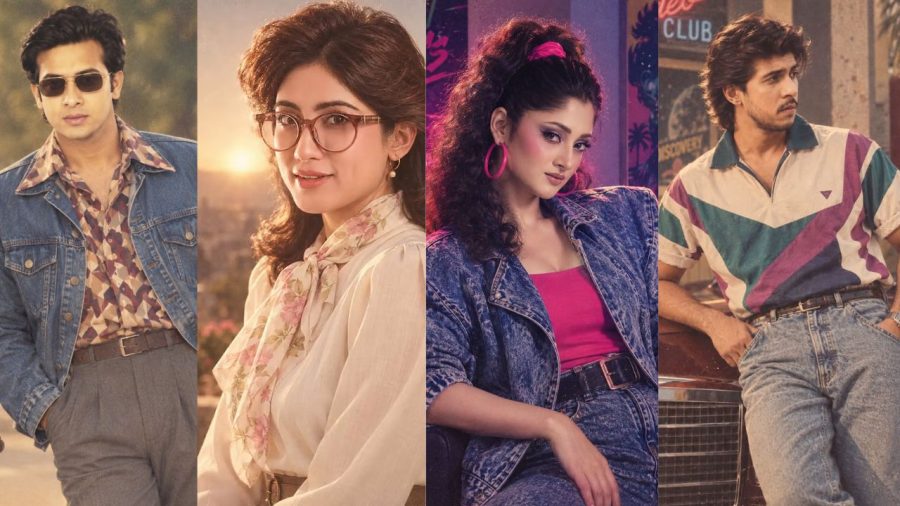
Modernity is not a costume, instead it is a way of thinking. There is nothing wrong with embracing global culture. A confident society should be curious about the world. We should listen to foreign music, enjoy international cuisine, follow global fashion and learn from other cultures. But openness to the world should not require cultural amnesia.
We can speak English without being embarrassed by Bangalee. We can wear Western clothes without dismissing traditional attire as backward. We can enjoy global culture without treating our own culture as something to be hidden away for special occasions.
Looking back at the 1980s does not mean pretending that the decade was some golden age. It was not. Society was more conservative, technology was limited and opportunities were fewer. The past deserves neither blind nostalgia nor blind rejection. But it does offer us a useful lesson. You do not have to cut your roots to grow. In fact, the deeper the roots, the farther the branches can reach.
So, perhaps the question for today’s Bangalee is not whether we are trendy enough but whether we are original enough. Because trends are temporary. What is fashionable today can look ridiculous tomorrow. The phrase everyone repeats today will eventually become yesterday’s slang. The brand everyone wants today will eventually be replaced by another. But identity does not go out of fashion. Neither do taste, culture, dignity or individuality.
The Bangalee of the 1980s may not have had the vocabulary of today’s trend-obsessed world. But they understood something that we may be forgetting: being yourself can be more modern than following everyone else. Perhaps that is the kind of “trend” worth bringing back.
_________________________________
The writer is a Senior Sub-Editor at Daily Sun. He can be reached at [email protected]
Read More