


 For all latest news, follow the Daily Sun's Google News channel.


On 21-22 August, at a scenic resort in Savar, the country’s academic elite gathered for a high-profile, two-day dialogue titled “Shaping the Future of Higher Education". Armed with glossy brochures detailing a brand-new blueprint – the grandly titled “Transforming Higher Education in Bangladesh: A National Agenda for Sustainable Excellence (2026-2030)” – policymakers, regulators, ministry officials, and over 60 vice-chancellors patted themselves on the back. They promised a tech-driven utopia: artificial intelligence integration, outcome-based education (OBE) frameworks, and a new higher education academy. However, this “quality regime” is not a panacea for the existing problems facing Bangladesh’s higher education.
Yet step inside almost any university classroom outside that air-conditioned conference hall, and a grimly different reality unfolds. What the University Grants Commission (UGC) and policymakers hail as a modern “quality regime” is, in reality, an administrative compliance. Driven by a bureaucratic obsession with standardised metrics, heavy-handed regulatory compliance, and corporate buzzwords, this regime is systematically crushing the soul of higher education in Bangladesh. It has traded genuine intellectual inquiry for a culture of checklists, leaving our universities hollowed out, exhausted, and insignificant.
At the heart of this crisis is the obsession with "mechanised quality". Over the last few years, the push for institutional accreditation has forced universities to adopt complex, rigid OBE frameworks. On paper, ensuring that students learn measurable skills sounds reasonable. In practice, it has devolved into an administrative nightmare. Academics that should be spending their time brainstorming new research topics, mentoring students, or preparing stimulating lectures are instead drowning in a sea of paperwork. They are forced to map every single lecture to arbitrary “Course Learning Outcomes” (CLOs) and “Program Learning Outcomes” (PLOs), filling out endless spreadsheets to prove compliance to visiting evaluation committees from the Bangladesh Accreditation Council (ACC).
When education is reduced to a series of checkable boxes, classroom changes for the worse. Spontaneity is penalised. A brilliant, tangents-driven debate about a current socio-political crisis or a newly published book is actively discouraged because it does not align with the pre-approved, rigid curriculum matrix submitted to the regulators. We are no longer teaching students how to think; rather, we are training faculty members how to document.
Furthermore, this quality regime operates under a toxic delusion of centralisation. The UGC’s latest vision promises to bridge the quality gap between premium Dhaka institutions and struggling regional universities by mandating uniform digital structures and centralised training. This one-size-fits-all approach ignores the deep structural inequities built into our system. You cannot fix a rural university that suffers from chronic power outages, lacks basic laboratory equipment, and struggles with a severe shortage of qualified local faculty by simply demanding they implement an AI-driven Learning Management System (LMS).
By imposing identical, top-down metrics on vastly different institutions, the regulatory regime does not elevate poor universities – it merely penalises them for their lack of resources while strangling the autonomy of the institutions that actually have the capacity to innovate. Academic autonomy, the absolute prerequisite for any world-class university, has been entirely sacrificed at the altar of bureaucratic control.
This brings us to the most tragic casualty of Bangladesh’s quality regime – the complete suppression of critical thinking and creative research. True research requires intellectual risk, funding, time, and above all, the freedom to question established dogmas. Yet, our current regime views research through a narrow, utilitarian lens. The “National Graduate Employment Framework” touted by policymakers explicitly demands that higher education morph into a glorified vocational pipeline tailored entirely to immediate corporate and industrial needs.
While aligning curricula with industry requirements is valuable, treating universities purely as factories that churn out obedient, technically skilled cogs for the corporate wheel is a dangerous mistake. It strips higher education of its democratic purpose. A university’s role is not just to make graduates employable; it is to create enlightened citizens, critics, philosophers, and scientists who can challenge societal status quos. By prioritising market-driven “soft skills” and technical compliance over humanities, social sciences, and pure theoretical research, we are creating a generation of technically competent graduates who lack the critical faculty to question the world around them and make right/ethical decisions.
Even the regime’s push for increased research output has backfired. By linking institutional funding and faculty promotions to the sheer quantity of publications and patents by 2030, regulators have incentivised a predatory academic culture. Instead of groundbreaking, deeply considered studies, our system now rewards hyper-fragmented, rushed, and low-quality papers published in obscure, “pay-to-publish” journals just to meet annual quotas. We have created a number game, and in doing so, we have completely devalued genuine scholarship.
Bangladesh stands at a critical juncture. The demographic dividend we frequently boast about is slipping through our fingers. If our policymakers sincerely want to “shape the future of higher education", they must realise that true quality cannot be manufactured by an act of parliament, a regulatory decree, or a mandatory checklist.
We must dismantle this stifling, top-down quality regime and replace it with an ecosystem rooted in trust, institutional autonomy, academic integrity/accountability, and huge financial investment. Instead of spending millions on setting up new bureaucratic layers like a Higher Education Academy, funds should be directed toward enhancing faculty salaries to attract top global talent, building world-class laboratories, ensuring faculty job security, and expanding student scholarships.
Regulators and policymakers must step back and transition from being heavy-handed policing agencies into supportive, hands-off facilitators. Let the spreadsheets go. Please give our academics the freedom to teach creatively, give our students the liberty to question boldly, and give our universities the autonomy to breathe. If we do not rescue our campuses from this bureaucratic quicksand soon, we will be left with officially accredited, apparently digitised higher education institutions that house nothing but empty minds.
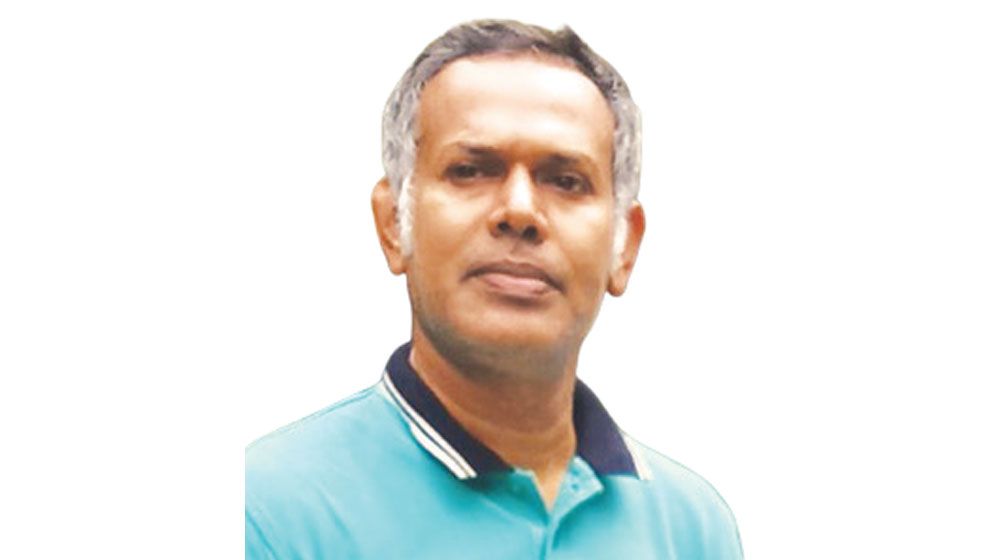
The writer is an Associate Professor in the Department of English, Stamford University Bangladesh. He could be contacted at [email protected]