



 For all latest news, follow the Daily Sun's Google News channel.


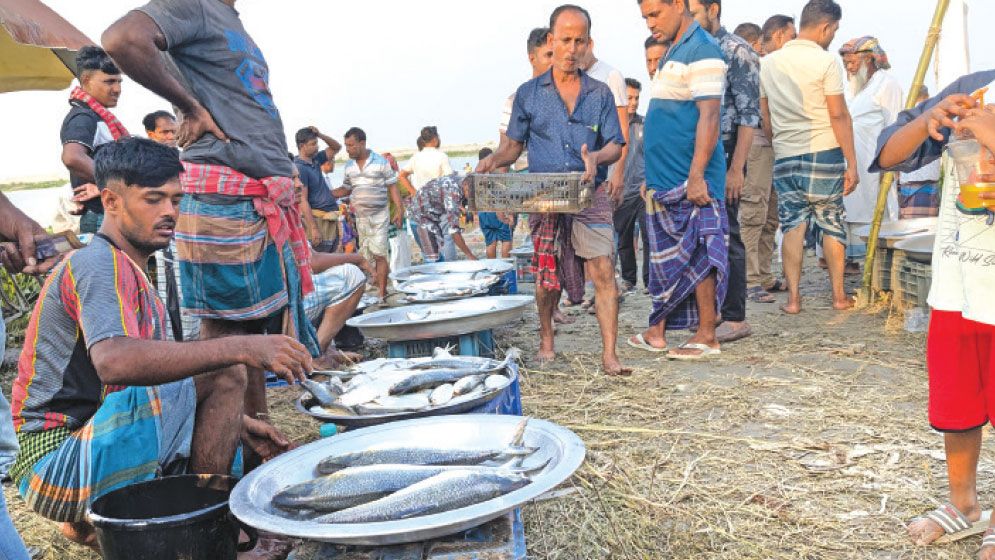
Illegal fishing and sales of hilsa are continuing in the Padma River in Shibchar upazila of Madaripur, with temporary markets bustling along the riverbanks despite a 22-day government ban to protect mother hilsa during the breeding season.
A recent visit showed that mother hilsa carrying eggs are being caught and sold openly in areas including Bandarkhola, Madbarerchar, Char Janajat and Kanthalbari unions, with buyers travelling from different places to purchase the fish.
During a visit to Kazirsura and Hira Khan areas of Char Janajat in Bandarkhola union on Tuesday morning, fishermen were seen returning from overnight fishing trips, while trawlers arrived at river ghats carrying fresh catches. Traders and middlemen bought the fish and sold them at makeshift markets along the riverbank.
Hilsa weighing more than one kilogram was selling for Tk 1,600–2,000 per kg, while smaller fish were priced at Tk500–1,000 per kg. Some buyers were  purchasing between five and 15kg at a time. The government has imposed a ban on catching, transporting, storing, marketing and selling hilsa across the country from 8 to 29 October to ensure the safe breeding of mother hilsa.
Despite the restrictions, the temporary markets have become gathering places for fishermen, traders and buyers. Small shops selling food, drinks and other items have also sprung up along the riverbanks. A trader at Hira Khan Bazar in Char Janajat, speaking on condition of anonymity, said hilsa was being sold freely at the temporary market from morning until evening.
However, locals said there had been no visible, strong enforcement drive by the local administration or law enforcement agencies to stop the illegal activities.
Some fishermen said they had borrowed between Tk60,000 and Tk1 lakh each to buy fishing nets, leaving them under pressure to continue fishing despite the ban. They said the prospect of losing their income and being unable to repay their loans had forced them to continue fishing, adding that hilsa catches had been good this season.
Shah Alam Munshi, a buyer from Sheikhpur, said he travelled to the riverbank market because he could see the fish before buying them and choose according to his preference. “The fish are fresh, and I can select them myself. Fishermen bring fish here, and people buy them every day,” he said.
Wahiduzzaman, president of local voluntary organisation Desh, stressed the need to protect mother hilsa during the breeding season, saying a single fish could lay hundreds of thousands of eggs. He called for intensified drives in the river, the closure of illegal markets and government assistance for financially vulnerable fishermen. He also urged local residents to help protect hilsa production and the river’s biodiversity.
Locals alleged that groups involved in illegal fishing had developed an information network to evade raids. According to them, people in the char areas alert fishermen when police or administrative officials approach from the mainland, allowing the fishermen to flee to nearby forests or the middle of the river.
Contacted, Shibchar Upazila Senior Fisheries Officer Satyajit Majumder said a shortage of manpower had made it difficult to maintain full surveillance across the vast area. “Whenever we receive specific information, we immediately launch an operation,” he said, adding that no one had been arrested and no nets had been destroyed in operations since the ban began, though enforcement efforts were continuing.