


 For all latest news, follow the Daily Sun's Google News channel.


TAMIM’S TEST: REFORM, RESTORE, REBUILD
Daily Sun Report, Dhaka
Published: 09 Apr 2026, 12:00 AM
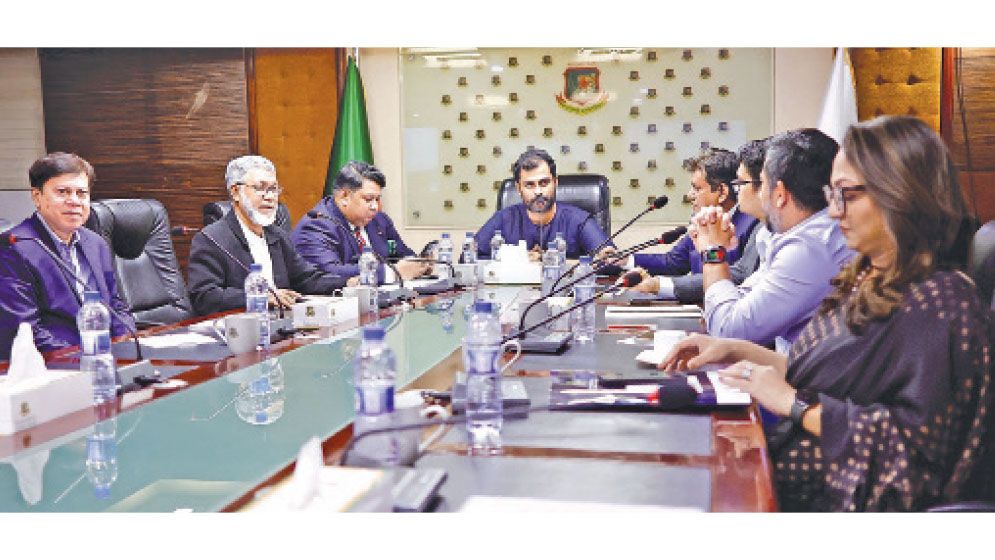
PHOTO : TANVIN TAMIM
Holding office is not a privilege to enjoy but a responsibility to bear - and one that allows little room for error. As Tamim Iqbal steps into the top job at the “new” Bangladesh Cricket Board, the expectations are immediate and unforgiving. Delivering results will be the baseline, not the benchmark, and any misstep risks instant scrutiny in a system that has shown little patience of late.
With the Aminul Islam Bulbul-led board dissolved on Tuesday, Tamim - at 37 - becomes the youngest president in the country’s cricket history. But symbolism will not soften the task ahead. The fate of predecessors like Faruque Ahmed and Bulbul, both former national captains who struggled to steady the ship, is a reminder of how volatile the role has become.
Now, Bangladesh’s most prolific opener enters a position where legacy will depend less on past runs and more on present decisions. His challenges are not merely administrative - they are structural, cultural, and deeply political.
Dhaka League revival
Perhaps the most urgent issue is restarting domestic cricket in Dhaka. Under the previous board, several clubs boycotted tournaments, calling the administration “illegal”. In response, the board created alternative competitions, including a 12-team first division league and a T20 tournament with players from non-participating clubs.
The fallout has been severe. The second division suffered similar boycotts, while the third division was nearly defunct, with only a handful of teams registering interest.
Most critically, the Dhaka Premier Division Cricket League (DPL) - the nation’s only List A competition and a financial lifeline for many - remains in limbo. National cricketers have openly voiced their frustration, as the DPL provides their primary yearly income.
For Tamim, bringing the DPL back is not just about scheduling - it is about restoring trust among cricketers, the game’s most vital stakeholders.
“Regarding the Dhaka Premier League, we have decided that we will immediately sit with each team and hold discussions with them. Our target is to announce the player transfer window as soon as possible and get the tournament started on the ground quickly,” Tamim told reporters on Wednesday after the second board meeting of the new cricket board.
“There is some concern regarding venue availability, but if necessary, we are even willing to rent grounds. Because now there are several private academies that are good enough to host List A matches. So if needed, we will go down that route,” he added.
Repairing ties with India
Diplomatically, the task is just as delicate. Bangladesh’s cricketing relationship with India has cooled following tensions over Mustafizur Rahman’s Indian Premier League exit and the T20 World Cup withdrawal cited as a “security concern”.
The situation is further knotted by disagreements involving the Board of Control for Cricket in India and International Cricket Council, leaving future bilateral engagements uncertain. India’s white-ball tour of Bangladesh - originally slated for 2025 and shifted to this September - now appears doubtful.
With global boards finalising the next Future Tours Programme, Bangladesh needs India onside. Tamim must therefore become a bridge-builder, easing tensions to protect Bangladesh’s position on the international calendar.
Infrastructure and investment
Tamim has long criticised the board’s reluctance to reinvest its sizable reserves - reportedly around Tk1,400 crore - into the game. Now he has the authority to act. Improving drainage systems, upgrading stadiums, and developing cricketing hubs outside Dhaka could define his presidency.
A more decentralised structure would widen the talent pool and ease the pressure on a handful of overused venues.
Continuity amid change
Even amidst reform, Tamim must preserve operational continuity. Despite the turmoil, certain initiatives under the previous board may hold long-term value. A full reset could cause further instability; selective continuity may help maintain flow during the transition.
Delivering an inclusive election
At the centre of the ad hoc committee’s mandate is the responsibility to conduct a free, fair, and inclusive election within three months. Tamim has already expressed his intent to create an environment where all stakeholders - players, organisers, and administrators - can participate. But achieving such consensus in a fractured landscape will be difficult. Restoring institutional credibility and ensuring transparent processes will be essential.
An inexperienced committee
Complicating matters is the committee’s makeup. Only three members - Tanjil Chowdhury, Rafiqul Islam, and Fahim Sinha - have prior experience on a cricket board. The rest must learn on the job, and quickly.
In such circumstances, decision-making, coordination, and crisis management become even more critical. With both leadership and structure in transition, the margin for error has never been thinner.