


 For all latest news, follow the Daily Sun's Google News channel.


Netanyahu on the razor’s edge
Agencies, Jerusalem
Published: 06 Nov 2026, 12:00 AM
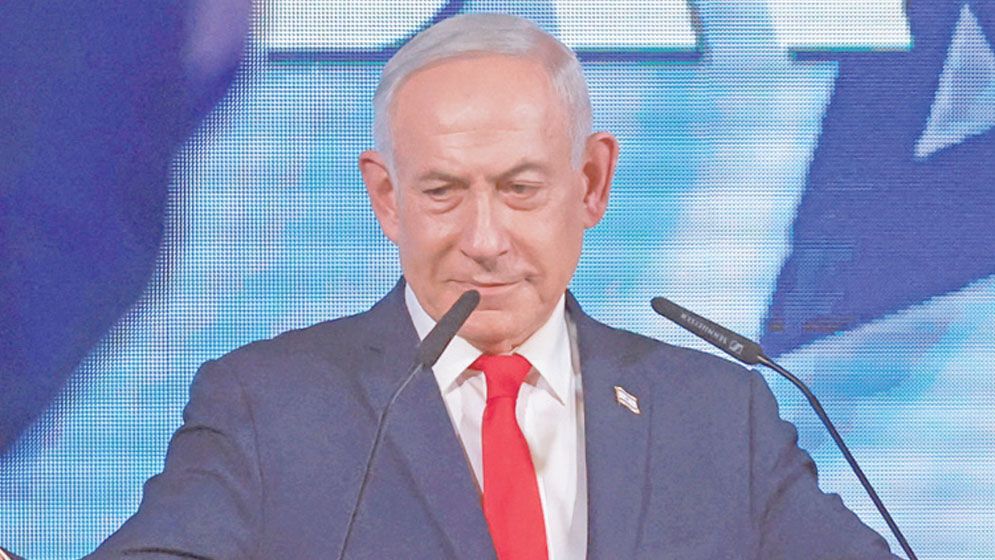

Israeli Prime Minister Benjamin Netanyahu is now on a razor edge as a string of setbacks, including the 27 October Israeli legislative elections and the subsequent 3 November US midterm elections, is haunting him.
Israeli opposition leaders said Wednesday that Netanyahu could not remain in power following Democratic gains in the US midterm elections, warning that his continued rule threatens Israel’s international standing and relations with its closest ally.
Yair Golan, leader of the opposition Democrats party, said the election results had revealed “just how toxic Netanyahu is among both Democrats and Republicans.”
Israeli lawmaker Gilad Kariv also called for Netanyahu to leave office.
In a statement, Kariv said Netanyahu “destroyed the relations with the Democratic Party and with half of the Republican Party.”
Netanyahu’s position in the post-election battle to stay on as Israel’s prime minister weakened on Thursday after an ultra-Orthodox Jewish party withheld support for any nominee and an Arab-led party endorsed his main opponent.
His bloc won 53 seats in the 120-member Knesset, compared with 48 for Jewish opposition parties and 19 for Arab parties.
Israel’s president was due to meet Netanyahu and his chief political rival Gadi Eisenkot to decide which of the two men to pick to form a government, after holding consultations with smaller parties.
Israel’s 27 October election ended in deadlock with neither Netanyahu nor Eisenkot, a former military chief, securing a clear path to a majority in parliament.
Netanyahu, at risk of losing power, has seized onto an investigation by election officials into possible vote tampering to cast doubt on the results, accusing Arab-led parties of stealing the vote. Critics accuse Netanyahu and his partners of trying to undermine the results, which he denies.
Meanwhile, US President Donald Trump on Tuesday said he had made a deal with Israeli Prime Minister Benjamin Netanyahu that Washington would stop $4 billion in annual funding to Israel after this year, but will still sell weapons to its close Middle East ally.
On the other hand, a group of senior Israeli ex-military officials helped Palestinian farmers on Tuesday to harvest olives, in a gesture of solidarity amid an upsurge in militant settler violence targeting Palestinians in the occupied West Bank.