


 For all latest news, follow the Daily Sun's Google News channel.


Putin slams killing of Iran's Khamenei but offers little beyond condolences so far
Putin conveyed his condolences to the family of Khamenei, the government of Iran and the people of Iran in a note to President Masoud Pezeshkian
Reuters, Moscow
Published: 01 Mar 2026, 06:45 PM
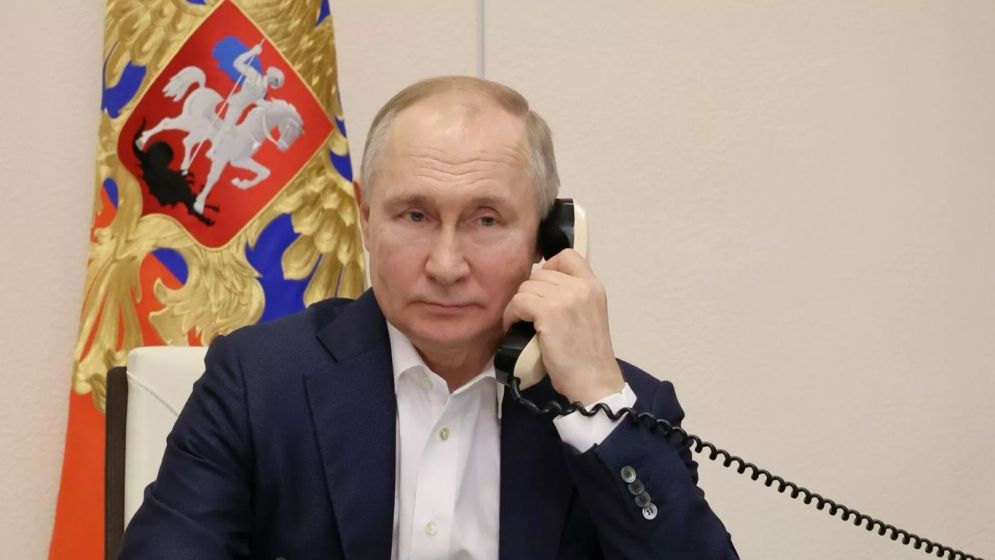
File Photo
Russian President Vladimir Putin on Sunday condemned the killing of Iranian Supreme Leader Ayatollah Ali Khamenei as a "cynical" murder but he offered little in public to Moscow's ally beyond condolences.
Khamenei is the third Russian ally to be toppled in
the past 15 months, following the falls of Moscow‑backed leaders in Syria and
Venezuela. His death leaves the Kremlin facing a strategic setback in a region
where it has long sought greater influence.
Russia says this weekend's US and Israeli attacks
have thrust the entire Middle East into the abyss, although some Iranian
sources have said that they have had little real help from Moscow in the biggest
crisis for Iran since the US-backed Shah was toppled in the 1979 revolution.
After Israeli Prime Minister Benjamin Netanyahu last
year openly speculated that Israel could prompt regime change, Putin cautioned
that Iranian society could consolidate around the political leadership there.
Putin conveyed his condolences to the family of
Khamenei, the government of Iran and the people of Iran in a note to President
Masoud Pezeshkian, the Kremlin said.
"Please accept my deep condolences in
connection with the murder of the Supreme Leader of the Islamic Republic of
Iran, Seyed Ali Khamenei, and members of his family, committed in cynical
violation of all norms of human morality and international law," Putin
said in the note.
Khamenei was killed on Saturday, aged 86, Iranian
state media announced, in air strikes by Israel and the United States. Putin
has long kept up contacts with Khamenei.
His first visit outside the former Soviet Union
since the start of the 2022 Ukraine war was to Tehran where he met Khamenei.
Both wary of intercepts by US intelligence, Putin and Khamenei would sometimes
exchange written messages or communicate by envoy.
Another Russian Ally Falls
With Russian allies ousted in Syria and Venezuela,
the fall of Khamenei poses a challenge for Moscow, though the Kremlin has shown
little appetite to date for challenging US President Donald Trump over Iran and
has been more successful than the West predicted in negotiating with Syria's
new rulers.
Fyodor Lukyanov, the influential editor-in-chief of
Russia in Global Politics magazine, compared the "murder" of Khamenei
to the 2011 killing of Libyan leader Colonel Muammar Gaddafi and the 2006 death
by hanging of Iraq's Saddam Hussein.
Lukyanov said the wider lesson from the events in
Iran was clear: "Negotiating with the Americans makes almost no
sense."
While Moscow has bought weapons from Iran for its
war in Ukraine and signed a 20-year strategic partnership deal with Tehran
earlier last year, their relationship since the 16th century, when Muscovy
officially established relations with the Persian Empire, has at times been
troubled.
The published strategic partnership does not contain
a mutual defence clause, and Russia has repeatedly said that it does not want
Iran to develop an atomic bomb, a step that Moscow fears would trigger a
nuclear arms race across the Middle East.
"In our country, Ayatollah Khamenei will be
remembered as an outstanding statesman who made a huge personal contribution to
the development of friendly Russian-Iranian relations and bringing them to the
level of a comprehensive strategic partnership," Putin said.
While it is unclear who will ultimately rule Iran after Khamenei, if there is a sustained supply disruption to oil from the Gulf then Russian oil revenues will increase, bolstering its war economy.