


 For all latest news, follow the Daily Sun's Google News channel.


White House denies plan to launch nuclear attack on Iran after Trump’s threat
Still, mediating countries seem to be hoping that a diplomatic breakthrough could still be made
Agencies
Published: 08 Apr 2026, 12:10 AM
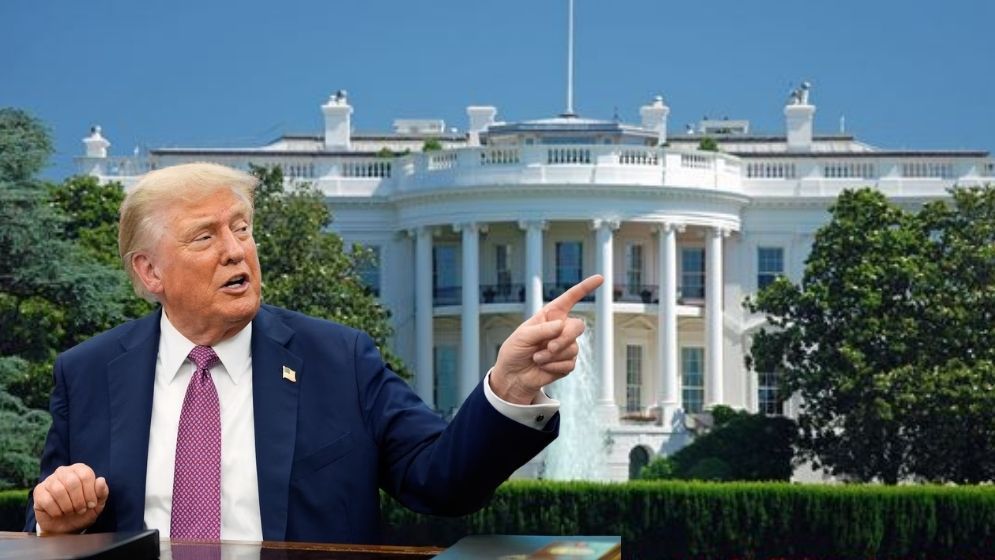
File Photo
The White House has denied that it has any plans to use nuclear weapons against Iran as a deadline imposed by President Donald Trump for Tehran to make a deal or face a massive onslaught looms.
The denial from Washington came on Tuesday, as the
president employed apocalyptic language. Insisting that Iran capitulate to his
demands, Trump warned that a “whole civilisation will die tonight”, Al Jazeera
English reports.
Texas Democratic Congressman Joaquin Castro called
on Trump to immediately make it clear that he is not considering using nuclear
weapons.
Vice President JD Vance later said that US forces
could employ tools they “so far haven’t decided to use”. That spurred an account
associated with former vice president Kamala Harris to assert that Vance
implied Trump “might use nuclear weapons”.
“Literally nothing @VP said here ‘implies’ this, you
absolute buffoons,” a social media post by the White House retorted.
However, Press Secretary Karoline Leavitt appeared
less certain when asked by the AFP news agency if Trump was prepared to use a
nuclear weapon.
“Only the President knows where things stand and
what he will do,” she said in a statement.
The original ultimatum was made by Trump on
Saturday, when he demanded that Iran make a deal to open the Strait of Hormuz,
through which about a fifth of global energy exports pass, or face an assault
on key infrastructure, including power plants and bridges.
The deadline falls at 8pm Eastern time (00:00 GMT).
Legal experts say targeting civilian infrastructure could amount to a war
crime.
‘Beyond the region’
“A whole civilisation will die tonight, never to be
brought back again. I don’t want that to happen, but it probably will,” said
Trump on his TruthSocial on Tuesday.
However, he said, “something revolutionarily
wonderful can happen, WHO KNOWS? We will find out tonight.”
However, the Iranian response has been defiant. The
Islamic Revolutionary Guards Corps (IRGC) said it will not hesitate to respond
in kind if the US attacks civilian facilities.
“We will do to the infrastructure of America and its
partners what will deprive them and their allies of the region’s oil and gas
for many years,” the IRGC said in a statement.
Washington fails to calculate the critical assets
that would be within Iranian fire range, it said. “Our response will extend
beyond the region if the US military crosses our red lines.”
President Masoud Pezeskhian said that more than 14
million Iranians, including himself, have volunteered to fight to defend Iran.
The fiery threats, which have reached a feverish
peak, between the US president and Iranian officials come as Israel-US strikes
on Iran and Iranian attacks across the region and Israel intensified.
Vance confirmed on Tuesday that US strikes targeted
military infrastructure on Iran’s Kharg Island, a key energy export hub,
although he said that oil facilities were not hit.
The island, a tiny one in the north of the Gulf, is
where about 90 percent of Iranian oil is exported from. Seizing it or destroying
oil storage tanks and pumping facilities would remove a key economic lifeline
to the IRGC.
This is the second time the US has struck Kharg. On 14
March, Washington claimed to have “totally obliterated” all military targets
there, with Trump saying that he had chosen not to “wipe out” the oil
infrastructure.
Meanwhile, Prime Minister Benjamin Netanyahu said
the Israeli army had struck railways and bridges in Iran, and the military
confirmed it had attacked bridge sections in several areas across the country,
claiming that they were used by the IRGC to transport weapons and military
equipment.
Bearing the brunt
In Israel, sirens sounded in the north and south as
missiles and drones were launched by Iran and Hezbollah in Lebanon, according
to Israeli media reports.
Gulf countries, in the meantime, continue to bear
the brunt of Iran’s retaliatory attacks.
Saudi Arabia and Kuwait said they intercepted drones
throughout the day, while the United Arab Emirates said it was responding to an
Iranian ballistic missile that targeted an administrative building of a
telecommunication company.
Still, mediating countries seem to be hoping that a
diplomatic breakthrough could still be made.
In the early hours of Tuesday, Iranian ambassador to
Pakistan, Reza Amiri Moghadam, said efforts to stop the war were
approaching a “critical, sensitive” stage, without offering more details.
His comments came after Iran proposed on Monday a
10-point peace plan to end the war, which Trump called a “significant step” but
“not good enough”.