


 For all latest news, follow the Daily Sun's Google News channel.


The rapist imam who exploited a religious ‘curse’ to build a wall of silence
The Telegraph
Published: 15 May 2026, 05:49 AM

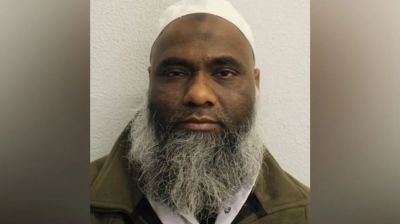
Abdul Halim Khan
To fellow Muslims in London’s Tower Hamlets district, Abdul Halim Khan seemed a pillar of the community. The respected imam was a familiar face at his local mosque, delivering prayers and always on hand to dispense the Almighty’s wisdom. To certain members of his flock, however, his spiritual talk took a very different turn.
During private religious guidance sessions with women and young girls, Halim would claim he had become possessed by a “jinn” or spirit. He would then carry out rape and sexual assaults, blaming the malign entity that was “inside” him. That same jinn, he would then warn his victims, would also wreak vengeance if they told anyone what had happened.
Halim committed his abuse over an 11-year period from 2004 to 2015, with one of those he preyed on aged just 12. Eventually, his youngest victim reported him to a teacher at her school in 2018. That then triggered a long and complex investigation by the Metropolitan Police, which led to six more victims coming forward and Halim’s conviction after a three-month trial. To break their silence, witnesses overcame not just their worries of retribution by his ‘jinn’, but their fear of testifying against an influential man of standing.
“It shows remarkable strength for anyone to report abuse, especially when the abuser is believed to be a trusted figure,” said Det Sgt Sara Yems, who led the inquiry. “The seven women who came forward have shown extraordinary courage in speaking with police and I hope they serve as inspiration to other victims and survivors.”
On Thursday, 54-year-old Halim Khan was given 13 life sentences, with a minimum 20-year term, at Snaresbrook Crown Court, having been found guilty of a long list of charges; nine of rape, four of sexual assault, five of rape of a child under 13, two of sexual assault of a child under 13, and one of assault by penetration.
‘This was an abuse of faith, not an expression of it’
Some of his victims gave impact statements in court, telling how he had robbed them of their childhood, abused their religious faith and sometimes set them against their own parents, who had been reluctant to question Halim Khan’s integrity.
One woman, now aged 30 and identified only as “Victim B”, said: “He has tainted the innocence of my childhood, my sense of safety and my ability to trust people. He committed these crimes by claiming to be a trustworthy man. I waited for years as my parents sang his praises and put him on a pedestal.”
Her voice quaking, she told how Halim had taken her virginity when she was too young to “even know what was happening”, and how he had threatened to abuse a younger sister when Victim B vowed to expose his wrongdoing.
She added: “I walk through life drowning in waves of huge anxiety. This is the mental state that he has hardwired into me, and no amount of therapy will rectify that. Khan is not a human being, he is evil personified.”
The case has sent shockwaves through Tower Hamlets, where around a third of residents are South Asian Muslims. Campaigners claim that despite the introduction of safeguarding measures, including criminal background checks, more needs to be done to ensure rogue imams abusing their power. Yet it also highlighted the continuing widespread belief in “jinns” in certain sections of Britain’s Muslim communities, which Halim exploited.
Jinns are mentioned in the Quran as invisible supernatural creatures, although folklore around them dates back to pre-Islamic times. They are said to be able to possess people – sometimes through curses – and are blamed for causing everything from bad luck and illness to infertility, criminal behaviour and poor mental health. For many more devout Muslims, especially those not educated in the West, belief in their existence can be absolute.
In Tower Hamlets, mental health professionals in the local NHS trust are specially trained to deal with cases of alleged jinn possession, where both patients and their families may be reluctant to accept normal medical diagnoses. There is also a thriving industry in clinics specialising in “ruqyah”, or spiritual healing, which advertise exorcism services for jinn possession. Faith healers, also known as raqi, also hold sessions and seminars at local mosques.
“Abdul Halim Khan exploited the profound trust invested in imams to manipulate and control his victims,” says Aisha Gill, a University of Bristol criminology professor who has studied honour-based violence and abuse within South Asian and Muslim communities, and who gave evidence at the trial.
“By falsely claiming to be possessed by a jinn and threatening them with black magic, a practice explicitly prohibited in Islam, he weaponised spiritual fear to silence them. His power derived not simply from interpersonal coercion, but from the manipulation of communal trust and deeply embedded religious beliefs. Orthodox Islamic teaching condemns precisely the kind of exploitation he carried out; this was an abuse of faith, not an expression of it.”
She added: “Cases like this should prompt a serious conversation about safeguarding within faith settings.”
A blind eye
Halim Khan is understood to have arrived in Britain from India in the early 1990s and was appointed to a mosque in 1996, prior to the introduction of tighter regulations on foreign-born imams in the wake of 9/11.
Although Indian-born, he is understood to have preached mainly to worshippers in Tower Hamlets’ Bangladeshi community, whose roots in the area go back to the 1960s. While locals are appalled at his crimes, police have not named the mosque where he preached for fear that it could lead to the identification of those he abused.
The process of bringing the case to trial was handled by Melissa Garner, a specialist prosecutor for the Crown Prosecution Service. She says that the victims had been allowed pre-recorded statements and cross-examination sessions, to spare them the ordeal of having to testify against Halim in person. Gill, she added, was brought in to explain to jury members that the victims would have taken his claims of jinn possession at face value.
“In relation to the use of jinns or black magic, it can be a challenge for a lay person, or someone who doesn’t follow that religion, to grasp that this is something victims actually believe,” says Garner. “It was explained to the jury that Khan had convinced his victims that if they spoke out about what happened, evil or harm would come to them or their families.”
The delay in bringing Halim to justice after his arrest in 2018 was partly due to the COVID outbreak, but also to more victims coming forward over the years. “It was quite a complex and protracted investigation, mainly due to the scope and sensitivity of it,” says Yems.
The trial, which began in November and lasted more than three months, heard that Halim Khan would persuade his victims to meet him at isolated spots, including flats and a car with tinted windows. He would give young girls mobile phones so that he could contact them, instructing one to climb out of a bedroom to see him. Some victims he assaulted up to 20 times.
Sarah Morris, summing up the case on Thursday for the prosecution, said that Halim initially inveigled his way into the victims’ families by offering his services as a faith leader and healer: “He told the victims that they and their families were facing some sort of danger and that the only way to save them was him. He said that if they told anyone what he had done, they would be cursed.”
He claimed that his accusers had jointly concocted the allegations to ruin his reputation, and denied ever claiming to be possessed. Part of the investigation involved examination of victims’ mobile phone records, which showed no evidence of any conspiracy. They did, however, show that Halim Khan had been in touch with at least one complainant whom he had denied ever meeting. He was convicted in February by a unanimous jury verdict, with the hearing adjourned until this week for pre-sentencing reports.
While police and prosecutors have been praised for their success in bringing the case to court, some campaigners believe that a blind eye is still turned towards sexual abuse by imams, thanks to the status they hold in Muslim communities. They liken it to the problems that prevailed until recently within British churches, where sex crimes carried out by priests and vicars were often covered up or not investigated.
Swaran Preet Singh is a professor of social and community psychiatry at Warwick University who has conducted research into mental health issues among minority communities.
“I know of cases in my own practice where people have complained of sexual abuse by imams,” he says. “I think it’s far more common than we know about, or than the communities concerned are willing to accept.”
He also expresses concern about the widespread acceptance of the existence of jinns among sections of the Muslim community, which he says offers an easy pretext for abuse. Ruqyah clinics are not regulated by law, which puts clients – who often seek help in a state of mental distress – at risk from unscrupulous operators.
“There is a need for more education around ruqyah,” Singh says. “Not all ruqyah practitioners are exploitative, and for the devout, prayer can play a valuable role helping people with mental or physical illness. But at the same time, people are also reluctant to question ruqyah teachings because they fear they will be seen to be questioning the Quran itself.
“Belief in possession has been a feature of most religions, but it is quite pronounced within the Muslim community, and there are those who will take advantage of that. The British authorities should be robust in confronting this – if they avoid doing so because of fears of causing offence, then they will make the same mistakes that allowed grooming gangs to operate.”
‘There are too many bad actors who take advantage’
East London has around a dozen ruqyah therapists – some of them with high-street premises, others working from private addresses. They typically charge £50-£100 per consultation, and often play a similar role to complementary medicine, treating anxiety, depression and routine aches and pains. Sometimes that is done by reciting Quranic verses, at other times by wearing taweez – amulets or talismans containing verses from the Koran that can be sewn into clothing. Many also claim to deal with jinn, black magic and the evil eye.
At Ruqyah Central in Mile End, an advert specifically warns clients to beware that some ruqyah practitioners are “charlatans, opportunists and rogue individuals” who exploit the vulnerable. It says it takes a “holistic approach to ruqyah” and stresses that it should not be a substitute for conventional medical treatment.
An administrator at the clinic, Abu Muhammad, says the clinic often received patients convinced they were suffering from jinn possession, some of whom would speak in foreign tongues, or showed “inexplicable strength”. However, in many cases, the clinic would simply refer them to local mental health specialists.
“Islam does not disregard medical treatment, or the issue of mental health. But the mind is a fragile place, and if God and prayer is cited with no harm to the patient then that may help,” he says.
“Occasionally, we’ve recommended people to be sectioned – whether there is a devil or not, they may be a risk to themselves and others.”
Muhammad adds that the clinic would welcome regulation of the trade, as happens in places such as Saudi Arabia.
“The Government here in Britain isn’t inclined to deal with the concept of God or devils, it’s not really part of their system,” he says. “But it’s definitely something we would like to see because there are too many bad actors who take advantage, especially of women.”
Abuse of power
Passing sentence, Judge Leslie Cuthbert told Khan: “You had supreme confidence in the protection your status in the community gave you, and because of the potential shame and dishonour that victims might incur in coming forward. Yet the only person who has behaved dishonourably here and should feel any shame is you.”
In one particularly sickening episode, Halim Khan told Victim B that she had contracted ovarian cancer and that she would die within six months unless he “treated her”. He then raped her in a car and told her that she was now “cured”.
He showed another victim porn movies before making his sexual advances. Despite his conviction, the court received a number of letters from his friends and family, whom Judge Cuthbert noted “were unwilling to accept the jury’s verdict”.
Halim appeared for Thursday’s sentencing hearing dressed in a tracksuit and blue skullcap and made no comment as he was led away. The court heard that he had already been badly beaten up while on remand in jail. But Judge Cuthbert said that as he had expressed no remorse for his crimes, it was possible that he would never be freed.
The court was told that the victims had suffered lasting trauma, and sometimes fall-outs with relatives who had taken his word over their own.
“My parents defended the person who abused me and closed every door on me,” another victim, identified as Victim A, told the court. “I was left alone with trauma that I didn’t create.”
Indeed, such was the respect Halim Khan commanded in the Bangladeshi community that even after his conviction, many continued to “express their disbelief” at the verdict, Morris said.
“It highlights the deep divide between the private way he conducted himself and his public face.”
Victim A added that her parents, sister and brother were “all victims too” of his manipulation.
“I am mourning the loss of my innocence, the childhood and family and the life we could have had without him,” she said, as Halim sat in front of her in the dock.
“But today he is no longer Abdul Halim Khan the religious leader. Now he is Abdul Halim Khan the convicted sex offender.”