


 For all latest news, follow the Daily Sun's Google News channel.


Saudi Arabia, France push diplomacy on Iran, reject threats to Hormuz
The two countries deepen strategic partnership with 21 agreements and MoUs
Saudi Gazette, Paris
Published: 25 Aug 2026, 03:23 AM
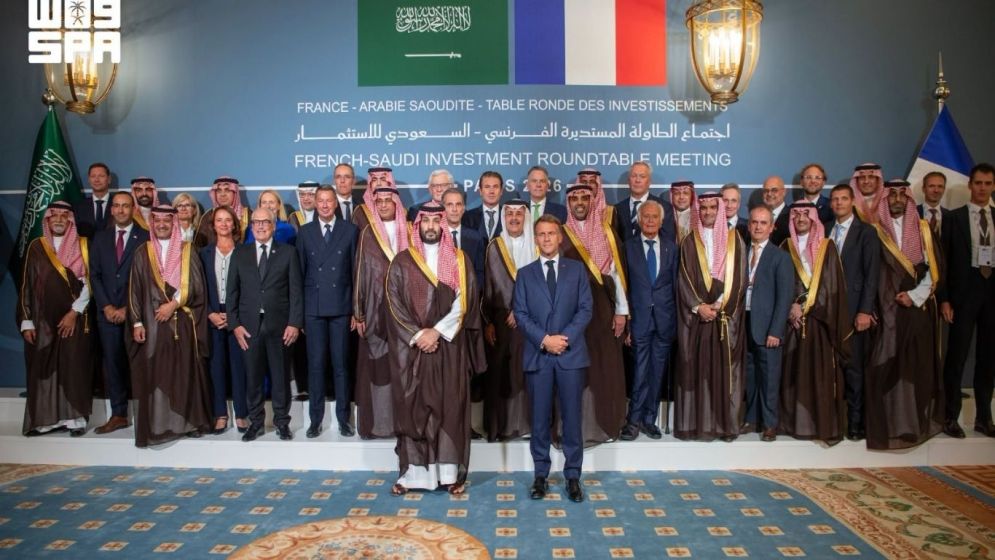
Photo: Collected
Saudi Arabia and France have called for a negotiated solution to the Iran issue to prevent further escalation and safeguard regional security, while condemning attacks on vessels in the Strait of Hormuz and urging the restoration of normal navigation through the strategic waterway.
The two countries agreed to deepen their strategic partnership in defence, investment, energy, artificial intelligence and regional security, while welcoming 21 agreements and memoranda of understanding signed during Crown Prince and Prime Minister Mohammed bin Salman’s state visit to France.
A joint statement issued at the end of the Crown Prince’s 23-24 August visit said Saudi Arabia and France were marking 100 years of diplomatic relations and seeking to build on their strategic partnership, which began during French President Emmanuel Macron’s state visit to Saudi Arabia in December 2024.
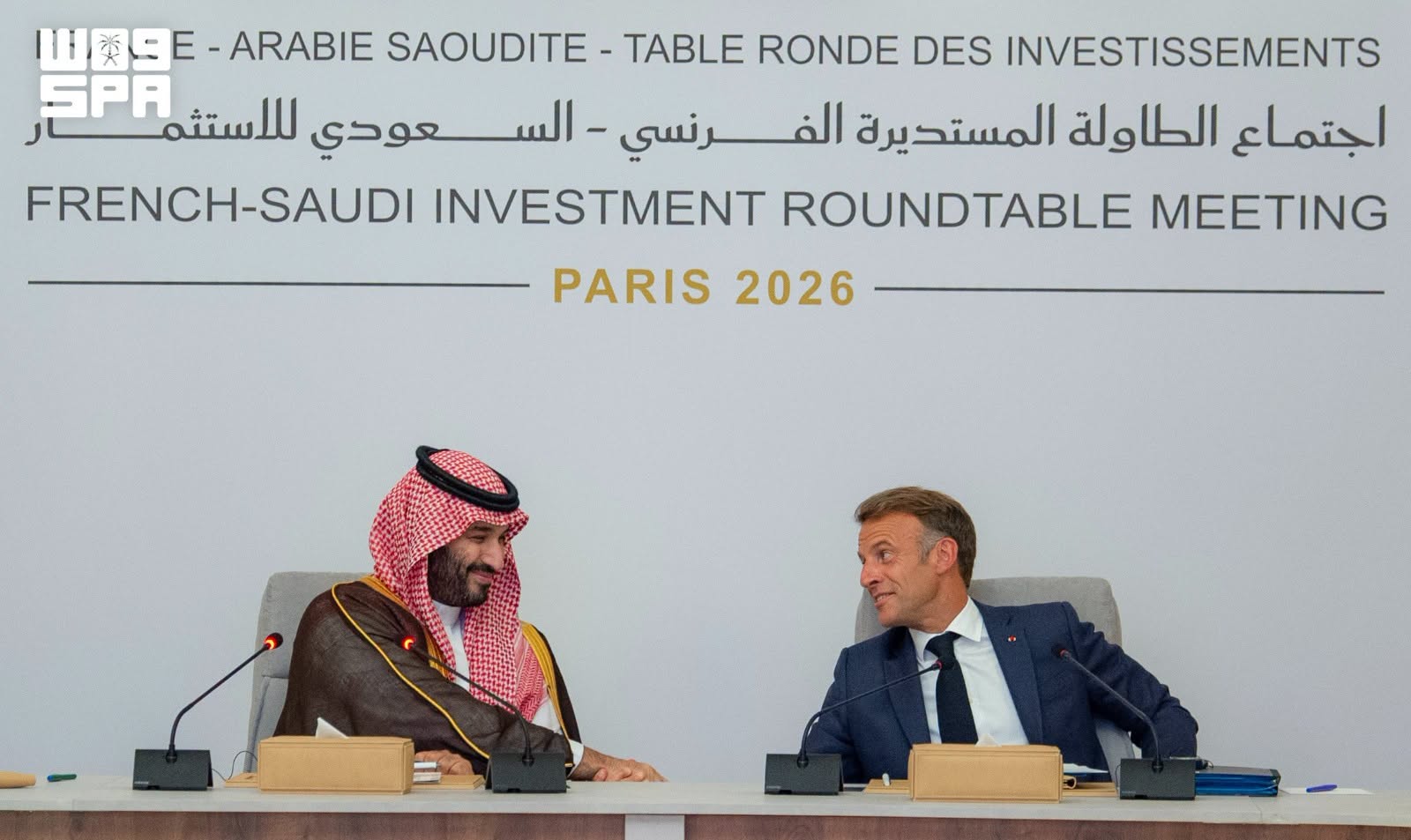
The Crown Prince and Macron held official talks and chaired the inaugural meeting of the Saudi-French Strategic Partnership Council, launching new initiatives to expand cooperation across a wide range of sectors.
The two leaders reaffirmed a shared vision for stability in the Middle East based on respect for state sovereignty and international law. They stressed the need to prioritise political and diplomatic solutions to conflicts and address security threats.
Iran and Strait of Hormuz
On Iran, Saudi Arabia and France stressed the importance of reaching a negotiated solution to prevent further escalation and safeguard regional security.
They reaffirmed their commitment to a diplomatic solution that guarantees the peaceful nature of Iran’s nuclear programme and called on Tehran to resume full cooperation with the International Atomic Energy Agency.
The two countries also condemned attacks on vessels in the Strait of Hormuz and threats to maritime security.
They stressed the importance of restoring navigation through the strait to the conditions that prevailed before 28 February 2026, including freedom of navigation, regular shipping movements and passage without direct or indirect fees or restrictions, in accordance with international law.
Palestine
Saudi Arabia and France welcomed the announcement of an agreement providing for the disarmament of Hamas and called for its implementation.
They stressed the need to establish conditions for a sustainable ceasefire and ensure the urgent, safe and unhindered delivery of humanitarian assistance to civilians in the Gaza Strip.
The two countries firmly rejected attempts to undermine the Palestinian people’s right to establish an independent state along the 1967 borders and stressed the importance of preserving the territorial unity of Palestinian lands.
They called for an end to Israeli settlement policies and settler violence, saying such actions threaten the two-state solution.
Both sides reaffirmed their commitment to fully implementing the New York Declaration, supported the Palestinian Authority’s reform agenda and welcomed the announcement of legislative and presidential elections in Palestine.
Lebanon, Yemen, Sudan and Syria
On Lebanon, the two countries agreed to intensify efforts towards a final settlement of the conflict, strengthen Lebanese state institutions and preserve the country’s sovereignty and territorial integrity.
They praised steps taken by Lebanese President Joseph Aoun and Prime Minister Nawaf Salam’s government to rebuild state institutions and extend state authority.
Saudi Arabia and France reiterated their support for the Lebanese Armed Forces and security services. They called for the full implementation of UN Security Council Resolution 1701, the complete disarmament of all non-state armed groups and Israel’s withdrawal from all Lebanese territory.
On Yemen, they reaffirmed support for the Presidential Leadership Council and UN efforts to reach a comprehensive settlement. They condemned Houthi attacks on civilian infrastructure and vital facilities in Saudi Arabia, as well as attacks on commercial shipping.
France reiterated its full solidarity with Saudi Arabia and rejected any attacks on the Kingdom’s territory.
Regarding Sudan, the two countries called for intensified efforts to end the crisis and external interference while preserving Sudan’s security, stability, sovereignty, independence, territorial integrity and institutions.
On Syria, they reiterated their commitment to the country’s unity, stability and economic recovery. They welcomed the establishment of a joint Saudi-Syrian-French Business Council and highlighted Syria’s potential to regain a role connecting Europe, the Gulf and Asia.
Defence and energy cooperation
Building on their longstanding defence relationship, Saudi Arabia and France adopted a declaration to strengthen defence cooperation, including in armaments and training, and pledged greater coordination to support international security and stability.
The two countries also highlighted bilateral trade, which reached approximately $11.8 billion in 2025.
On energy, they stressed the importance of stable global energy markets, security of supply and protection of maritime routes.
The two sides agreed to strengthen strategic cooperation in oil and petrochemicals, sustainable power generation, energy efficiency, renewable energy, energy storage, peaceful nuclear energy, clean hydrogen and technologies to reduce and remove emissions.
They also agreed to expand cooperation on climate issues and related technological solutions.
€6 billion Qiddiya project in France
The two sides welcomed a memorandum of understanding signed by Qiddiya Investment Company to explore the development of a major mixed-use global destination and theme parks in Cergy-Pontoise in the Île-de-France region.
Initial plans envisage an integrated destination combining entertainment, leisure, hospitality, culture and sports, with up to three major entertainment facilities alongside hotels and other attractions.
Investment in the project could reach approximately €6 billion over its development period.
Saudi Arabia and France also agreed to establish a dedicated financial framework to support projects carried out by French companies in the Kingdom.
They further agreed to deepen cooperation in artificial intelligence, quantum computing, emerging technologies and capacity building.
AlUla partnership extended to 2035
The two countries agreed to extend their partnership on AlUla until 2035, building on cooperation in archaeology, heritage and culture under Vision 2030.
The joint statement said the new framework reflected the strength of bilateral cooperation and sought to capitalise on AlUla’s potential as a leading cultural and heritage destination in the 21st century.
Saudi Arabia and France also welcomed the success of the third Esports World Cup, held in Paris during the summer of 2026, and committed to expanding cooperation in culture, youth and sports.
The Crown Prince and Macron welcomed France’s participation in Expo 2030 Riyadh and agreed that the event should serve as a major milestone in Saudi-French relations.
21 agreements and MoUs announced
The two countries signed a number of agreements and MoUs covering defence, health, artificial intelligence, emerging technologies and entertainment during the state visit.
They also welcomed the outcome of the Saudi-French Investment Roundtable, attended by the Crown Prince and Macron alongside senior executives and private-sector representatives.
The discussions covered opportunities and joint projects in energy, industry, financial services, transportation and logistics, healthcare, culture, tourism and artificial intelligence.
Saudi Arabia and France welcomed the announcement of 21 agreements and memoranda of understanding across multiple sectors, saying they reflected the growing economic partnership and opened new avenues for bilateral investment and cooperation.