


 For all latest news, follow the Daily Sun's Google News channel.


Sweden’s centre-left opposition bloc wins election
Daily Sun Report, Sweden
Published: 17 Sep 2026, 11:26 PM
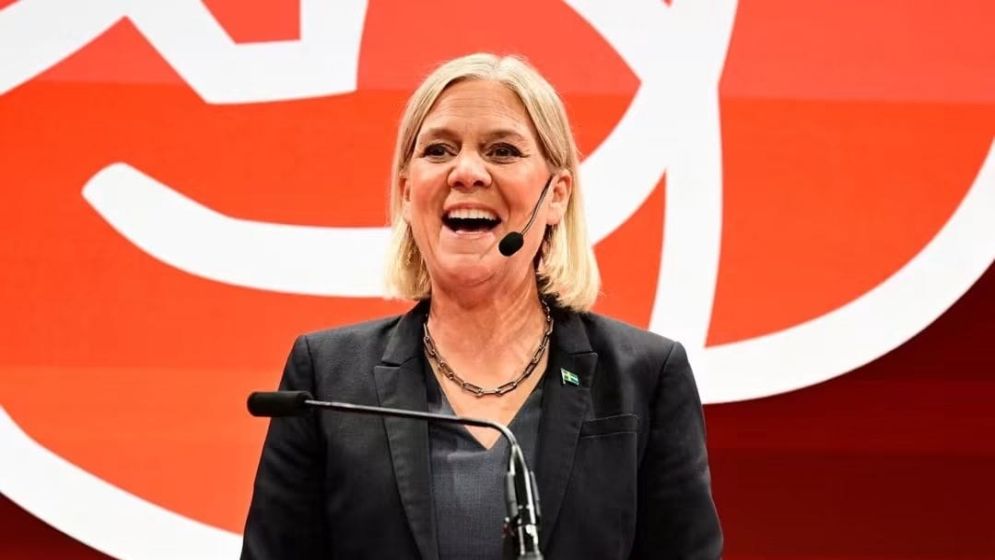
Former prime minister Magdalena Andersson is now expected to seek to form the next government | Photo: Collected
Sweden’s centre-left opposition has won the parliamentary
election, securing 176 seats in the 349-member Riksdag, while the governing
bloc led by Prime Minister Ulf Kristersson won 173 seats.
The final vote count was completed on Thursday following
Sunday’s election, with late-arriving ballots, including votes from overseas,
also included in the count. The final result gives the opposition bloc a
three-seat lead.
The opposition is led by the Social Democrats, whose leader
and former prime minister Magdalena Andersson is now expected to seek to form
the next government. The Social Democrats remained the largest single party,
winning 99 seats.
The opposition bloc also includes the Left Party, the Centre
Party and the Green Party.
Kristersson’s governing bloc consists of the Moderate Party,
Sweden Democrats, Christian Democrats and Liberals. Together, the four parties
secured 173 seats.
Following the final result, Kristersson announced that he would
resign as prime minister. In a letter to the parliamentary speaker, he said he
was requesting to be relieved of his post so that the process of forming a new
government could begin.
However, forming a new government could prove challenging
for Andersson because of differences among the opposition parties. The Centre
Party has said it would not join a government that includes the Left Party in
the cabinet, while the Left Party has called for a ministerial role.
The parliamentary speaker will now begin consultations with
the parties before a vote on a new prime minister. Parliament could launch the vote
on a new prime minister from 29 September at the earliest.
Kristersson and his cabinet will continue to serve as a
caretaker government until a new government takes office.
Meanwhile, the Sweden Democrats, which supported
Kristersson’s government from outside the cabinet, won 62 seats, 11 fewer than
in the 2022 election.
The final result marks a potential change of government in
Sweden, but the composition of the next government will depend on negotiations
among the parties.