


 For all latest news, follow the Daily Sun's Google News channel.


Why has Pakistan temporarily closed trade routes with Iran?
Thousands of trucks stranded, border restrictions raise fears of LPG shortage, price hike
Gulf News, Dubai
Published: 19 Oct 2026, 07:49 PM
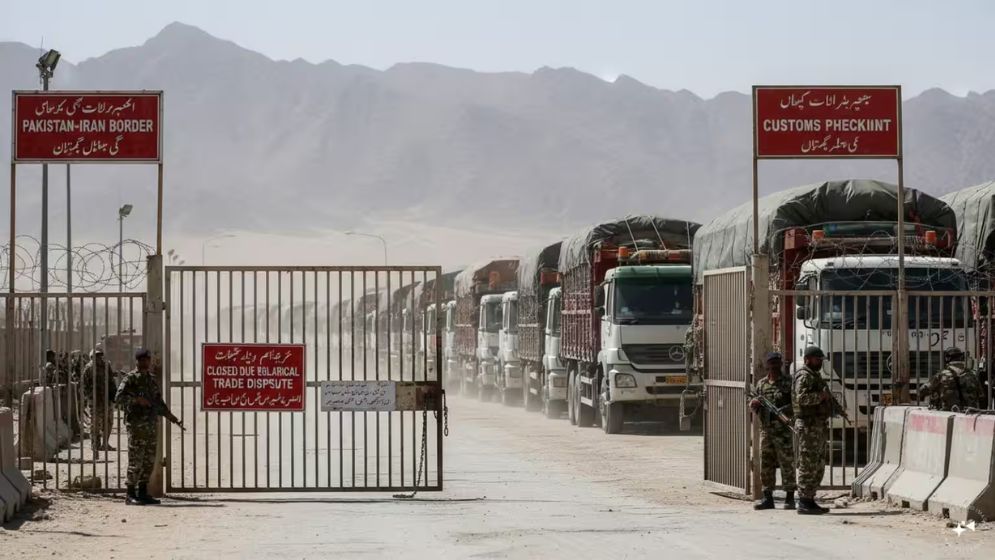
Representational Image
Pakistan has temporarily suspended commercial trade through two major border crossings with Iran, leaving around 2,000 trucks stranded and raising concerns over possible shortages and higher prices of liquefied petroleum gas (LPG) and other essential commodities.
The suspension affects the Gabd-Rimdan and Taftan crossings,
two important routes for trade between the neighbouring countries. Officials
say the restrictions are aimed at addressing security concerns, preventing
smuggling and improving border management.
The Balochistan government said on Sunday that discussions
were under way between senior Pakistani and Iranian officials to resolve
administrative issues and reopen the crossings as soon as possible.
Why were the borders closed?
Shahid Rind, adviser to the Balochistan chief minister on
media and political affairs, said the temporary closure was necessary to
strengthen security, curb smuggling and establish a more effective border
management system.
He rejected rumours circulating on social media about the
closure and urged the public to rely on verified information.
Rind said progress was being made in talks between officials
of the two countries.
“In view of the current progress, the Pakistan-Iran border
is likely to reopen soon,” he said.
He added that a coordinated system was being developed to
improve border operations, prevent smuggling and maintain law and order.
According to Rind, better border management would also help improve facilities for traders and bring greater stability to border communities.
What Iran says
Iranian Foreign Ministry spokesperson Esmail Baqaei
attributed the disruption to technical issues, according to the state-run Irna
news agency. He said both countries were holding consultations to restore
normal operations.
Around 2,000 trucks stranded
The sudden suspension has disrupted the movement of
commercial goods, with trucks carrying LPG, rice, fresh fruit and other
commodities reportedly stranded on both sides of the border, Dawn online
reported.
The Quetta Chamber of Commerce and Industry said
approximately 2,000 trucks travelling between Pakistan and Iran had been
affected.
The chamber warned that prolonged restrictions could cause
substantial financial losses to traders and businesses dependent on
cross-border commerce. It has advised businesses involved in trade with Iran to
suspend new import and export orders until further notice.
The Ministry of Commerce issued a memorandum on Friday
withdrawing an earlier order dated 3 October, effectively suspending commercial
operations through the designated crossings.
However, passenger movement through the Rimdan-Gabd crossing
reportedly remains operational, according to Iran’s Wana news agency.
Biggest concern
One of the biggest concerns is the possible impact on
Pakistan’s LPG supplies. The Gabd-Rimdan crossing has emerged as an important
route for energy imports, with reports indicating that more than 4,000 tonnes
of LPG were entering Pakistan daily through the crossing.
Traders and energy sector representatives have warned that
an extended closure could disrupt supplies to Karachi and other parts of the
country. Reduced imports could also put upward pressure on LPG prices in the
open market, particularly if alternative supply arrangements are not made.
The disruption comes as the Taftan route has already been
experiencing difficulties because of security challenges in Balochistan.
Local business representatives fear that continued
restrictions could affect trade revenues, increase transportation costs and
threaten the livelihoods of people dependent on border commerce.
Trade relations under pressure
The suspension comes despite recent efforts by Islamabad and
Tehran to strengthen bilateral trade and improve border connectivity.
Since March, both countries have introduced measures to
simplify customs procedures, improve transit arrangements and facilitate
commercial movement.
In August, an Iranian delegation led by Trade and Industry
Minister Mohammad Atabak visited Islamabad for the 10th session of the
Pakistan-Iran Joint Trade Committee.
The delegation also met Prime Minister Shehbaz Sharif, with
both sides agreeing to expand trade by improving logistics, harmonising customs
procedures and working towards round-the-clock border operations.
However, traders say poor road infrastructure and recurring
security incidents have continued to affect several border routes.
Gwadar Chamber of Commerce and Industry President Jiand Hoot
previously said trade through the Panjgur and Mand-Radig crossings was
virtually non-existent because of inadequate roads and incidents involving the
burning of vehicles.
When will trade resume?
Pakistani and Iranian officials have indicated that the
suspension is temporary, but no specific date has been announced for the
reopening of commercial trade.
The Balochistan government says talks are progressing and that the crossings could reopen soon once the outstanding administrative and security issues are resolved.